Ling Zongxin, Liu Xia, Jia Xiaoyun, Cheng Yiwen, Luo Yueqiu, Yuan Li, Wang Yuezhu, Zhao Chunna, Guo Shu, Li Lanjuan, Xu Xiwei, Xiang Charlie
Collaborative Innovation Center for Diagnosis and Treatment of Infectious Diseases, State Key Laboratory for Diagnosis and Treatment of Infectious Diseases, the First Affiliated Hospital, School of Medicine, Zhejiang University, Hangzhou, Zhejiang, 310003, China.
1] Collaborative Innovation Center for Diagnosis and Treatment of Infectious Diseases, State Key Laboratory for Diagnosis and Treatment of Infectious Diseases, the First Affiliated Hospital, School of Medicine, Zhejiang University, Hangzhou, Zhejiang, 310003, China [2] Intensive Care Unit, the First Affiliated Hospital, School of Medicine, Zhejiang University, Hangzhou, Zhejiang, 310003, China.
Sci Rep. 2014 Dec 15;4:7485. doi: 10.1038/srep07485.
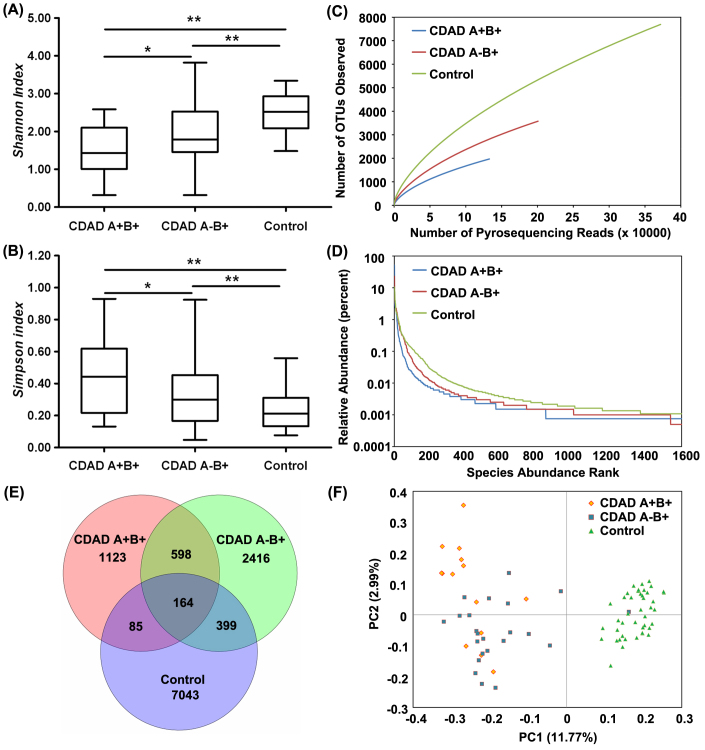
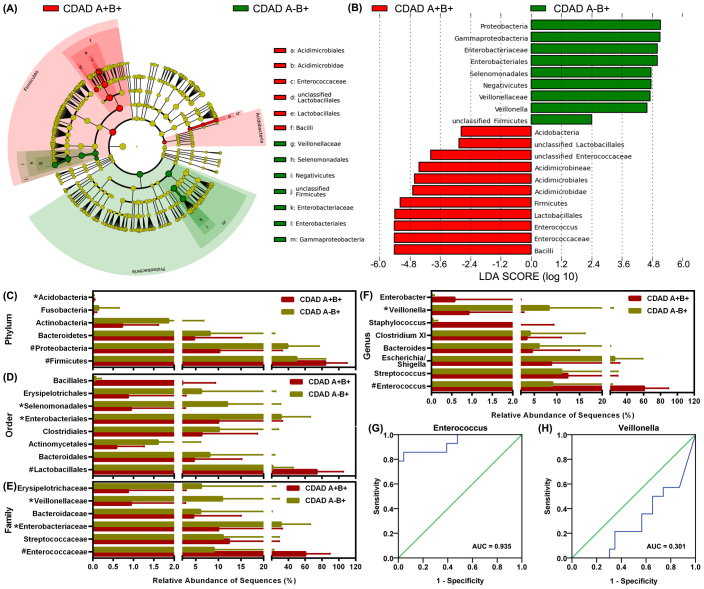
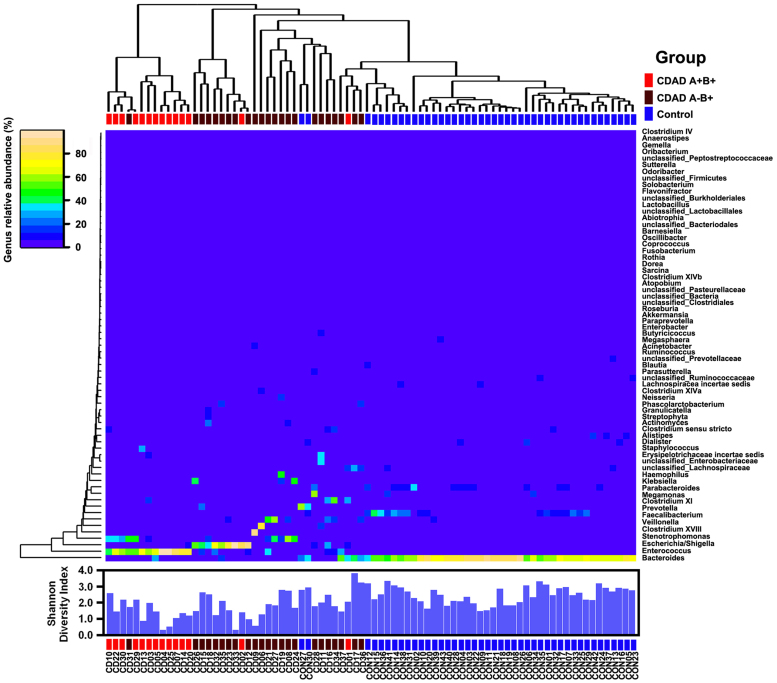
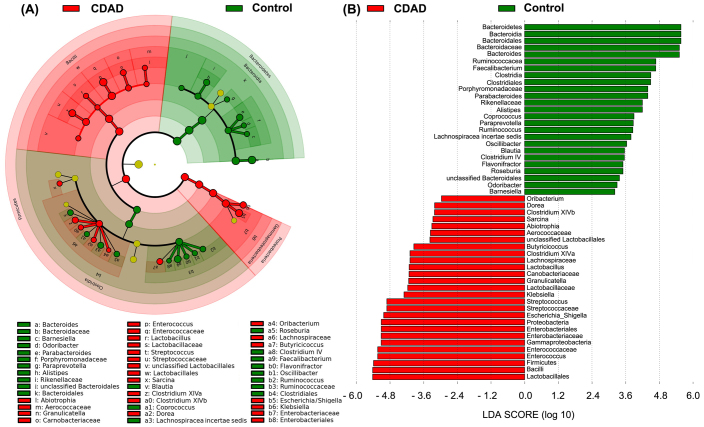
Increasing evidence suggests that altered intestinal microbial composition and function result in an increased risk of Clostridium difficile-associated diarrhoea (CDAD); however, the specific changes of intestinal microbiota in children suffering from CDAD and their associations with C. difficile strain toxigenicity are poorly understood. High-throughput pyrosequencing showed that reduced faecal bacterial diversity and dramatic shifts of microbial composition were found in children with CDAD. The Firmicutes/Bacteroidetes ratio was increased significantly in patients with CDAD, which indicated that dysbiosis of faecal microbiota was closely associated with CDAD. C. difficile infection resulted in an increase in lactate-producing phylotypes, with a corresponding decrease in butyrate-producing bacteria. The decrease in butyrate and lactate buildup impaired intestinal colonisation resistance, which increased the susceptibility to C. difficile colonisation. Strains of C. difficile which were positive for both toxin A and toxin B reduced faecal bacterial diversity to a greater degree than strains that were only toxin B-positive, and were associated with unusually abundant Enterococcus, which implies that the C. difficile toxins have different impacts on the faecal microbiota of children. Greater understanding of the relationships between disruption of the normal faecal microbiota and colonisation with C. difficile that produces different toxins might lead to improved treatment.
越来越多的证据表明,肠道微生物组成和功能的改变会增加艰难梭菌相关性腹泻(CDAD)的风险;然而,CDAD患儿肠道微生物群的具体变化及其与艰难梭菌菌株产毒性的关联却鲜为人知。高通量焦磷酸测序显示,CDAD患儿粪便细菌多样性降低,微生物组成发生显著变化。CDAD患者的厚壁菌门/拟杆菌门比值显著升高,这表明粪便微生物群失调与CDAD密切相关。艰难梭菌感染导致产乳酸菌型增加,产丁酸菌相应减少。丁酸减少和乳酸积累损害了肠道定植抗性,增加了对艰难梭菌定植的易感性。毒素A和毒素B均呈阳性的艰难梭菌菌株比仅毒素B呈阳性的菌株对粪便细菌多样性的降低程度更大,且与异常丰富的肠球菌有关,这意味着艰难梭菌毒素对儿童粪便微生物群有不同影响。更深入了解正常粪便微生物群破坏与产生不同毒素的艰难梭菌定植之间的关系可能会改善治疗效果。