Department of Microbial Infection and Immunity, Ohio State University, Columbus, OH 43210.
Department of Microbiology and Environmental Toxicology, University of California Santa Cruz, Santa Cruz, CA 95064.
Microbiol Spectr. 2015 Jun;3(3). doi: 10.1128/microbiolspec.MB-0011-2014.
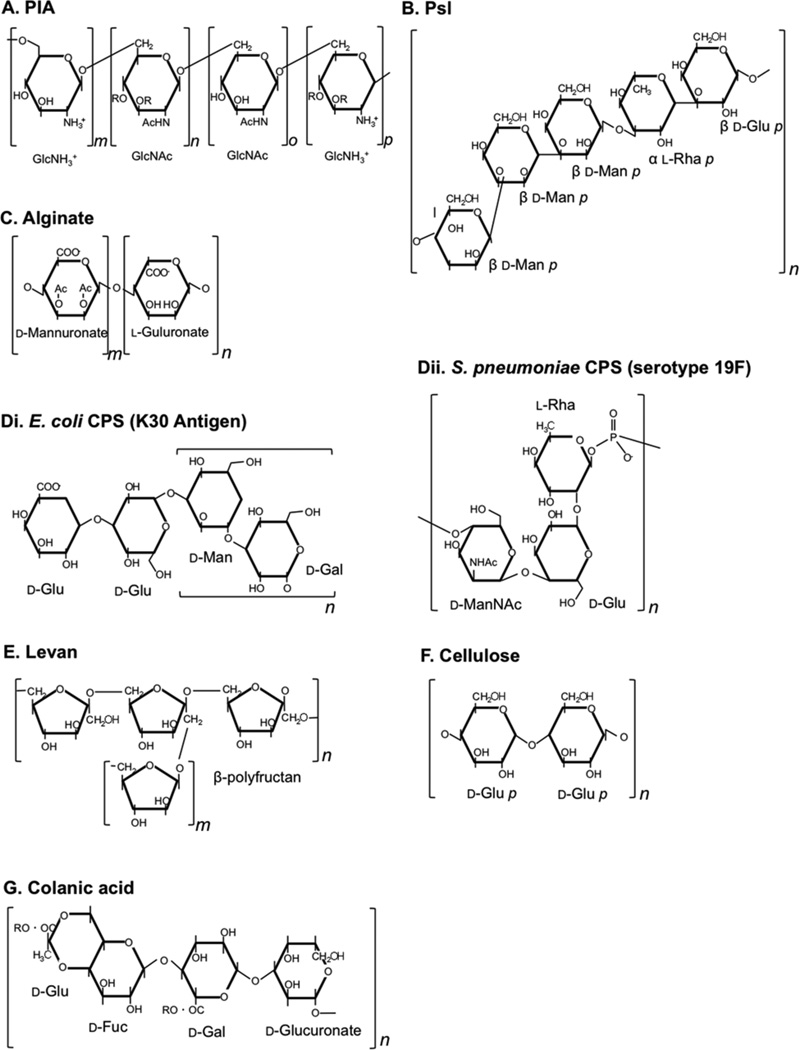
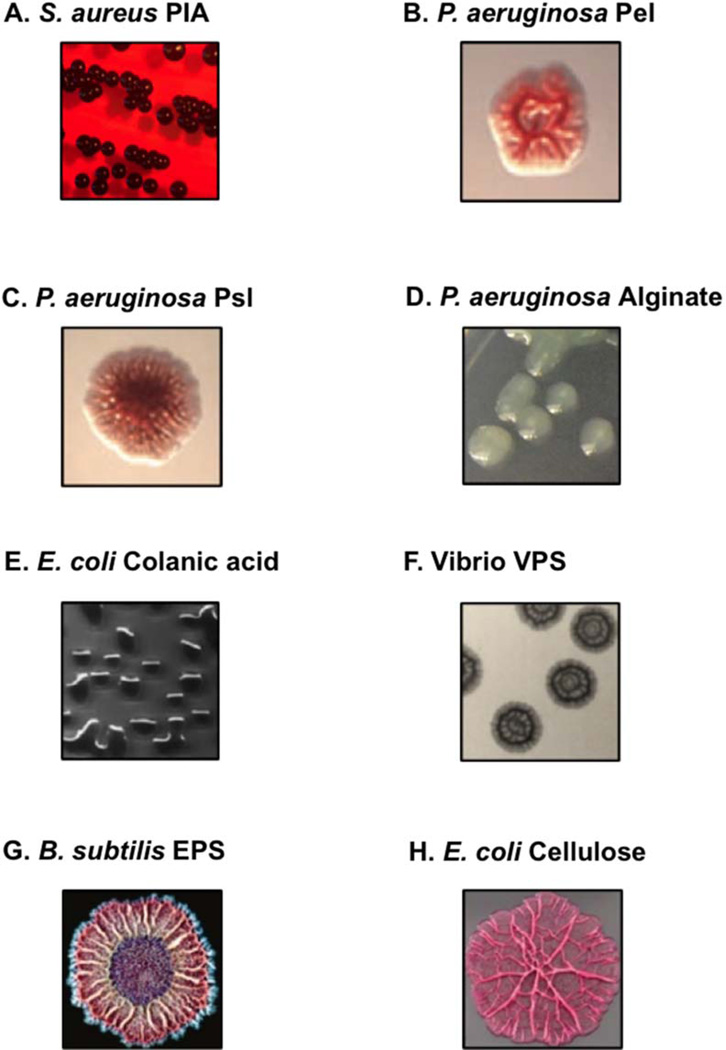
Microbes produce a biofilm matrix consisting of proteins, extracellular DNA, and polysaccharides that is integral in the formation of bacterial communities. Historical studies of polysaccharides revealed that their overproduction often alters the colony morphology and can be diagnostic in identifying certain species. The polysaccharide component of the matrix can provide many diverse benefits to the cells in the biofilm, including adhesion, protection, and structure. Aggregative polysaccharides act as molecular glue, allowing the bacterial cells to adhere to each other as well as surfaces. Adhesion facilitates the colonization of both biotic and abiotic surfaces by allowing the bacteria to resist physical stresses imposed by fluid movement that could separate the cells from a nutrient source. Polysaccharides can also provide protection from a wide range of stresses, such as desiccation, immune effectors, and predators such as phagocytic cells and amoebae. Finally, polysaccharides can provide structure to biofilms, allowing stratification of the bacterial community and establishing gradients of nutrients and waste products. This can be advantageous for the bacteria by establishing a heterogeneous population that is prepared to endure stresses created by the rapidly changing environments that many bacteria encounter. The diverse range of polysaccharide structures, properties, and roles highlight the importance of this matrix constituent to the successful adaptation of bacteria to nearly every niche. Here, we present an overview of the current knowledge regarding the diversity and benefits that polysaccharide production provides to bacterial communities within biofilms.
微生物产生的生物膜基质由蛋白质、细胞外 DNA 和多糖组成,这对于细菌群落的形成至关重要。多糖的历史研究表明,它们的过度产生通常会改变菌落形态,并可用于诊断某些特定物种。生物膜基质中的多糖成分可为细胞提供许多不同的益处,包括粘附、保护和结构。聚集多糖充当分子胶,使细菌细胞能够相互粘附以及粘附在表面上。粘附有助于生物和非生物表面的定植,使细菌能够抵抗可能使细胞与营养源分离的流体运动施加的物理压力。多糖还可以提供对多种压力的保护,例如干燥、免疫效应物以及吞噬细胞和变形虫等捕食者。最后,多糖可以为生物膜提供结构,允许细菌群落分层,并建立营养物质和废物的梯度。这对细菌有利,因为它建立了一个异质种群,准备好承受许多细菌遇到的快速变化的环境所产生的压力。多糖结构、性质和作用的多样性强调了这种基质成分对细菌适应几乎所有小生境的成功的重要性。在这里,我们概述了关于多糖产生为生物膜内细菌群落提供多样性和益处的现有知识。