Kato Agapitus B, Hyseni Chaz, Okedi Loyce M, Ouma Johnson O, Aksoy Serap, Caccone Adalgisa, Masembe Charles
Department of Biological Sciences, College of Natural Sciences, Makerere University, Box 7062, Kampala, Uganda.
Department of Biology, University of Mississippi, Oxford, MS, 38677, USA.
Parasit Vectors. 2015 Jul 22;8:385. doi: 10.1186/s13071-015-0984-1.
Glossina fuscipes fuscipes is the main vector of African Trypanosomiasis affecting both humans and livestock in Uganda. The human disease (sleeping sickness) manifests itself in two forms: acute and chronic. The Lake Victoria basin in Uganda has the acute form and a history of tsetse re-emergence despite concerted efforts to control tsetse. The government of Uganda has targeted the basin for tsetse eradication. To provide empirical data for this initiative, we screened tsetse flies from the basin for genetic variation at the mitochondrial DNA cytochrome oxidase II (mtDNA COII) gene with the goal of investigating genetic diversity and gene flow among tsetse, tsetse demographic history; and compare these results with results from a previous study based on microsatellite loci data in the same area.
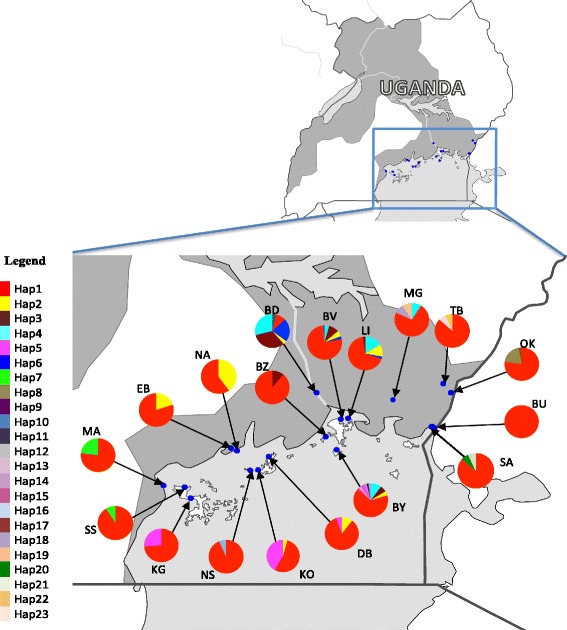
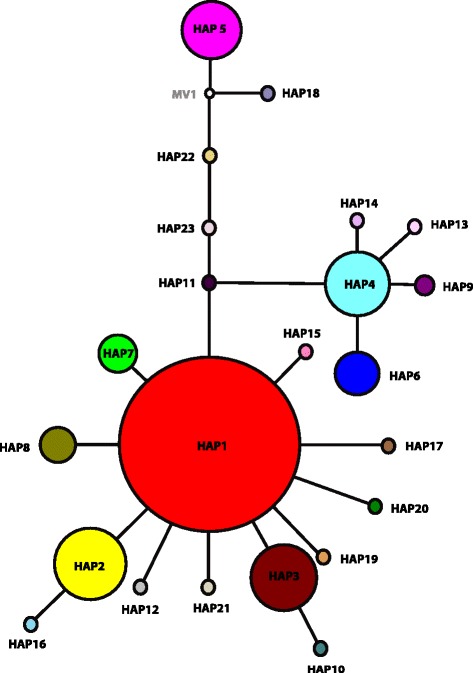
We collected 429 Gff tsetse fly samples from 14 localities in the entire Ugandan portion of the Lake Victoria coast, covering 40,000 km(2). We performed genetic analyses on them and added data collected for 56 Gff individuals from 4 additional sampling sites in the basin. The 529 pb partial mitochondrial DNA cytochrome oxidase II (mtDNA COII) sequences totaling 485 were analysed for genetic differentiation, structuring and demographic history. The results were compared with findings from a previous study based on microsatellite loci data from the basin.
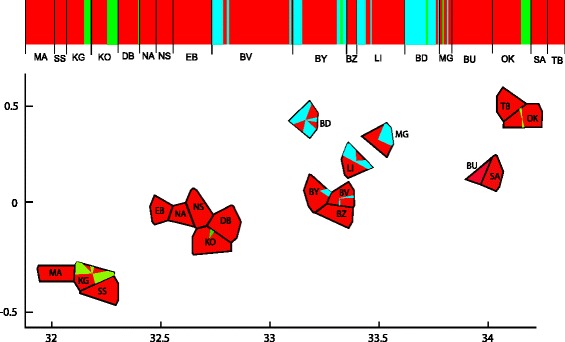
The differences within sampling sites explained a significant proportion of the genetic variation. We found three very closely related mtDNA population clusters, which co-occurred in multiple sites. Although Φ ST (0 - 0.592; P < 0.05) and Bayesian analyses suggest some level of weak genetic differentiation, there is no correlation between genetic divergence and geographic distance (r = 0.109, P = 0.185), and demographic tests provide evidence of locality-based demographic history.
The mtDNA data analysed here complement inferences made in a previous study based on microsatellite data. Given the differences in mutation rates, mtDNA afforded a look further back in time than microsatellites and revealed that Gff populations were more connected in the past. Microsatellite data revealed more genetic structuring than mtDNA. The differences in connectedness and structuring over time could be related to vector control efforts. Tsetse re-emergence after control interventions may be due to re-invasions from outside the treated areas, which emphasizes the need for an integrated area-wide tsetse eradication strategy for sustainable removal of the tsetse and trypanosomiasis problem from this area.
乌干达采采蝇(Glossina fuscipes fuscipes)是非洲锥虫病的主要传播媒介,对乌干达的人类和牲畜均有影响。人类疾病(昏睡病)有两种表现形式:急性和慢性。尽管在控制采采蝇方面做出了协同努力,但乌干达维多利亚湖流域仍存在急性形式的昏睡病且有采采蝇再次出现的历史。乌干达政府已将该流域作为根除采采蝇的目标地区。为该倡议提供实证数据时,我们对来自该流域的采采蝇进行了线粒体DNA细胞色素氧化酶II(mtDNA COII)基因的遗传变异筛选,目的是调查采采蝇之间的遗传多样性和基因流动、采采蝇的种群历史,并将这些结果与之前基于同一地区微卫星位点数据的研究结果进行比较。
我们从维多利亚湖沿岸乌干达部分地区的14个地点收集了429只采采蝇样本,覆盖面积达40,000平方公里。我们对它们进行了遗传分析,并补充了从该流域另外4个采样点收集的56只采采蝇个体的数据。对总共485个长度为529 pb的线粒体DNA细胞色素氧化酶II(mtDNA COII)序列进行了遗传分化、结构和种群历史分析。将结果与之前基于该流域微卫星位点数据的研究结果进行比较。
采样点内的差异解释了很大一部分遗传变异。我们发现了三个高度相关的mtDNA种群簇,它们在多个地点同时出现。尽管Φ ST(0 - 0.592;P < 0.05)和贝叶斯分析表明存在一定程度的弱遗传分化,但遗传差异与地理距离之间没有相关性(r = 0.109,P = 0. 如果对你有帮助,请点赞并分享给更多的人! 185),种群测试提供了基于地点的种群历史证据。
此处分析的mtDNA数据补充了之前基于微卫星数据得出的推论。鉴于突变率的差异,mtDNA能比微卫星追溯到更久远的时间,并揭示出过去采采蝇种群之间的联系更为紧密。微卫星数据显示出比mtDNA更多的遗传结构。随着时间推移,在连通性和结构方面的差异可能与媒介控制措施有关。控制干预后采采蝇的再次出现可能是由于来自处理区域外的重新入侵,这强调需要制定一项综合的全区域采采蝇根除策略,以可持续地消除该地区的采采蝇和锥虫病问题。