Vector Group, Liverpool School of Tropical Medicine, Liverpool, United Kingdom.
PLoS Negl Trop Dis. 2011 Aug;5(8):e1266. doi: 10.1371/journal.pntd.0001266. Epub 2011 Aug 9.
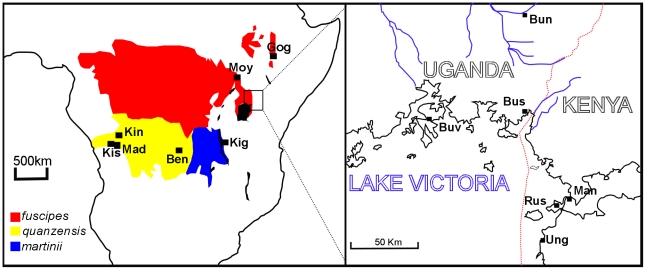
The tsetse fly Glossina fuscipes s.l. is responsible for the transmission of approximately 90% of cases of human African trypanosomiasis (HAT) or sleeping sickness. Three G. fuscipes subspecies have been described, primarily based upon subtle differences in the morphology of their genitalia. Here we describe a study conducted across the range of this important vector to determine whether molecular evidence generated from nuclear DNA (microsatellites and gene sequence information), mitochondrial DNA and symbiont DNA support the existence of these taxa as discrete taxonomic units.
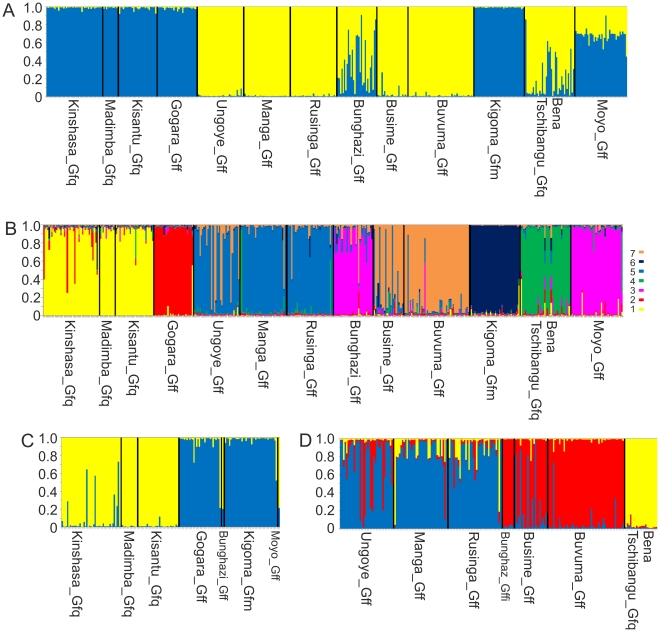
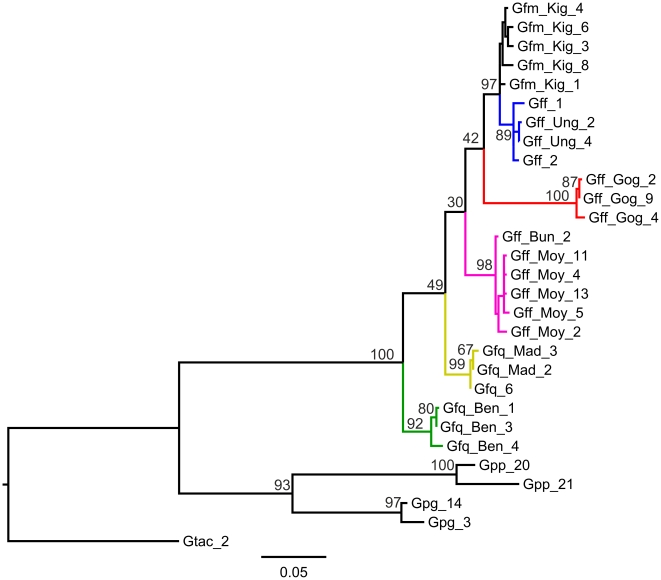
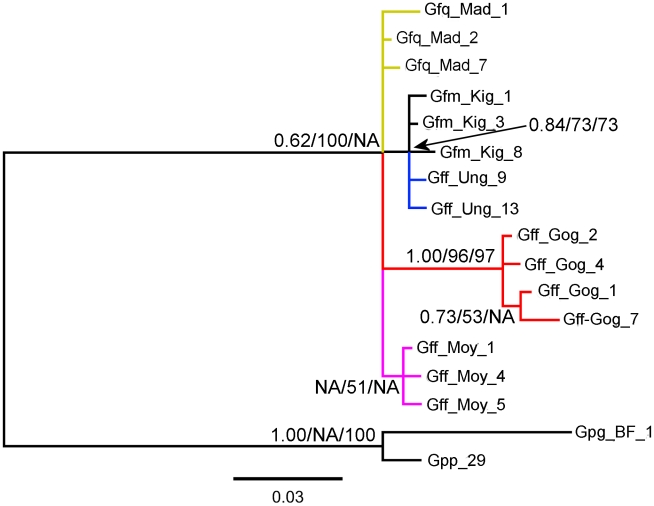
The nuclear ribosomal Internal transcribed spacer 1 (ITS1) provided support for the three subspecies. However nuclear and mitochondrial sequence data did not support the monophyly of the morphological subspecies G. f. fuscipes or G. f. quanzensis. Instead, the most strongly supported monophyletic group was comprised of flies sampled from Ethiopia. Maternally inherited loci (mtDNA and symbiont) also suggested monophyly of a group from Lake Victoria basin and Tanzania, but this group was not supported by nuclear loci, suggesting different histories of these markers. Microsatellite data confirmed strong structuring across the range of G. fuscipes s.l., and was useful for deriving the interrelationship of closely related populations.
CONCLUSION/SIGNIFICANCE: We propose that the morphological classification alone is not used to classify populations of G. fuscipes for control purposes. The Ethiopian population, which is scheduled to be the target of a sterile insect release (SIT) programme, was notably discrete. From a programmatic perspective this may be both positive, given that it may reflect limited migration into the area or negative if the high levels of differentiation are also reflected in reproductive isolation between this population and the flies to be used in the release programme.
采采蝇 Glossina fuscipes s.l. 是传播人类非洲锥虫病(昏睡病)的主要媒介,约占 90%。该物种已被描述为三个亚种,主要依据其生殖器形态上的细微差异。本研究跨越了这一重要媒介的分布范围,旨在确定来自核 DNA(微卫星和基因序列信息)、线粒体 DNA 和共生菌 DNA 的分子证据是否支持这些分类单元的存在。
核核糖体内转录间隔区 1(ITS1)为这三个亚种提供了支持。然而,核和线粒体序列数据不支持形态亚种 G. f. fuscipes 或 G. f. quanzensis 的单系性。相反,最有力支持的单系群由来自埃塞俄比亚的蝇类组成。母系遗传标记(mtDNA 和共生菌)也表明维多利亚湖盆地和坦桑尼亚的一个蝇类群体是单系的,但核标记不支持这一群体,表明这些标记的历史不同。微卫星数据证实了 G. fuscipes s.l. 整个分布范围内的强烈结构,并有助于推导密切相关种群的相互关系。
结论/意义:我们建议,为控制目的,不应仅根据形态分类来对采采蝇种群进行分类。埃塞俄比亚种群计划成为不育昆虫释放(SIT)计划的目标,其种群明显是离散的。从计划的角度来看,这可能是积极的,因为这可能反映出该地区的迁移有限,或者如果这种高分化水平也反映在该种群与释放计划中使用的蝇类之间的生殖隔离中,这可能是消极的。