Nigerian Institute for Trypanosomiasis Research, Kaduna, Nigeria.
Centre for Biomolecular Interactions, University of Bremen, 28334, Bremen, Germany.
BMC Microbiol. 2018 Nov 23;18(Suppl 1):180. doi: 10.1186/s12866-018-1293-6.
Tsetse flies are vectors of trypanosomes, parasites that cause devastating disease in humans and livestock. In the course of vector control programmes it is necessary to know about the Glossina species present in the study area, the population dynamics and the genetic exchange between tsetse fly populations.
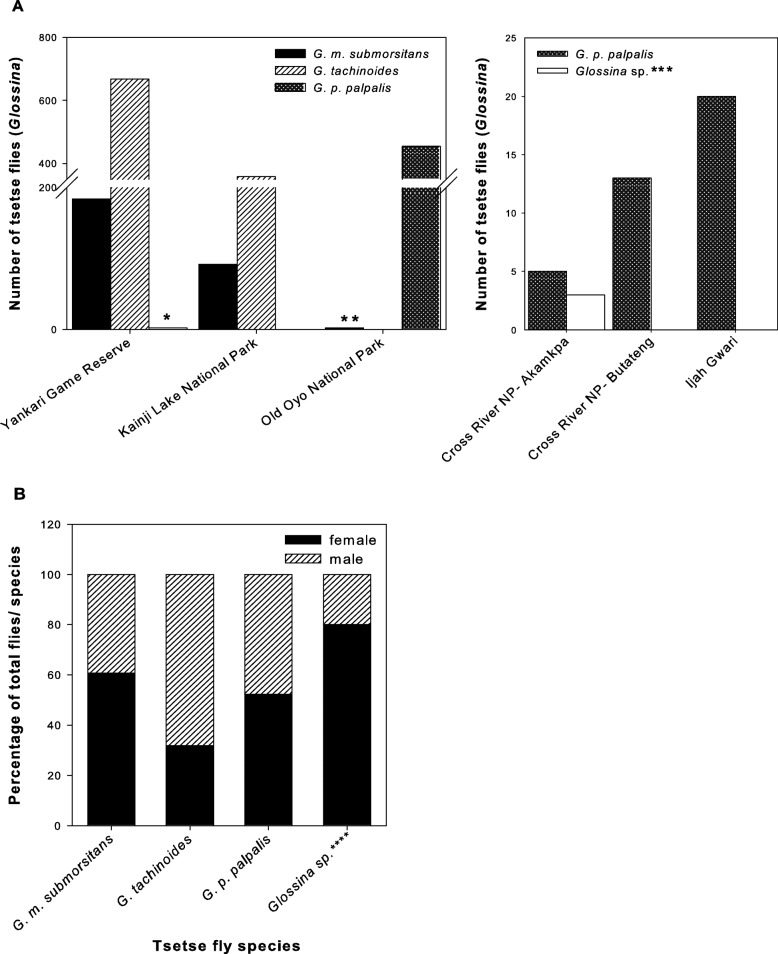
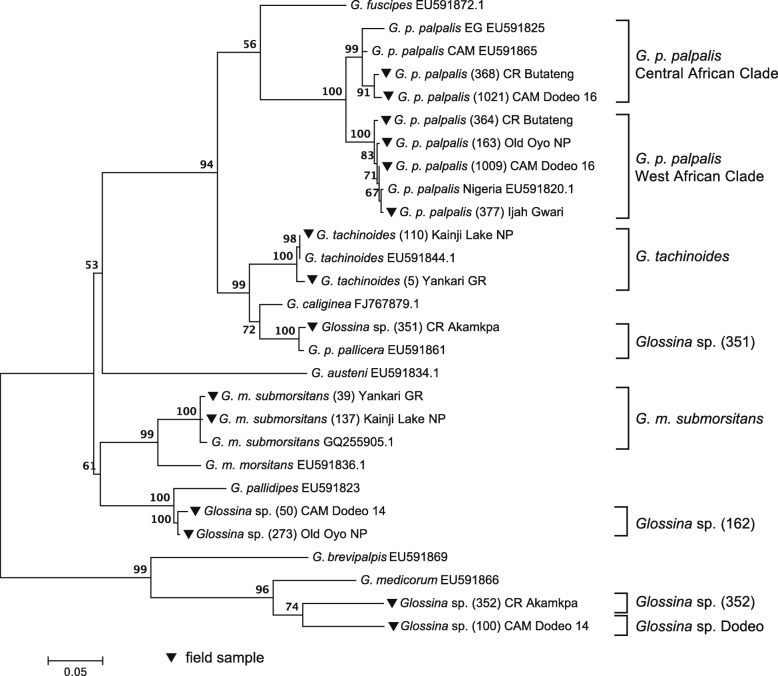
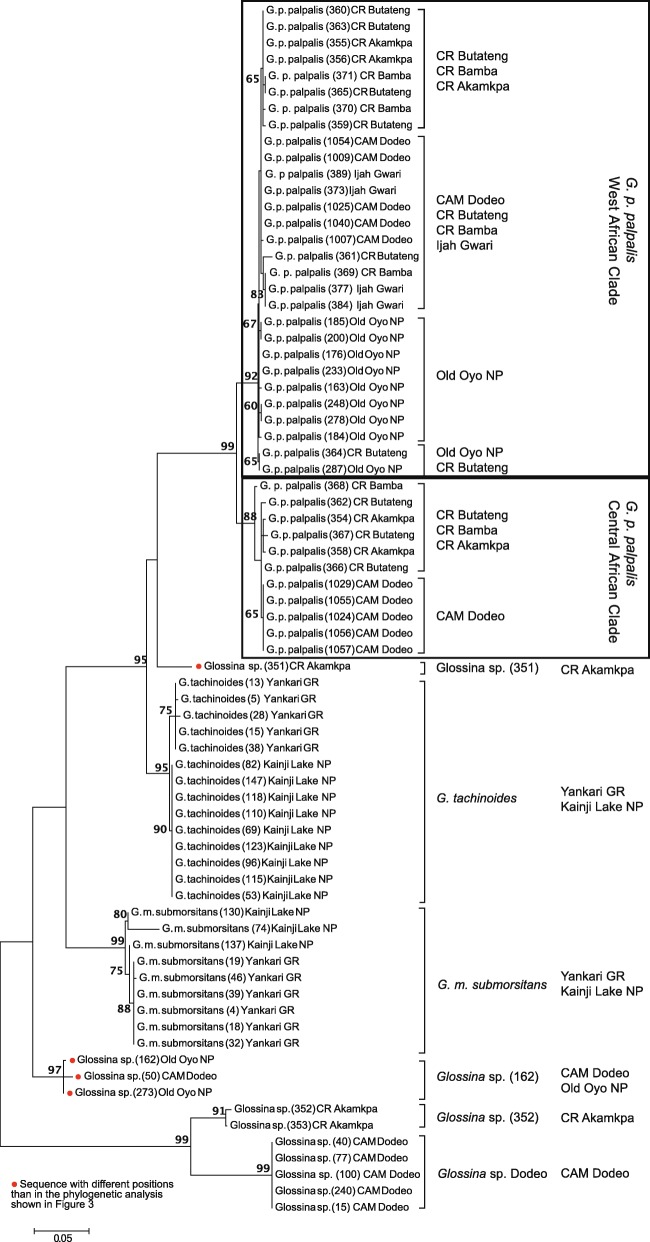
To achieve an overview of the tsetse fly diversity in Nigeria and at the Nigeria-Cameroon border, tsetse flies were trapped and collected between February and March 2014 and December 2016. Species diversity was determined morphologically and by analysis of Cytochrome C Oxidase SU1 (COI) gene sequences. Internal transcribed spacer-1 (ITS-1) sequences were compared to analyse variations within populations. The most dominant species were G. m. submorsitans, G. tachinoides and G. p. palpalis. In Yankari Game Reserve and Kainji Lake National Park, G. submorsitans and G. tachinoides were most frequent, whereas in Old Oyo National Park and Ijah Gwari G. p. palpalis was the dominant species. Interestingly, four unidentified species were recorded during the survey, for which no information on COI or ITS-1 sequences exists. G. p. palpalis populations showed a segregation in two clusters along the Cameroon-Nigerian border.
The improved understanding of the tsetse populations in Nigeria will support decisions on the scale in which vector control is likely to be more effective. In order to understand in more detail how isolated these populations are, it is recommended that further studies on gene flow be carried out using other markers, including microsatellites.
采采蝇是锥虫的传播媒介,这些寄生虫会给人类和家畜带来毁灭性的疾病。在进行病媒控制计划时,有必要了解研究区域内存在的采采蝇种类、种群动态以及采采蝇种群之间的基因交流。
为了全面了解尼日利亚和尼日利亚-喀麦隆边境的采采蝇多样性,我们于 2014 年 2 月至 3 月和 2016 年 12 月期间捕获和收集了采采蝇。通过形态学和细胞色素 C 氧化酶 SU1(COI)基因序列分析来确定物种多样性。通过比较内部转录间隔区-1(ITS-1)序列来分析种群内的变异。最主要的物种是 G. m. submorsitans、G. tachinoides 和 G. p. palpalis。在扬卡里野生动物园和卡因吉湖国家公园,G. submorsitans 和 G. tachinoides 最为常见,而在老奥约国家公园和Ijah Gwari,G. p. palpalis 则是主要物种。有趣的是,在调查期间还记录了四种未识别的物种,对于这些物种,我们没有 COI 或 ITS-1 序列的信息。G. p. palpalis 种群在喀麦隆-尼日利亚边境沿线分为两个聚类。
对尼日利亚采采蝇种群的深入了解将支持有关病媒控制规模的决策,因为这可能会提高控制效果。为了更详细地了解这些种群的隔离程度,建议使用其他标记物(包括微卫星)进一步开展关于基因流动的研究。