Proietto Marco, Bianchi Michele Maria, Ballario Paola, Brenna Andrea
Department of Biology and Biotechnologies "Charles Darwin", Sapienza-University of Rome, Piazzale Aldo Moro 5, Rome 00185, Italy.
Pasteur Institute, Cenci Bolognetti Foundation and Department of Biology and Biotechnology "Charles Darwin", Sapienza-University of Rome, Piazzale Aldo Moro 5, Rome 00185, Italy.
Int J Mol Sci. 2015 Jul 7;16(7):15347-83. doi: 10.3390/ijms160715347.
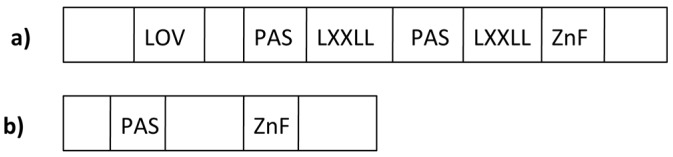
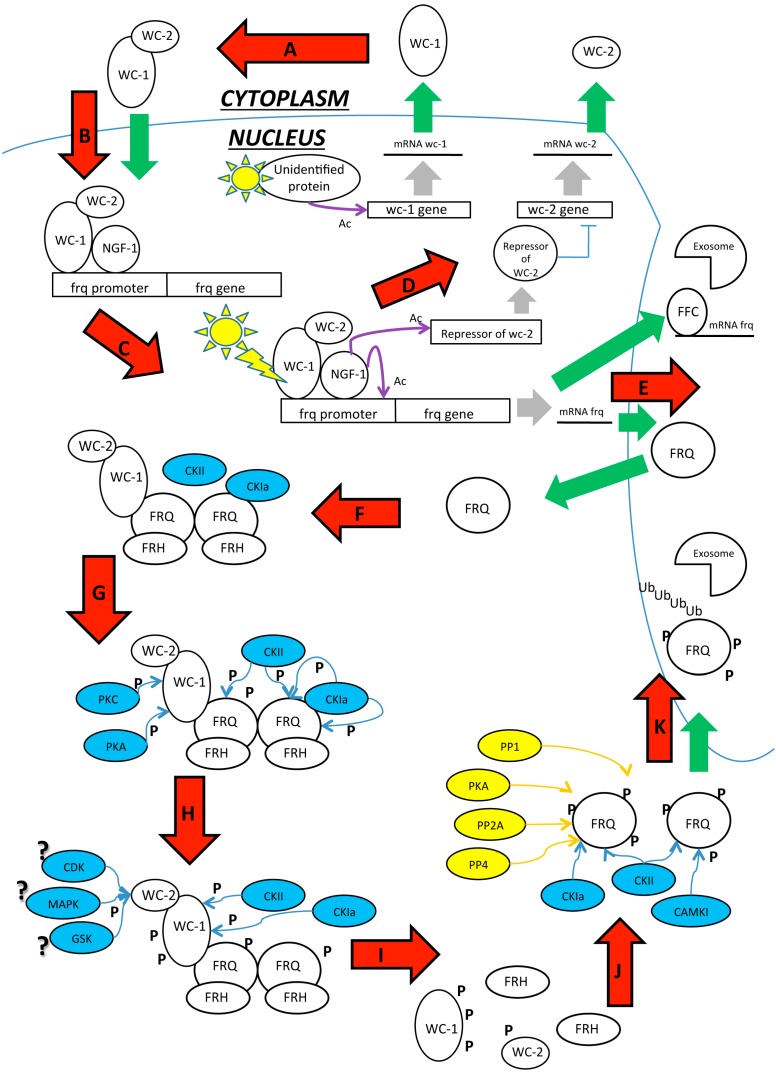
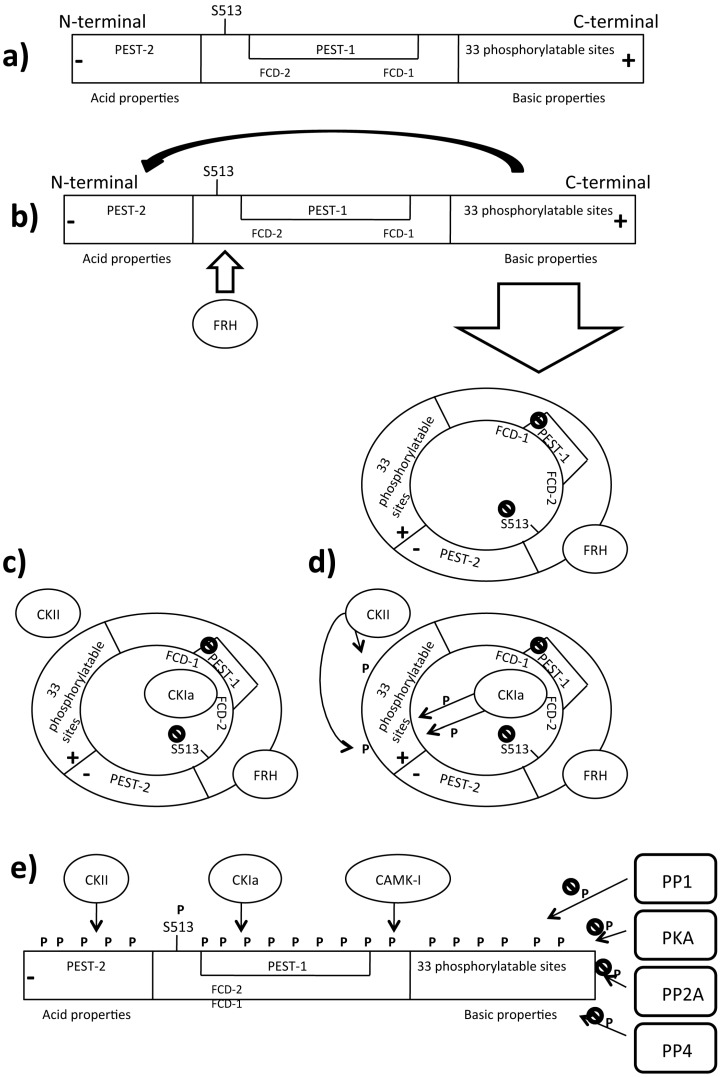
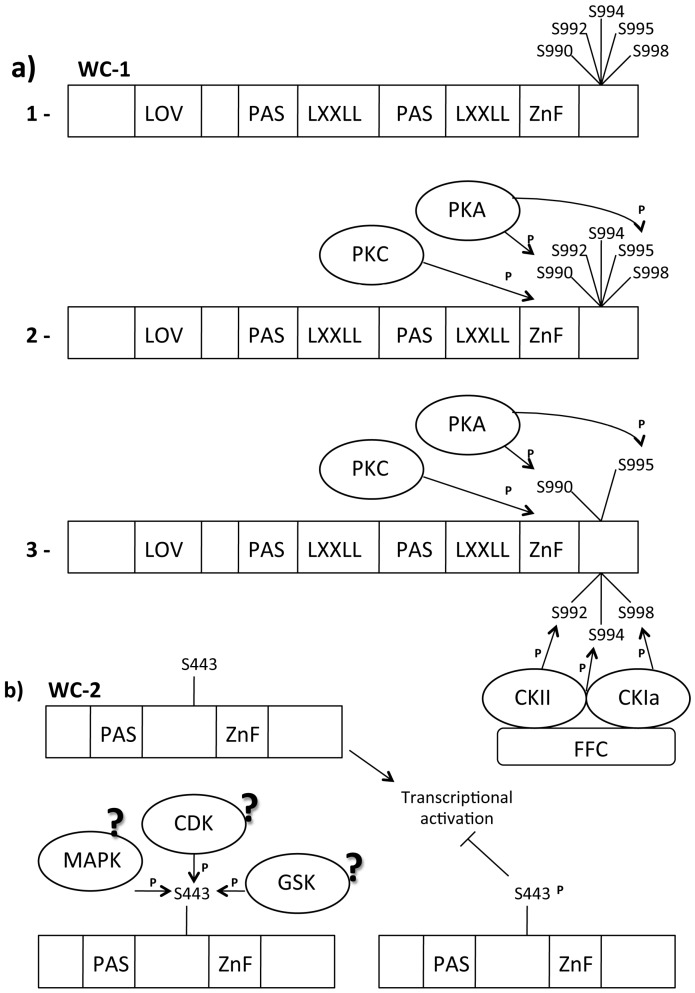
Blue light, a key abiotic signal, regulates a wide variety of physiological processes in many organisms. One of these phenomena is the circadian rhythm presents in organisms sensitive to the phase-setting effects of blue light and under control of the daily alternation of light and dark. Circadian clocks consist of autoregulatory alternating negative and positive feedback loops intimately connected with the cellular metabolism and biochemical processes. Neurospora crassa provides an excellent model for studying the molecular mechanisms involved in these phenomena. The White Collar Complex (WCC), a blue-light receptor and transcription factor of the circadian oscillator, and Frequency (FRQ), the circadian clock pacemaker, are at the core of the Neurospora circadian system. The eukaryotic circadian clock relies on transcriptional/translational feedback loops: some proteins rhythmically repress their own synthesis by inhibiting the activity of their transcriptional factors, generating self-sustained oscillations over a period of about 24 h. One of the basic mechanisms that perpetuate self-sustained oscillations is post translation modification (PTM). The acronym PTM generically indicates the addition of acetyl, methyl, sumoyl, or phosphoric groups to various types of proteins. The protein can be regulatory or enzymatic or a component of the chromatin. PTMs influence protein stability, interaction, localization, activity, and chromatin packaging. Chromatin modification and PTMs have been implicated in regulating circadian clock function in Neurospora. Research into the epigenetic control of transcription factors such as WCC has yielded new insights into the temporal modulation of light-dependent gene transcription. Here we report on epigenetic and protein PTMs in the regulation of the Neurospora crassa circadian clock. We also present a model that illustrates the molecular mechanisms at the basis of the blue light control of the circadian clock.
蓝光是一种关键的非生物信号,可调节许多生物体中的多种生理过程。其中一种现象是,生物体中的昼夜节律受蓝光的相位设定效应影响,并在昼夜交替的控制下呈现出来。生物钟由与细胞代谢和生化过程紧密相连的正负反馈自动调节回路组成。粗糙脉孢菌为研究这些现象背后的分子机制提供了一个极佳的模型。昼夜节律振荡器的蓝光受体和转录因子白领复合体(WCC)以及生物钟起搏器频率蛋白(FRQ)是粗糙脉孢菌昼夜节律系统的核心。真核生物钟依赖于转录/翻译反馈回路:一些蛋白质通过抑制其转录因子的活性,有节奏地抑制自身的合成,从而在大约24小时的周期内产生自持振荡。维持自持振荡的基本机制之一是翻译后修饰(PTM)。PTM这个首字母缩略词一般表示向各种类型的蛋白质添加乙酰基、甲基、SUMO基或磷酸基团。该蛋白质可以是调节性的、酶性的或染色质的组成部分。PTM会影响蛋白质的稳定性、相互作用、定位、活性和染色质包装。染色质修饰和PTM已被证明与调节粗糙脉孢菌的生物钟功能有关。对诸如WCC等转录因子的表观遗传控制的研究,为光依赖性基因转录的时间调控带来了新的见解。在此,我们报告了粗糙脉孢菌生物钟调节中的表观遗传学和蛋白质PTM。我们还提出了一个模型,阐明了蓝光控制生物钟的分子机制。