Hernández-Pando Rogelio, Barrios-Payán Jorge, Mata-Espinosa Dulce, Marquina-Castillo Brenda, Hernández-Ramírez Diego, Bottasso Oscar Adelmo, Bini Estela Isabel
Experimental Pathology Section, Department of Pathology, National Institute of Medical Sciences and Nutrition "Salvador Zubirán", México City, 14000, México.
Immunology Department, National Institute of Medical Sciences and Nutrition "Salvador Zubirán", México City, 14000, México.
PLoS One. 2015 Jul 22;10(7):e0133200. doi: 10.1371/journal.pone.0133200. eCollection 2015.
The high mobility group box 1 (HMGB1) is the prototype of alarmin protein released by stressed or dying cells. The redox state of this protein confers different functions in the regulation of inflammation and immune response.
Determine the kinetics, cellular sources and function of HMGB1 in experimental tuberculosis.
BALB/c mice were infected with Mycobacterium tuberculosis strain H37Rv. At different time points, HMGB1 was quantified in bronchial lavage fluid (BALF) and in lungs was determined its cellular sources by immunohistochemistry. HMGB1 was blocked with specific antibodies or recombinant HMGB1 was administered during early or late infection. Bacilli burdens, inflammation and cytokines expression were determined.
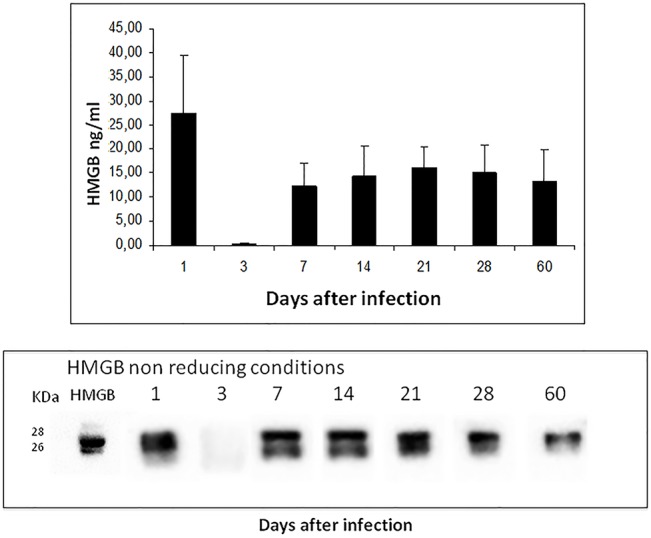
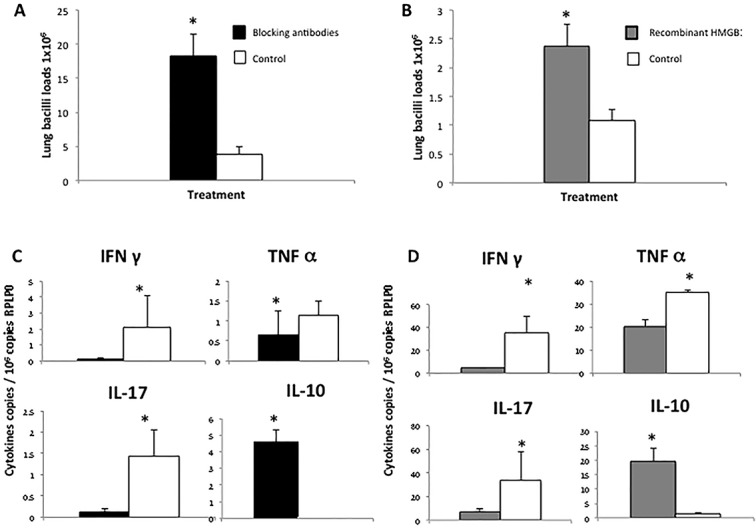
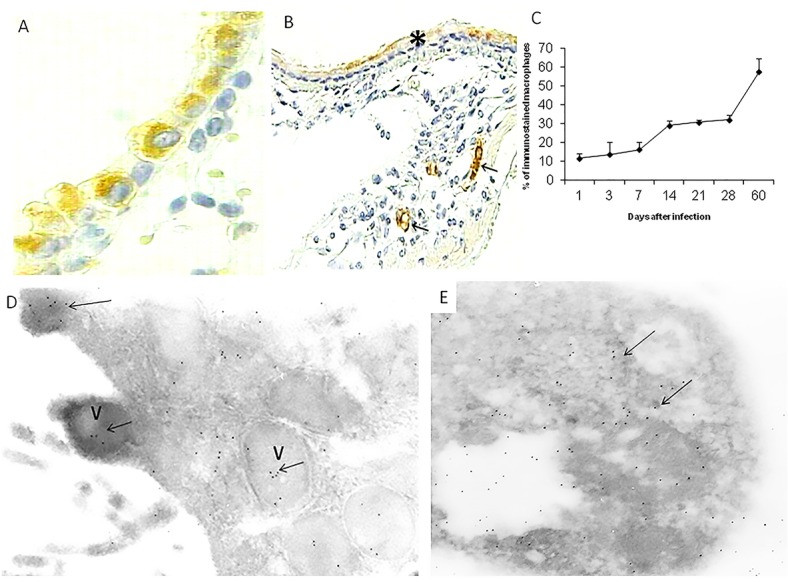
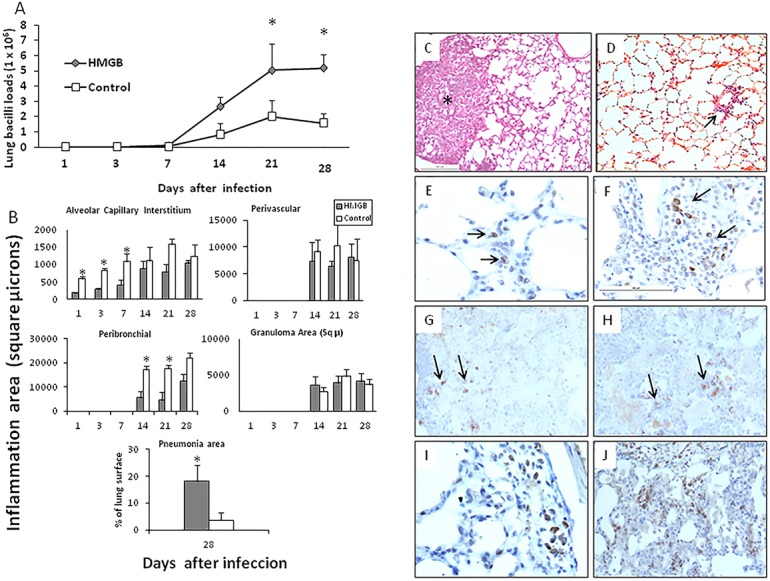
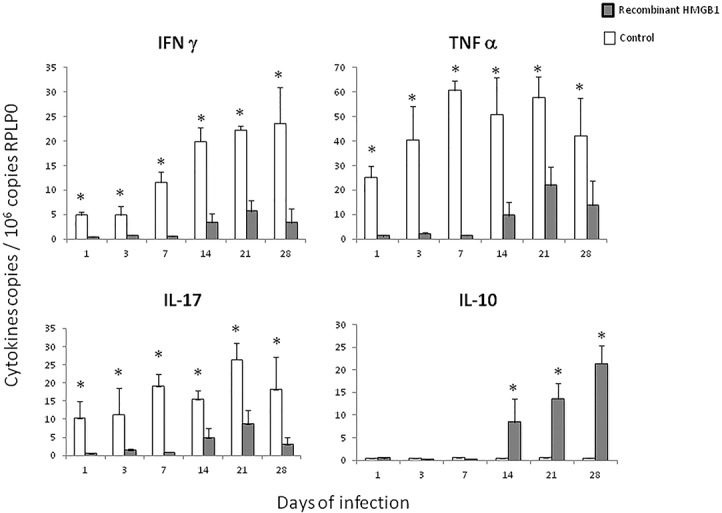
The maximal concentration of HMGB1 in BALF was at day one of infection. Bronchial epithelium and macrophages were the most important sources. At day 7 to 21 the oxidized HMGB1 was predominant, while during late infection only the reduced form was seen. Blocking HMGB1 during early infection produced significant decrease of bacilli burdens and high production of pro-inflammatory cytokines, while the opposite was seen when HMGB1 was administered. Blocking HMGB1 activity or administrated it in high amounts during late infection worsening the disease.
HMGB1 is liberated during experimental tuberculosis and promotes or suppress the immune response and inflammation depending on the redox state.
高迁移率族蛋白B1(HMGB1)是应激或濒死细胞释放的警报素蛋白的原型。该蛋白的氧化还原状态在炎症和免疫反应调节中赋予不同功能。
确定实验性结核病中HMGB1的动力学、细胞来源及功能。
用结核分枝杆菌H37Rv菌株感染BALB/c小鼠。在不同时间点,对支气管肺泡灌洗液(BALF)中的HMGB1进行定量,并通过免疫组织化学确定肺中其细胞来源。在感染早期或晚期用特异性抗体阻断HMGB1或给予重组HMGB1。测定细菌载量、炎症和细胞因子表达。
BALF中HMGB1的最大浓度在感染第1天。支气管上皮细胞和巨噬细胞是最重要的来源。在第7至21天,氧化型HMGB1占主导,而在感染后期仅可见还原型。在感染早期阻断HMGB1可使细菌载量显著降低,并产生大量促炎细胞因子,而给予HMGB1时则出现相反情况。在感染后期阻断HMGB1活性或大量给予HMGB1会使病情恶化。
在实验性结核病期间HMGB1被释放,并且根据氧化还原状态促进或抑制免疫反应和炎症。