
细菌和古菌模式菌株基因组百科全书,第三阶段:土壤和植物相关及新描述模式菌株的基因组
Genomic Encyclopedia of Bacterial and Archaeal Type Strains, Phase III: the genomes of soil and plant-associated and newly described type strains.
作者信息
Whitman William B, Woyke Tanja, Klenk Hans-Peter, Zhou Yuguang, Lilburn Timothy G, Beck Brian J, De Vos Paul, Vandamme Peter, Eisen Jonathan A, Garrity George, Hugenholtz Philip, Kyrpides Nikos C
机构信息
Department of Microbiology, University of Georgia, Athens, GA, Greece.
DOE Joint Genome Institute, Walnut Creek, CA, USA.
出版信息
Stand Genomic Sci. 2015 May 17;10:26. doi: 10.1186/s40793-015-0017-x. eCollection 2015.
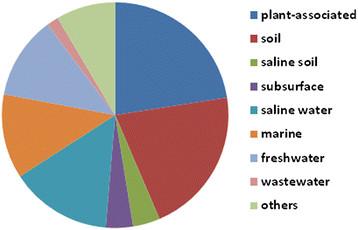
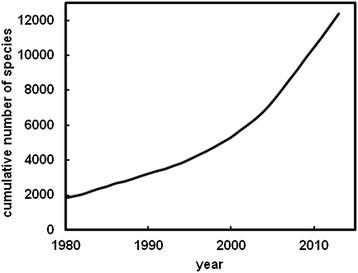
The Genomic Encyclopedia of Bacteria and Archaea (GEBA) project was launched by the JGI in 2007 as a pilot project to sequence about 250 bacterial and archaeal genomes of elevated phylogenetic diversity. Herein, we propose to extend this approach to type strains of prokaryotes associated with soil or plants and their close relatives as well as type strains from newly described species. Understanding the microbiology of soil and plants is critical to many DOE mission areas, such as biofuel production from biomass, biogeochemistry, and carbon cycling. We are also targeting type strains of novel species while they are being described. Since 2006, about 630 new species have been described per year, many of which are closely aligned to DOE areas of interest in soil, agriculture, degradation of pollutants, biofuel production, biogeochemical transformation, and biodiversity.
细菌和古菌基因组百科全书(GEBA)项目由美国能源部联合基因组研究所(JGI)于2007年启动,作为一个试点项目,对约250个具有较高系统发育多样性的细菌和古菌基因组进行测序。在此,我们建议将这种方法扩展到与土壤或植物相关的原核生物模式菌株及其近缘种,以及新描述物种的模式菌株。了解土壤和植物的微生物学对于美国能源部的许多任务领域至关重要,例如从生物质生产生物燃料、生物地球化学和碳循环。我们还将目标对准正在被描述的新物种的模式菌株。自2006年以来,每年大约有630个新物种被描述,其中许多与美国能源部在土壤、农业、污染物降解、生物燃料生产、生物地球化学转化和生物多样性等感兴趣的领域密切相关。

 Zotero 插件