Mehmood Shahid, Rehman Malik A, Ismail Hammad, Mirza Bushra, Bhatti Arshad S
Center for Micro and Nano Devices, Department of Physics, COMSATS Institute of Information Technology, Quaid-i-Azam University, Islamabad, Pakistan.
Department of Biochemistry, Faculty of Biological Sciences, Quaid-i-Azam University, Islamabad, Pakistan.
Int J Nanomedicine. 2015 Jul 16;10:4521-33. doi: 10.2147/IJN.S83356. eCollection 2015.
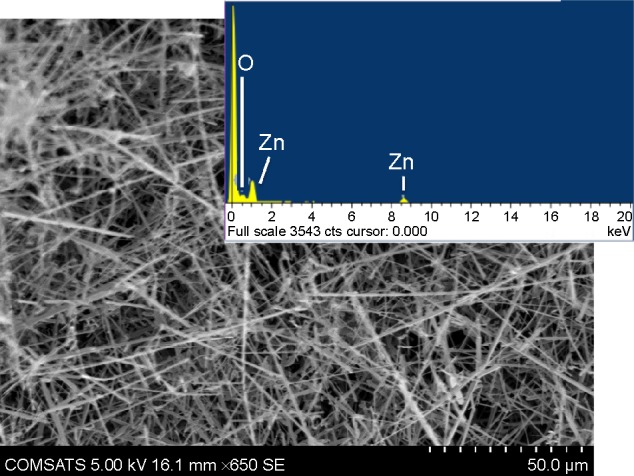
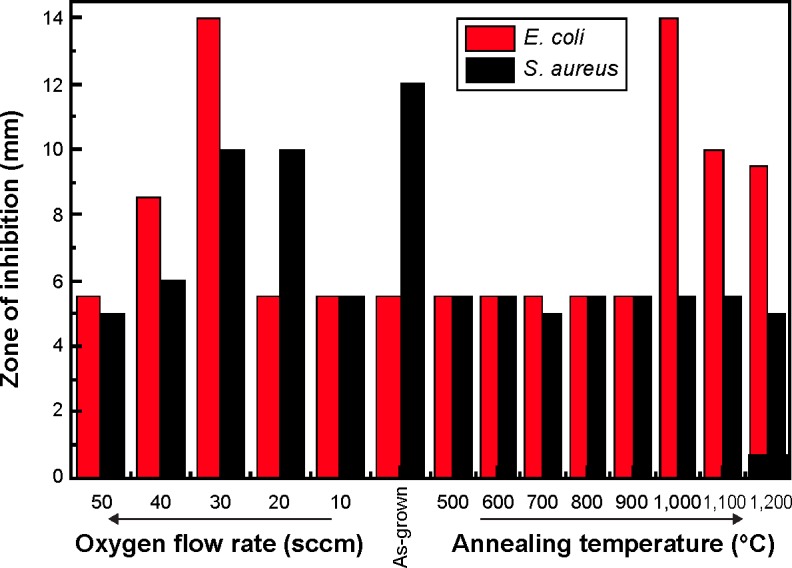
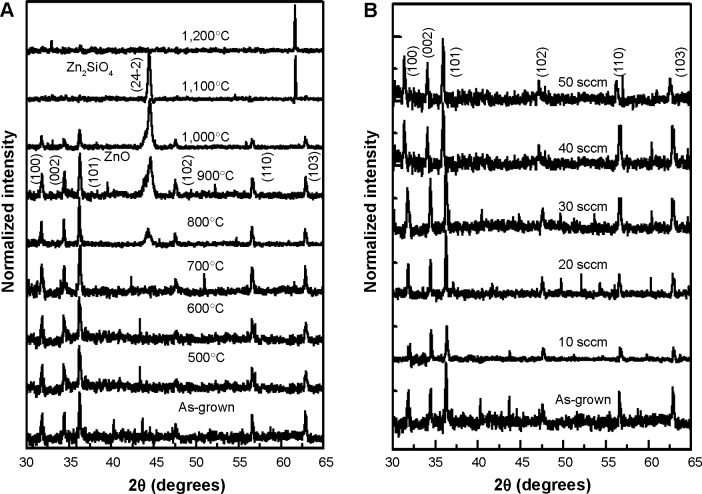
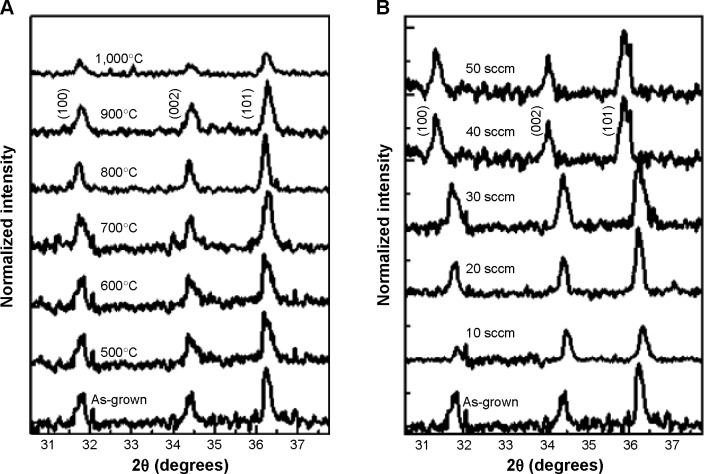
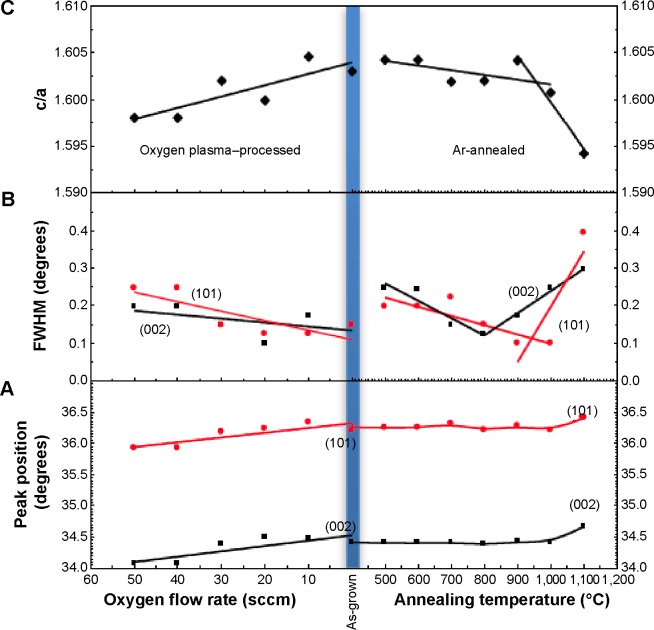
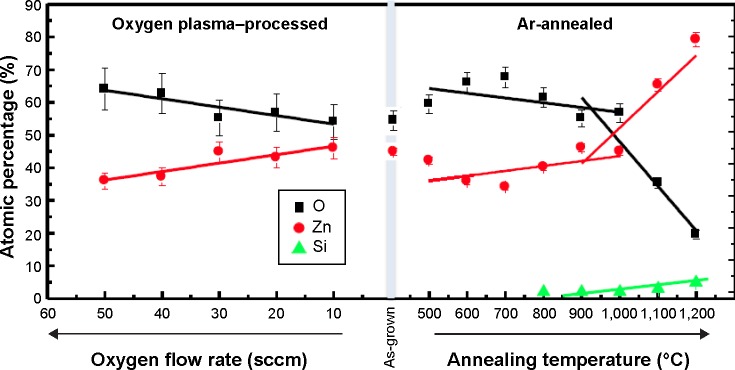
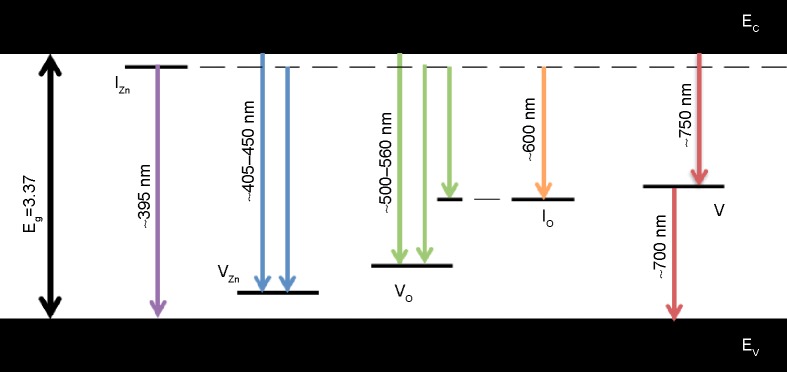
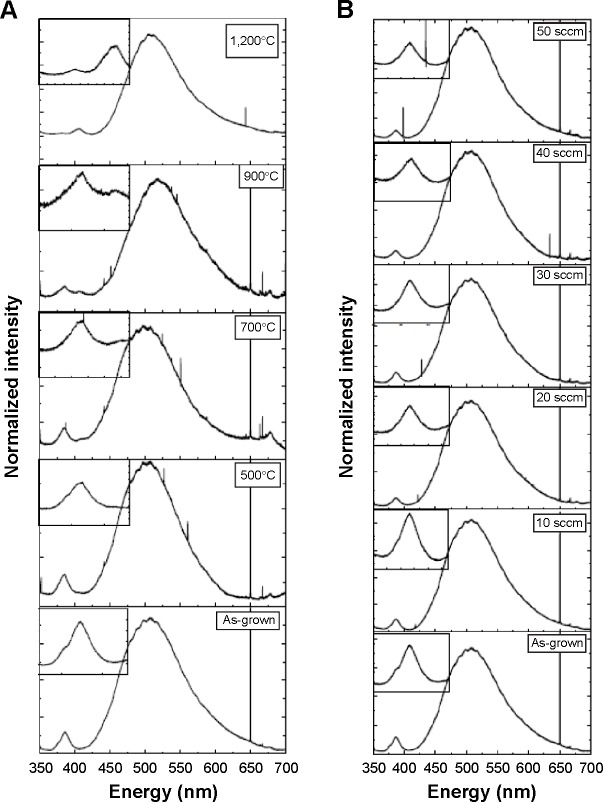
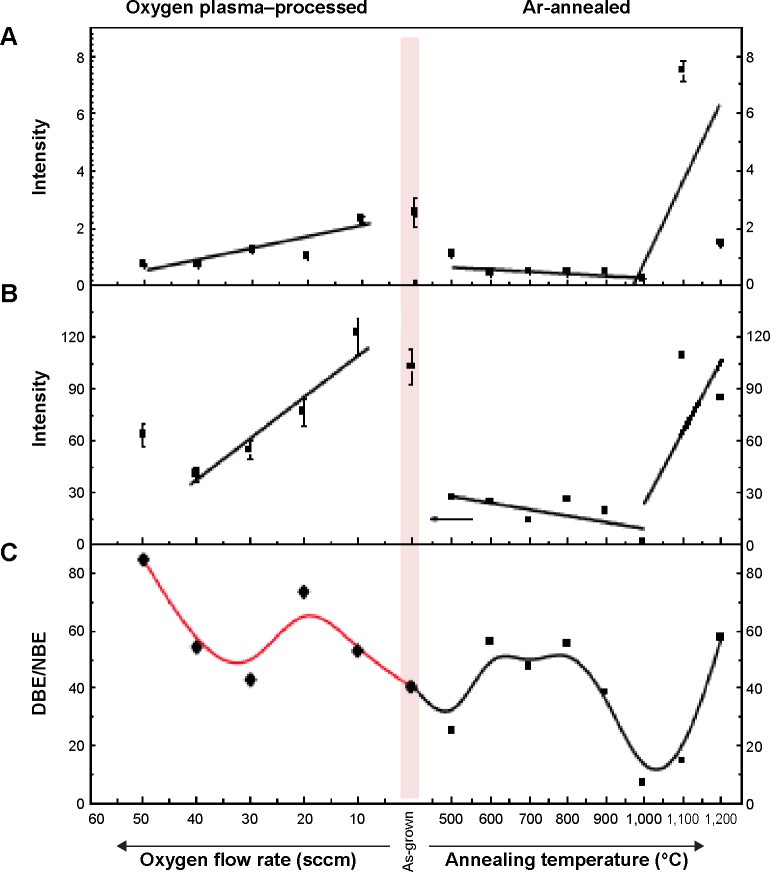
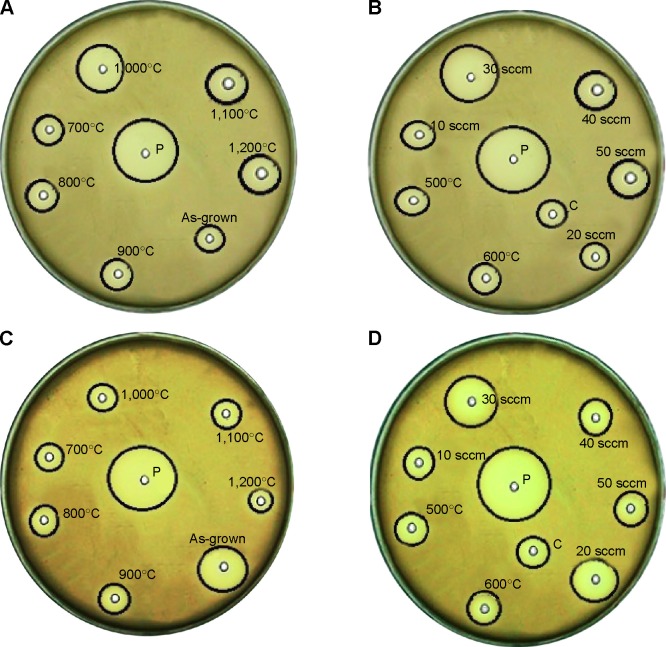
In this work, we highlighted the effect of surface modifications of one-dimensional (1D) ZnO nanostructures (NSs) grown by the vapor-solid mechanism on their antibacterial activity. Two sets of ZnO NSs were modified separately - one set was modified by annealing in an Ar environment, and the second set was modified in O2 plasma. Annealing in Ar below 800°C resulted in a compressed lattice, which was due to removal of Zn interstitials and increased O vacancies. Annealing above 1,000°C caused the formation of a new prominent phase, Zn2SiO4. Plasma oxidation of the ZnO NSs caused an expansion in the lattice due to the removal of O vacancies and incorporation of excess O. Photoluminescence (PL) spectroscopy was employed for the quantification of defects associated with Zn and O in the as-grown and processed ZnO NS. Two distinct bands were observed, one in the ultraviolet (UV) region, due to interband transitions, and other in the visible region, due to defects associated with Zn and O. PL confirmed the surface modification of ZnO NS, as substantial decrease in intensities of visible band was observed. Antibacterial activity of the modified ZnO NSs demonstrated that the surface modifications by Ar annealing limited the antibacterial characteristics of ZnO NS against Staphylococcus aureus. However, ZnO NSs annealed at 1,000°C or higher showed a remarkable antibacterial activity against Escherichia coli. O2 plasma-treated NS showed appreciable antibacterial activity against both E. coli and S. aureus. The minimum inhibition concentration was determined to be 0.5 mg/mL and 1 mg/mL for Ar-annealed and plasma-oxidized ZnO NS, respectively. It was thus proved that the O content at the surface of the ZnO NS was crucial to tune the antibacterial activity against both selected gram-negative (E. coli) and gram-positive (S. aureus) bacterial species.
在这项工作中,我们着重研究了通过气-固机制生长的一维(1D)氧化锌纳米结构(NSs)的表面改性对其抗菌活性的影响。两组氧化锌纳米结构分别进行了改性——一组在氩气环境中退火改性,另一组在氧气等离子体中改性。在800°C以下的氩气中退火会导致晶格压缩,这是由于锌间隙的去除和氧空位的增加。在1000°C以上退火会导致形成一个新的显著相,即硅酸锌(Zn2SiO4)。氧化锌纳米结构的等离子体氧化由于氧空位的去除和过量氧的掺入导致晶格膨胀。光致发光(PL)光谱用于量化生长态和处理后的氧化锌纳米结构中与锌和氧相关的缺陷。观察到两个不同的波段,一个在紫外(UV)区域,由于带间跃迁,另一个在可见光区域,由于与锌和氧相关的缺陷。PL证实了氧化锌纳米结构的表面改性,因为观察到可见光波段的强度大幅降低。改性氧化锌纳米结构的抗菌活性表明,氩气退火的表面改性限制了氧化锌纳米结构对金黄色葡萄球菌的抗菌特性。然而,在1000°C或更高温度下退火的氧化锌纳米结构对大肠杆菌显示出显著的抗菌活性。氧气等离子体处理的纳米结构对大肠杆菌和金黄色葡萄球菌均显示出可观的抗菌活性。氩气退火和等离子体氧化的氧化锌纳米结构的最低抑菌浓度分别确定为0.5毫克/毫升和1毫克/毫升。因此证明,氧化锌纳米结构表面的氧含量对于调节对所选革兰氏阴性(大肠杆菌)和革兰氏阳性(金黄色葡萄球菌)细菌种类的抗菌活性至关重要。