Huhn Sebastian, Kharabian Masouleh Shahrzad, Stumvoll Michael, Villringer Arno, Witte A Veronica
Department of Neurology, Max Planck Institute for Human Cognitive and Brain Sciences Leipzig, Germany.
Collaborative Research Centre 1052 'Obesity Mechanisms', Subproject A1, Faculty of Medicine, University of Leipzig Leipzig, Germany ; IFB Adiposity Diseases, University of Leipzig Leipzig, Germany.
Front Aging Neurosci. 2015 Jul 8;7:132. doi: 10.3389/fnagi.2015.00132. eCollection 2015.
Adhering to the Mediterranean diet (MeDi) is known to be beneficial with regard to many age-associated diseases including cardiovascular diseases and type 2 diabetes. Recent studies also suggest an impact on cognition and brain structure, and increasing effort is made to track effects down to single nutrients.
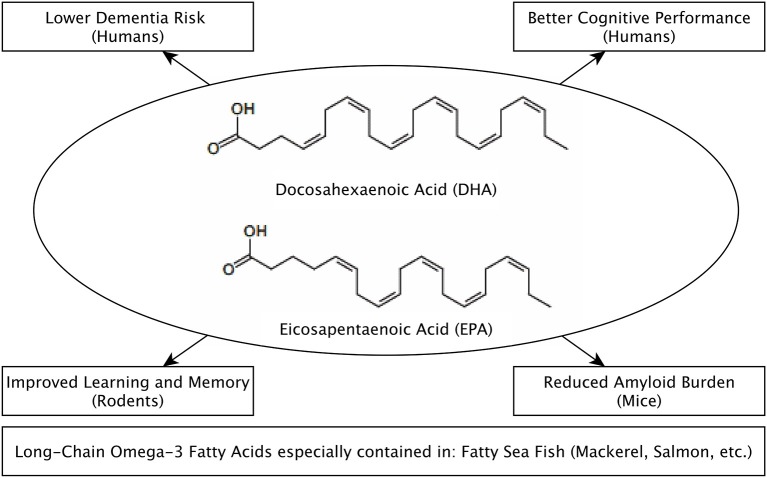
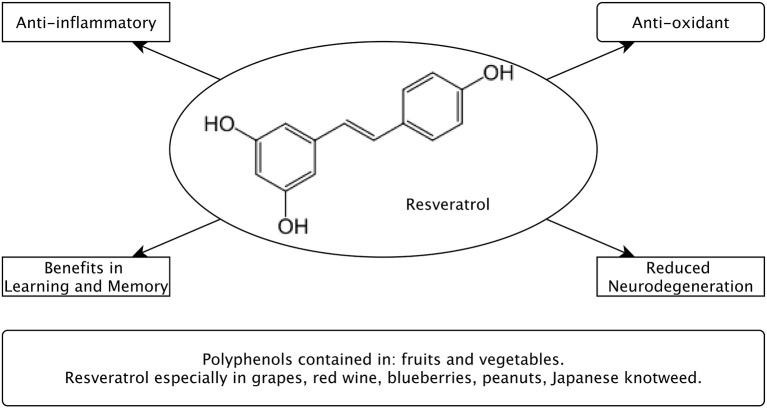
We aimed to review whether two MeDi components, i.e., long-chain omega-3 fatty acids (LC-n3-FA) derived from sea-fish, and plant polyphenols including resveratrol (RSV), exert positive effects on brain health in aging.
We summarized health benefits associated with the MeDi and evaluated available studies on the effect of (1) fish-consumption and LC-n3-FA supplementation as well as (2) diet-derived or supplementary polyphenols such as RSV, on cognitive performance and brain structure in animal models and human studies. Also, we discussed possible underlying mechanisms.
A majority of available studies suggest that consumption of LC-n3-FA with fish or fishoil-supplements exerts positive effects on brain health and cognition in older humans. However, more large-scale randomized controlled trials are needed to draw definite recommendations. Considering polyphenols and RSV, only few controlled studies are available to date, yet the evidence based on animal research and first interventional human trials is promising and warrants further investigation. In addition, the concept of food synergy within the MeDi encourages future trials that evaluate the impact of comprehensive lifestyle patterns to help maintaining cognitive functions into old age.
众所周知,坚持地中海饮食(MeDi)对包括心血管疾病和2型糖尿病在内的许多与年龄相关的疾病有益。最近的研究还表明其对认知和脑结构有影响,并且人们越来越努力地将其影响追溯到单一营养素。
我们旨在综述MeDi的两个组成部分,即海鱼中提取的长链ω-3脂肪酸(LC-n3-FA)和包括白藜芦醇(RSV)在内的植物多酚,是否对衰老过程中的脑健康产生积极影响。
我们总结了与MeDi相关的健康益处,并评估了现有研究,这些研究涉及(1)鱼类消费和LC-n3-FA补充剂以及(2)饮食来源或补充的多酚(如RSV)对动物模型和人体研究中的认知表现和脑结构的影响。此外,我们还讨论了可能的潜在机制。
大多数现有研究表明,食用含LC-n3-FA的鱼类或鱼油补充剂对老年人的脑健康和认知有积极影响。然而,需要更多大规模的随机对照试验来得出明确的建议。关于多酚和RSV,迄今为止仅有少数对照研究,不过基于动物研究和首次人体干预试验的证据很有前景,值得进一步研究。此外,MeDi中的食物协同作用概念鼓励未来进行试验,以评估综合生活方式模式对帮助维持老年人认知功能的影响。