Benis Nirupama, Schokker Dirkjan, Suarez-Diez Maria, Martins Dos Santos Vitor A P, Smidt Hauke, Smits Mari A
Host Microbe Interactomics, Wageningen University, Wageningen, The Netherlands.
Wageningen UR Livestock Research, Wageningen University, Wageningen, The Netherlands.
BMC Genomics. 2015 Jul 29;16(1):556. doi: 10.1186/s12864-015-1733-8.
Evidence is accumulating that perturbation of early life microbial colonization of the gut induces long-lasting adverse health effects in individuals. Understanding the mechanisms behind these effects will facilitate modulation of intestinal health. The objective of this study was to identify biological processes involved in these long lasting effects and the (molecular) factors that regulate them. We used an antibiotic and the same antibiotic in combination with stress on piglets as an early life perturbation. Then we used host gene expression data from the gut (jejunum) tissue and community-scale analysis of gut microbiota from the same location of the gut, at three different time-points to gauge the reaction to the perturbation. We analysed the data by a new combination of existing tools. First, we analysed the data in two dimensions, treatment and time, with quadratic regression analysis. Then we applied network-based data integration approaches to find correlations between host gene expression and the resident microbial species.
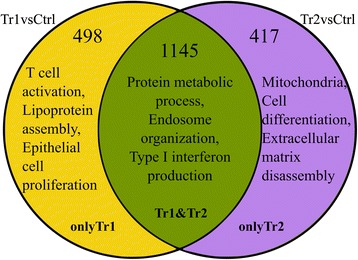
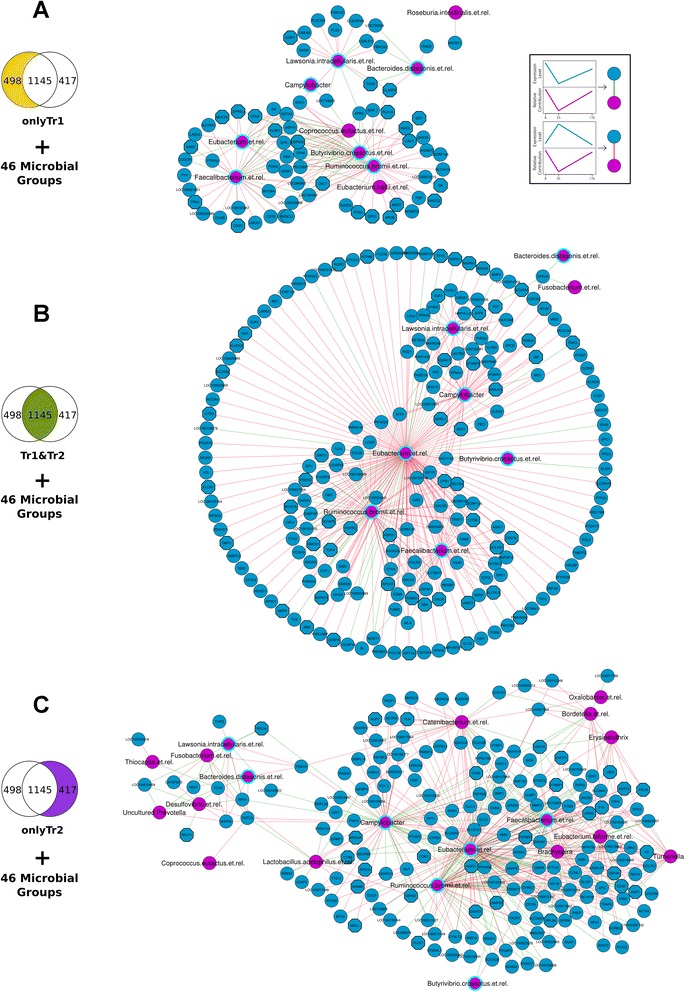
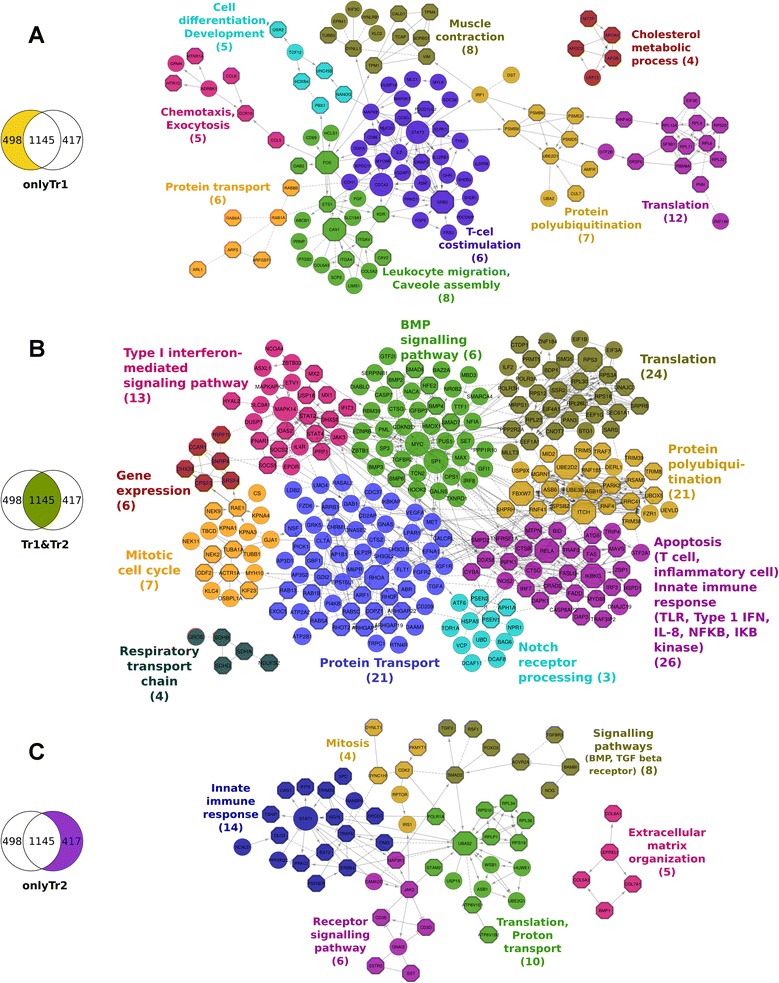
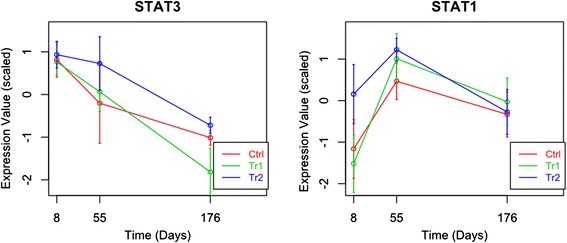
The use of a new combination of data analysis tools allowed us to identify significant long-lasting differences in jejunal gene expression patterns resulting from the early life perturbations. In addition, we were able to identify potential key gene regulators (hubs) for these long-lasting effects. Furthermore, data integration also showed that there are a handful of bacterial groups that were associated with temporal changes in gene expression.
The applied systems-biology approach allowed us to take the first steps in unravelling biological processes involved in long lasting effects in the gut due to early life perturbations. The observed data are consistent with the hypothesis that these long lasting effects are due to differences in the programming of the gut immune system as induced by the temporary early life changes in the composition and/or diversity of microbiota in the gut.
越来越多的证据表明,早期肠道微生物定植的扰动会对个体产生长期的不良健康影响。了解这些影响背后的机制将有助于调节肠道健康。本研究的目的是确定与这些长期影响相关的生物学过程以及调节这些过程的(分子)因素。我们使用抗生素以及抗生素与应激联合作用于仔猪,作为早期生活扰动。然后,我们在三个不同时间点,使用来自肠道(空肠)组织的宿主基因表达数据以及同一肠道位置的肠道微生物群的群落规模分析,来评估对扰动的反应。我们通过现有工具的新组合来分析数据。首先,我们用二次回归分析在治疗和时间两个维度上分析数据。然后,我们应用基于网络的数据整合方法来寻找宿主基因表达与常驻微生物物种之间的相关性。
使用新的数据工具组合使我们能够识别因早期生活扰动而导致的空肠基因表达模式中显著的长期差异。此外,我们能够识别出这些长期影响的潜在关键基因调节因子(枢纽)。此外,数据整合还表明,有少数细菌类群与基因表达的时间变化相关。
所应用的系统生物学方法使我们能够在揭示早期生活扰动导致肠道长期影响所涉及的生物学过程方面迈出第一步。观察到的数据与以下假设一致:这些长期影响是由于肠道微生物群组成和/或多样性的早期生活临时变化所诱导的肠道免疫系统编程差异所致。