Wageningen Bioveterinary Research, Lelystad, The Netherlands.
Wageningen Livestock Research, Wageningen, The Netherlands.
J Anim Sci. 2020 Jun 1;98(6). doi: 10.1093/jas/skaa181.
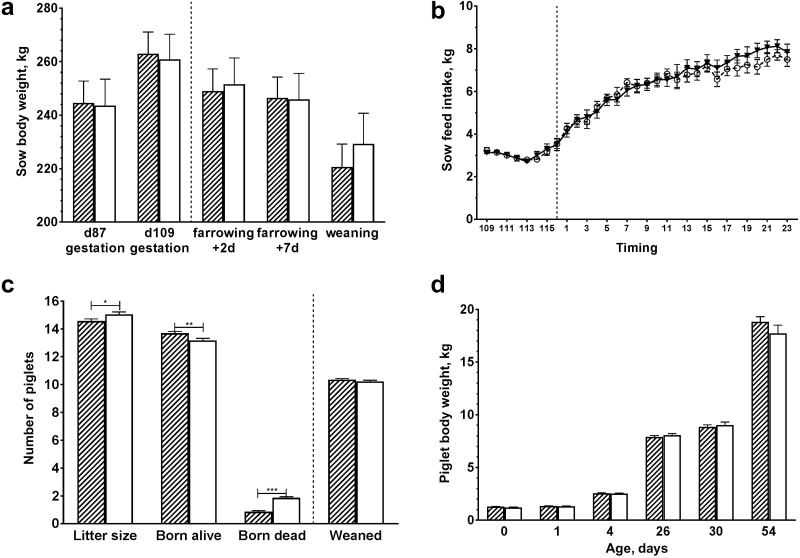
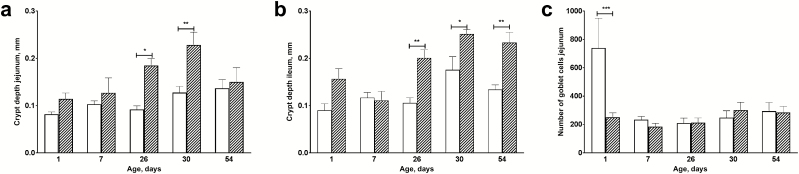
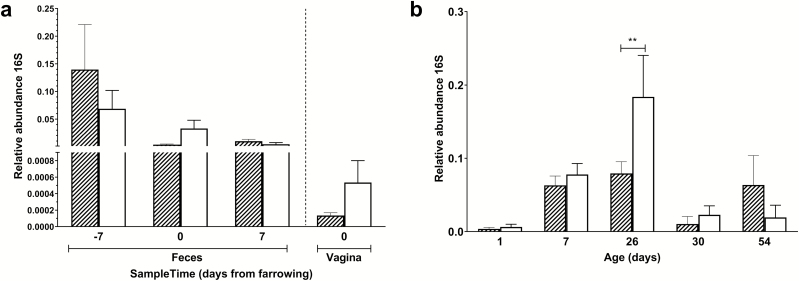
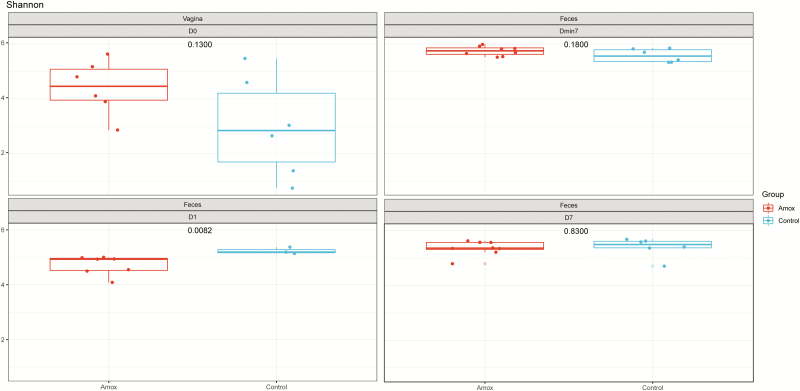
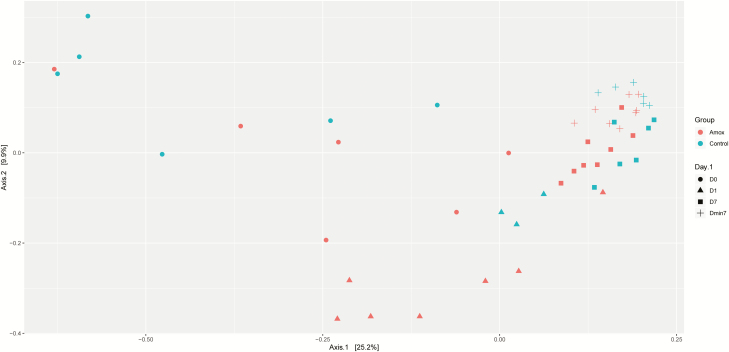
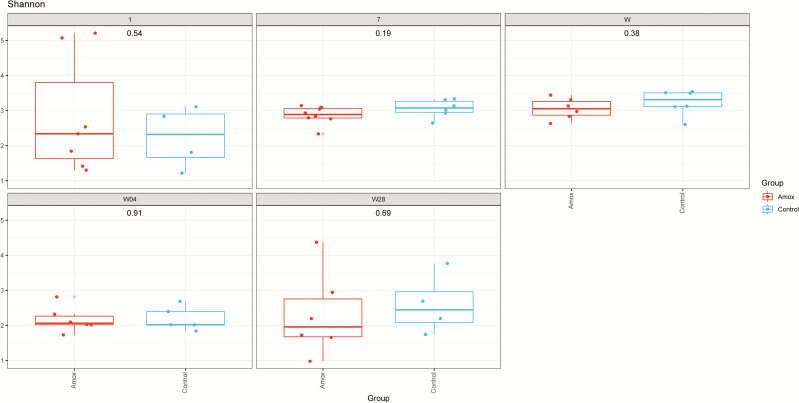
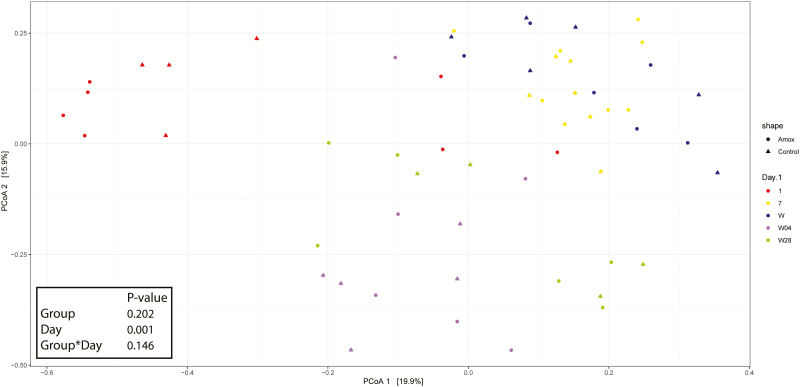
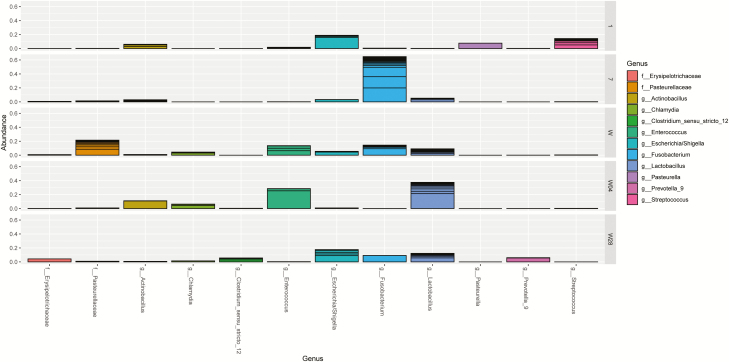
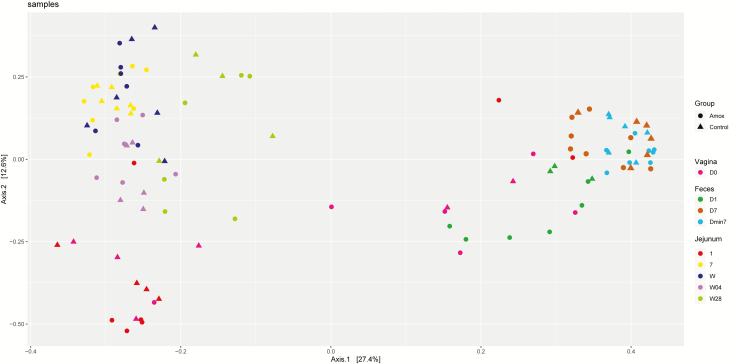
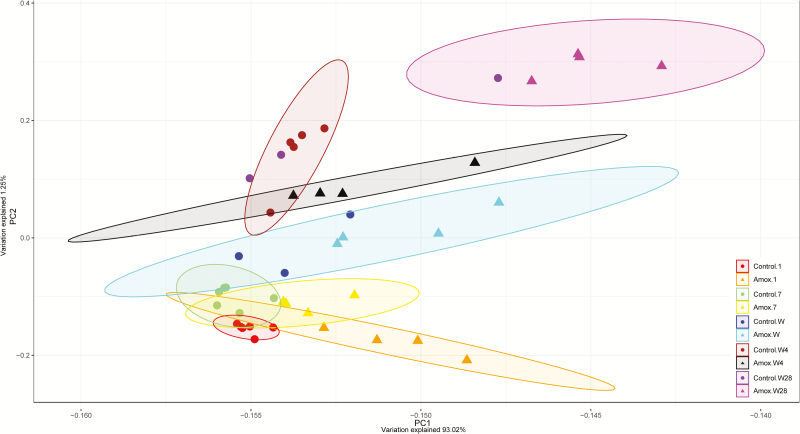
The objective of this study is to investigate the effect of a maternal antibiotic administration during the last week of gestation on the early life intestinal development in neonatal piglets. Colonization of the gut with bacteria starts during birth and plays a major role in the intestinal and immunological development of the intestine. We demonstrate that maternal interventions induced changes in the sows (n = 6 to 8 per treatment) fecal microbiota diversity around birth (P < 0.001, day 1). Whole-genome microarray analysis in small intestinal samples of 1-d old piglets (n = 6 to 8 per treatment) showed significantly expressed genes (Padj < 0.05) which were involved in processes of tight junction formation and immunoglobulin production. Furthermore, when performing morphometry analysis, the number of goblet cells in jejunum was significantly (P < 0.001) lower in piglets from amoxicillin administered sows compared with the respective control piglets. Both significantly expressed genes (Padj < 0.05) and significant morphometry data (jejunum P < 0.05 and ileum P < 0.01) indicate that the crypts of piglets from amoxicillin administered sows deepen around weaning (day 26) as an effect of the amoxicillin administration in sows. The latter might imply that the intestinal development of piglets was delayed by maternal antibiotic administration. Taken together, these results show that maternally oral antibiotic administration changes in early life can affect intestinal development of the offspring piglets for a period of at least 5 wk after the maternal antibiotic administration was finished. These results show that modulation of the neonatal intestine is possible by maternal interventions.
本研究旨在探究妊娠末期母体给予抗生素对新生仔猪早期肠道发育的影响。肠道细菌定植始于出生,并在肠道和免疫发育中发挥重要作用。我们证明,母体干预会在分娩前后(P < 0.001,第 1 天)改变母猪(每组 6-8 头)粪便微生物群的多样性。对 1 日龄仔猪(每组 6-8 头)小肠样本进行全基因组微阵列分析显示,有显著表达的基因(Padj < 0.05)参与了紧密连接形成和免疫球蛋白产生过程。此外,当进行形态计量学分析时,与相应的对照组仔猪相比,来自阿莫西林处理母猪的仔猪空肠中的杯状细胞数量明显(P < 0.001)减少。显著表达的基因(Padj < 0.05)和显著的形态计量学数据(空肠 P < 0.05 和回肠 P < 0.01)表明,阿莫西林处理母猪的仔猪的隐窝在断奶后(第 26 天)变深,这是母猪给予阿莫西林的结果。这可能意味着母猪给予抗生素会延迟仔猪的肠道发育。总之,这些结果表明,母体口服抗生素在生命早期的改变会影响后代仔猪的肠道发育,至少在母体抗生素治疗结束后 5 周内会受到影响。这些结果表明,通过母体干预可以调节新生儿的肠道。