Besnier Laura S, Cardot Philippe, Da Rocha Barbara, Simon Anthony, Loew Damarys, Klein Christophe, Riveau Béatrice, Lacasa Michel, Clair Caroline, Rousset Monique, Thenet Sophie
Sorbonne Universités, Université Pierre et Marie Curie, Université Paris 06, UMRS 1138, Centre de Recherche des Cordeliers, F-75006 Paris, France Institut National de la Santé et de la Recherche Médicale, UMRS 1138, Centre de Recherche des Cordeliers, F-75006 Paris, France Université Paris Descartes, Sorbonne Paris Cité, UMRS 1138, Centre de Recherche des Cordeliers, F-75006 Paris, France.
Institut Curie, PSL Research University, Centre de Recherche, F-75005 Paris, France Centre National de la Recherche Scientifique/UMR144, F-75005 Paris, France.
Mol Biol Cell. 2015 Sep 15;26(18):3313-28. doi: 10.1091/mbc.E14-11-1534. Epub 2015 Jul 29.
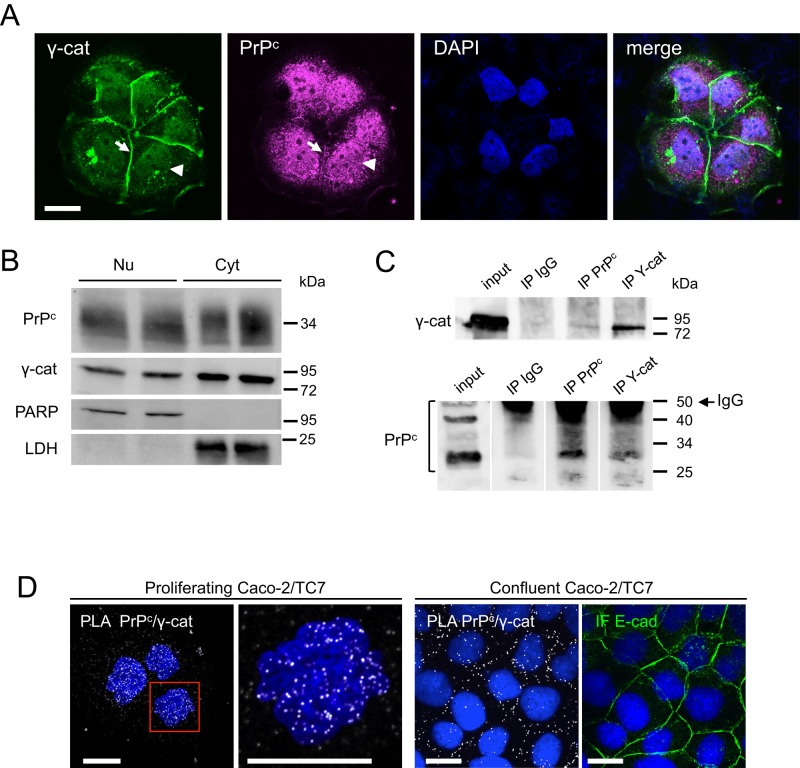
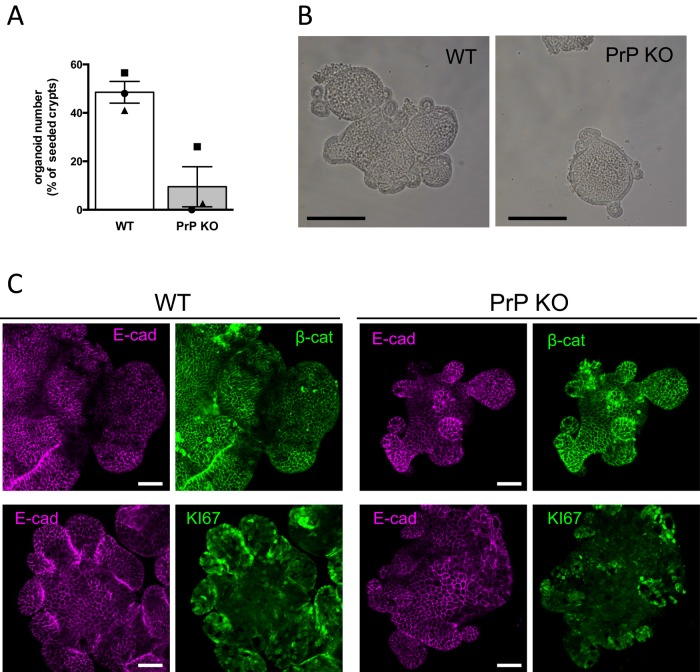
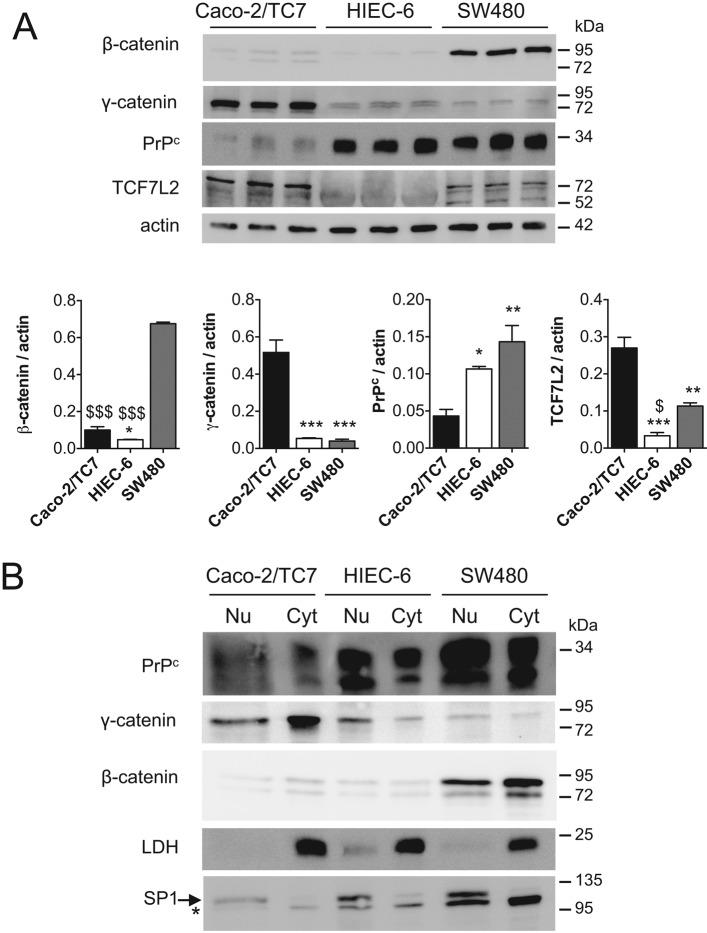
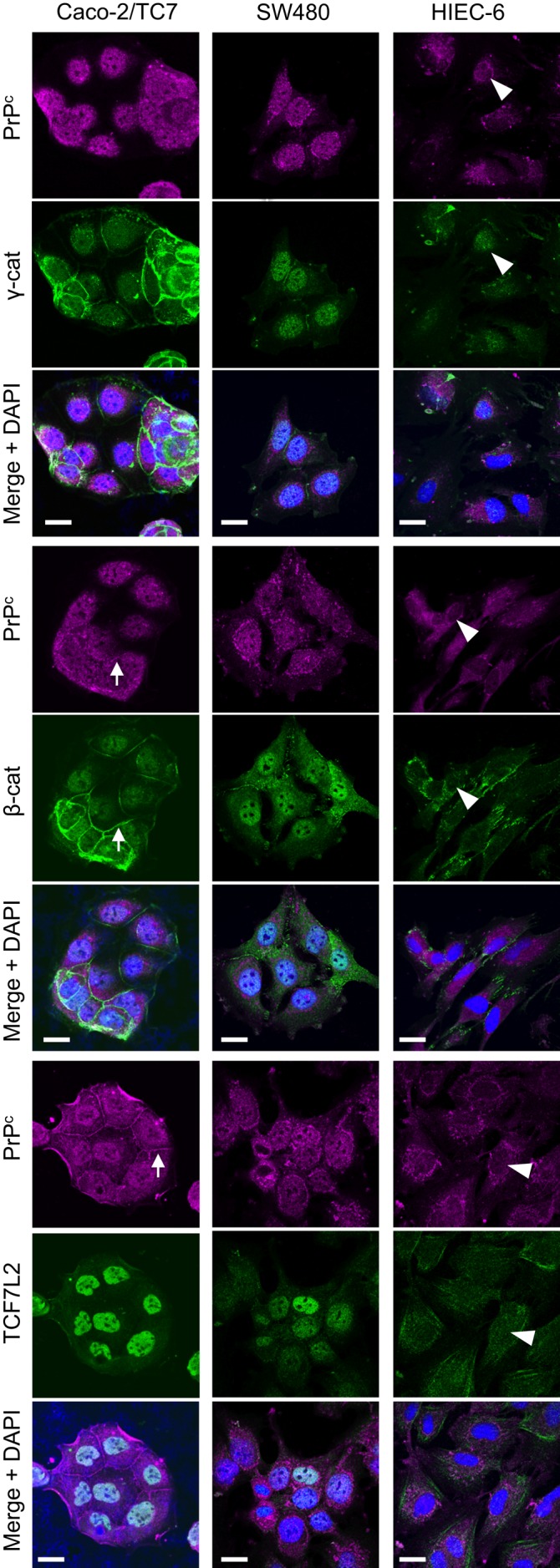
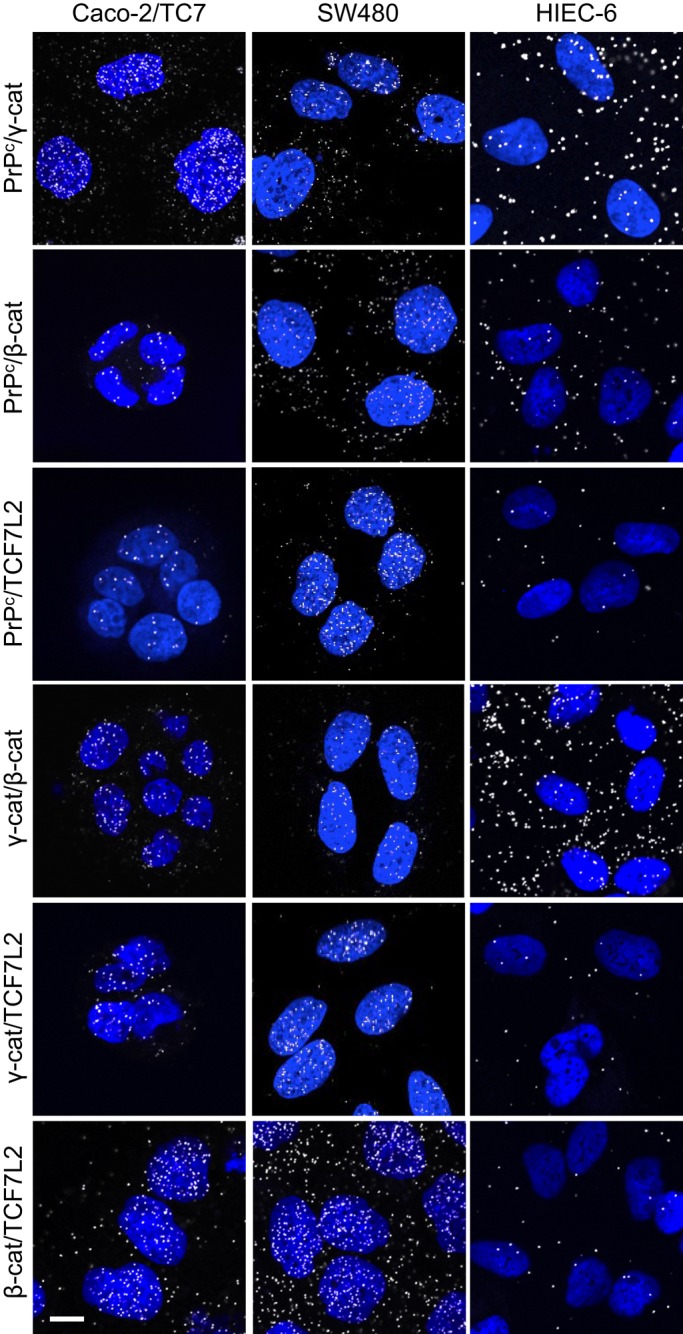
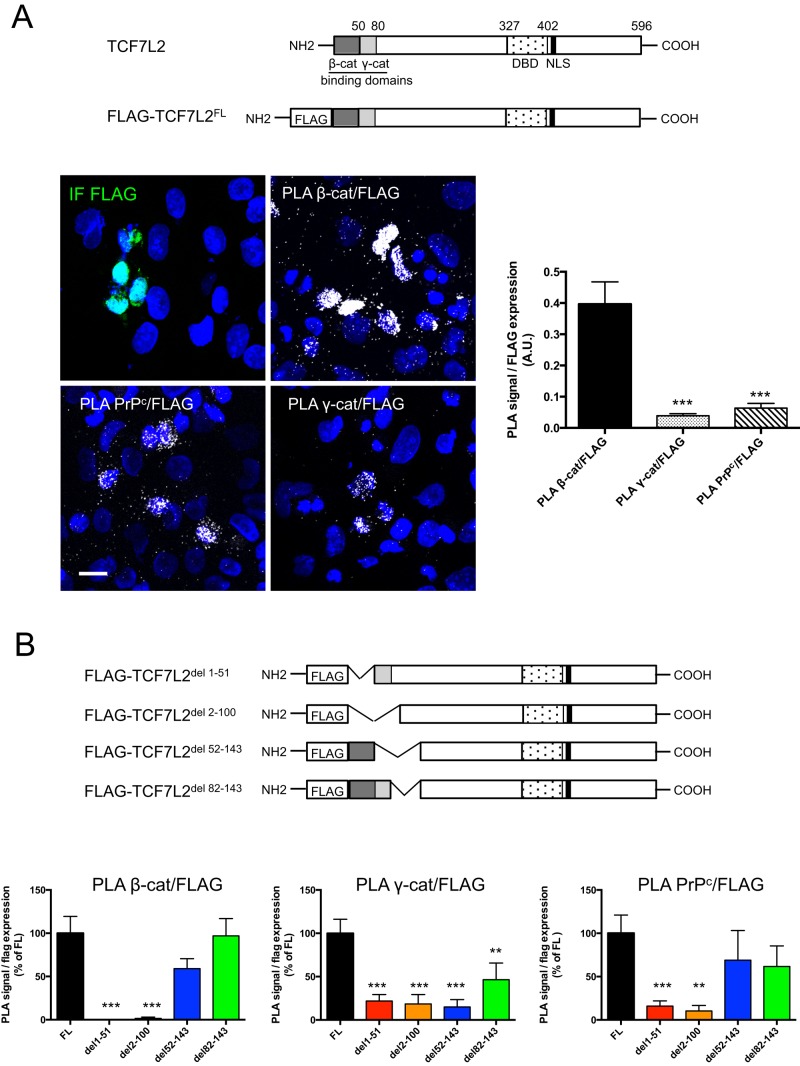
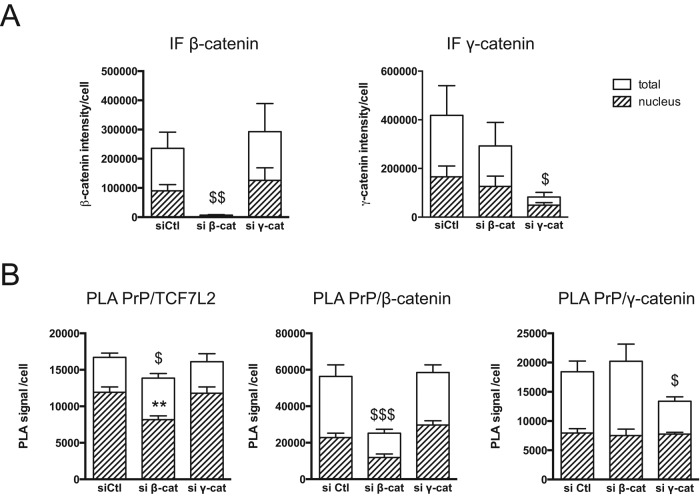
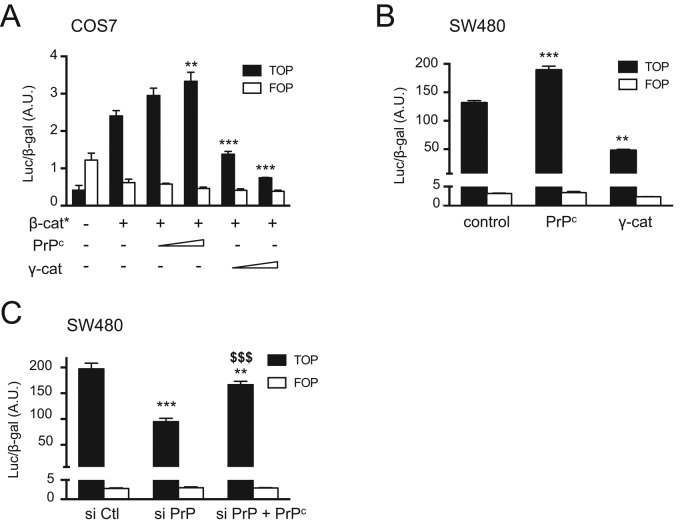
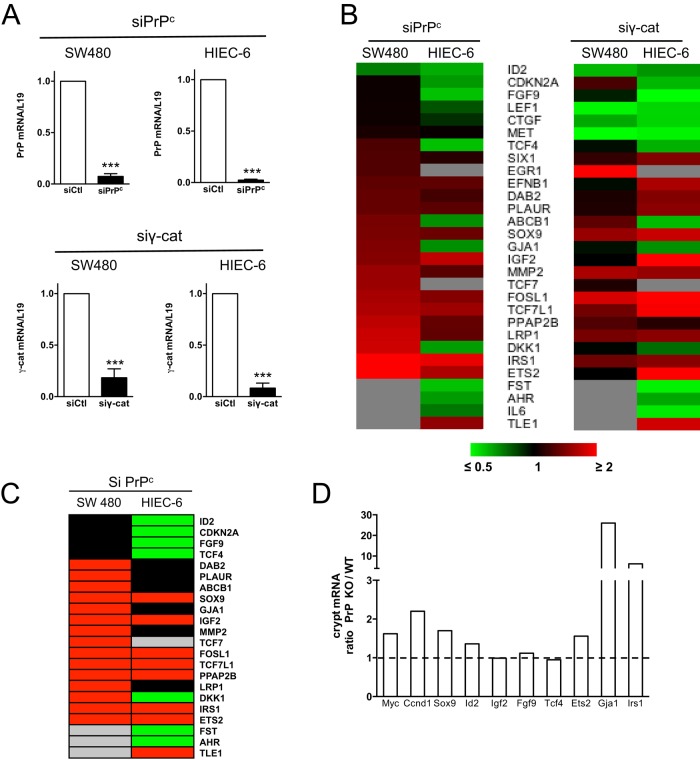
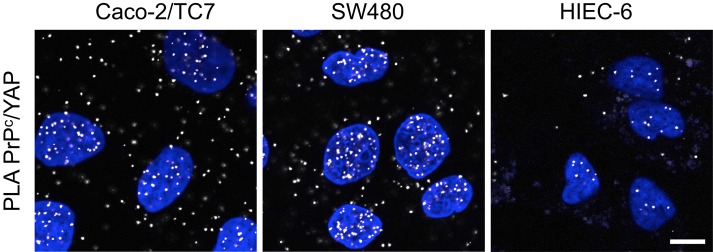
We reported previously that the cellular prion protein (PrP(c)) is a component of desmosomes and contributes to the intestinal barrier function. We demonstrated also the presence of PrP(c) in the nucleus of proliferating intestinal epithelial cells. Here we sought to decipher the function of this nuclear pool. In human intestinal cancer cells Caco-2/TC7 and SW480 and normal crypt-like HIEC-6 cells, PrP(c) interacts, in cytoplasm and nucleus, with γ-catenin, one of its desmosomal partners, and with β-catenin and TCF7L2, effectors of the canonical Wnt pathway. PrP(c) up-regulates the transcriptional activity of the β-catenin/TCF7L2 complex, whereas γ-catenin down-regulates it. Silencing of PrP(c) results in the modulation of several Wnt target gene expressions in human cells, with different effects depending on their Wnt signaling status, and in mouse intestinal crypt cells in vivo. PrP(c) also interacts with the Hippo pathway effector YAP, suggesting that it may contribute to the regulation of gene transcription beyond the β-catenin/TCF7L2 complex. Finally, we demonstrate that PrP(c) is required for proper formation of intestinal organoids, indicating that it contributes to proliferation and survival of intestinal progenitors. In conclusion, PrP(c) must be considered as a new modulator of the Wnt signaling pathway in proliferating intestinal epithelial cells.
我们之前报道过,细胞朊蛋白(PrP(c))是桥粒的一个组成部分,有助于肠道屏障功能。我们还证明了PrP(c)存在于增殖的肠上皮细胞核中。在此,我们试图解读这个核库的功能。在人肠癌细胞Caco-2/TC7和SW480以及正常隐窝样HIEC-6细胞中,PrP(c)在细胞质和细胞核中与γ-连环蛋白(其桥粒伙伴之一)以及β-连环蛋白和TCF7L2(经典Wnt信号通路的效应分子)相互作用。PrP(c)上调β-连环蛋白/TCF7L2复合物的转录活性,而γ-连环蛋白则下调其活性。沉默PrP(c)会导致人细胞中几种Wnt靶基因表达的调节,根据其Wnt信号状态有不同影响,在体内小鼠肠隐窝细胞中也是如此。PrP(c)还与Hippo信号通路效应分子YAP相互作用,表明它可能在β-连环蛋白/TCF7L2复合物之外对基因转录调控有贡献。最后,我们证明PrP(c)是肠道类器官正常形成所必需的,表明它有助于肠祖细胞的增殖和存活。总之,PrP(c)必须被视为增殖肠上皮细胞中Wnt信号通路的一种新的调节因子。