Wright Gavin J, Bianchi Enrica
Cell Surface Signalling Laboratory, Wellcome Trust Sanger Institute, Hinxton, Cambridge, UK.
Cell Tissue Res. 2016 Jan;363(1):227-235. doi: 10.1007/s00441-015-2243-3. Epub 2015 Jul 30.
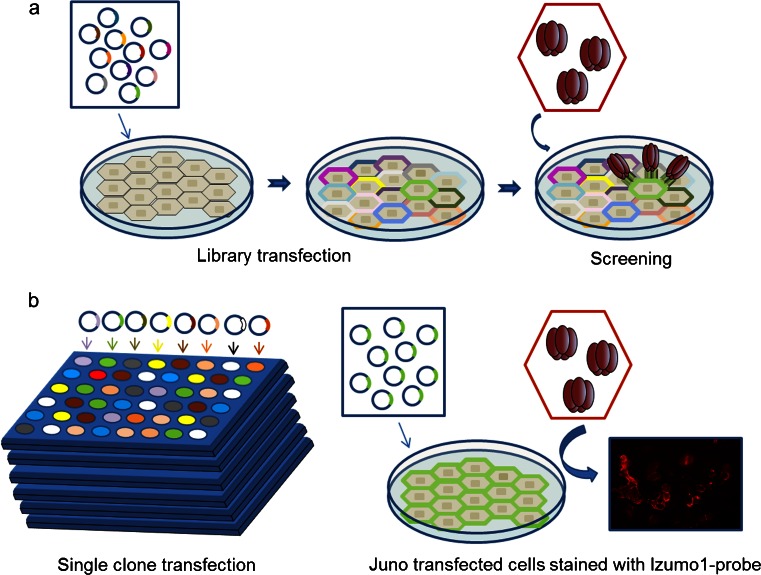
Sexual reproduction is used by many different organisms to create a new generation of genetically distinct progeny. Cells originating from separate sexes or mating types segregate their genetic material into haploid gametes which must then recognize and fuse with each other in a process known as fertilization to form a diploid zygote. Despite the central importance of fertilization, we know remarkably little about the molecular mechanisms that are involved in how gametes recognize each other, particularly in mammals, although the proteins that are displayed on their surfaces are almost certainly involved. This paucity of knowledge is largely due to both the unique biological properties of mammalian gametes (sperm and egg) which make them experimentally difficult to manipulate, and the technical challenges of identifying interactions between membrane-embedded cell surface receptor proteins. In this review, we will discuss our current knowledge of animal gamete recognition, highlighting where important contributions to our understanding were made, why particular model systems were helpful, and why progress in mammals has been particularly challenging. We discuss how the development of mammalian in vitro fertilization and targeted gene disruption in mice were important technological advances that triggered progress. We argue that approaches employed to discover novel interactions between cell surface gamete recognition proteins should account for the unusual biochemical properties of membrane proteins and the typically highly transient nature of their interactions. Finally, we describe how these principles were applied to identify Juno as the egg receptor for sperm Izumo1, an interaction that is essential for mammalian fertilization.
许多不同的生物体都通过有性生殖来产生新一代基因独特的后代。来自不同性别或交配类型的细胞将其遗传物质分离到单倍体配子中,然后这些配子必须在一个称为受精的过程中相互识别并融合,形成一个二倍体合子。尽管受精至关重要,但我们对配子相互识别所涉及的分子机制却知之甚少,尤其是在哺乳动物中,尽管配子表面展示的蛋白质几乎肯定与此有关。知识的匮乏很大程度上是由于哺乳动物配子(精子和卵子)独特的生物学特性,这使得它们在实验上难以操控,以及识别膜嵌入细胞表面受体蛋白之间相互作用的技术挑战。在这篇综述中,我们将讨论我们目前对动物配子识别的了解,突出对我们理解有重要贡献的地方、特定模型系统为何有帮助,以及为何在哺乳动物方面取得进展特别具有挑战性。我们讨论了哺乳动物体外受精和小鼠靶向基因破坏的发展是如何引发进展的重要技术进步。我们认为,用于发现细胞表面配子识别蛋白之间新相互作用的方法应该考虑膜蛋白不同寻常的生化特性及其相互作用通常高度短暂的性质。最后,我们描述了这些原则是如何应用于鉴定Juno为精子Izumo1的卵子受体的,这种相互作用对哺乳动物受精至关重要。