Cell Surface Signalling Laboratory, Wellcome Sanger Institute, Cambridge, UK.
Receptor Discovery Group, Microchemistry, Proteomics and Lipidomics Department, San Francisco, CA, USA.
Nat Commun. 2021 Feb 23;12(1):1251. doi: 10.1038/s41467-021-21512-w.
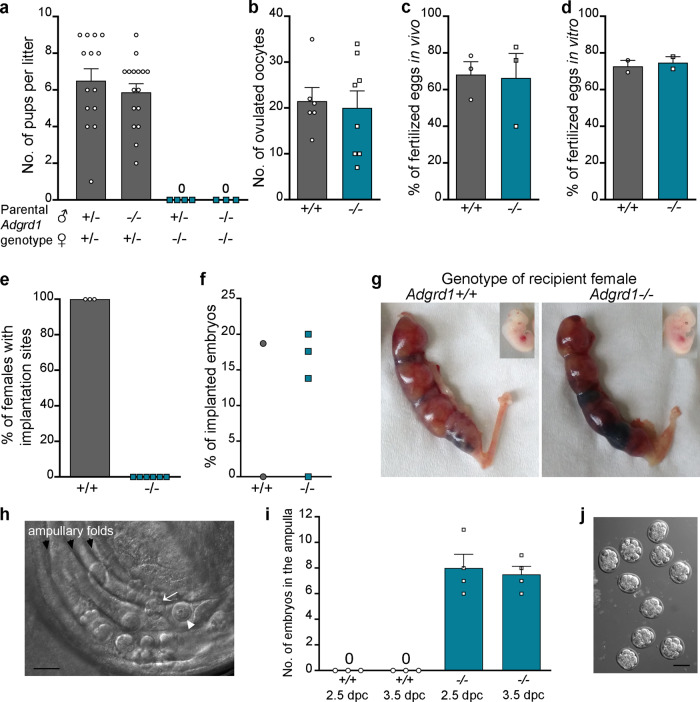
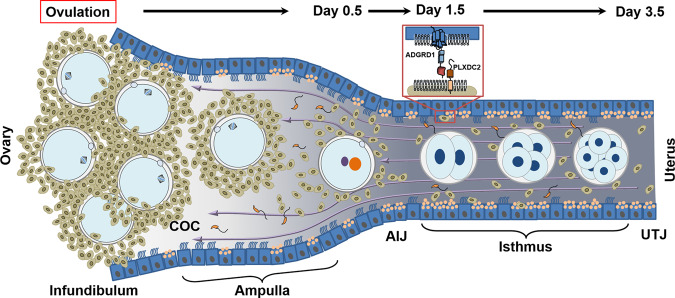
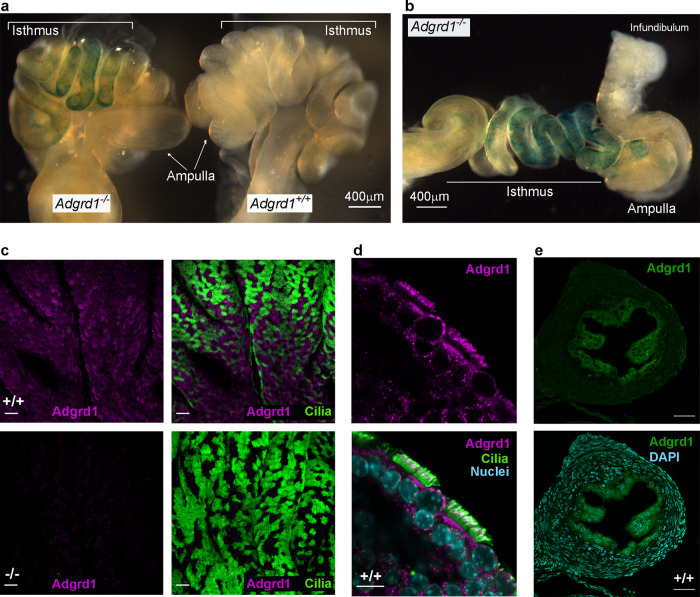
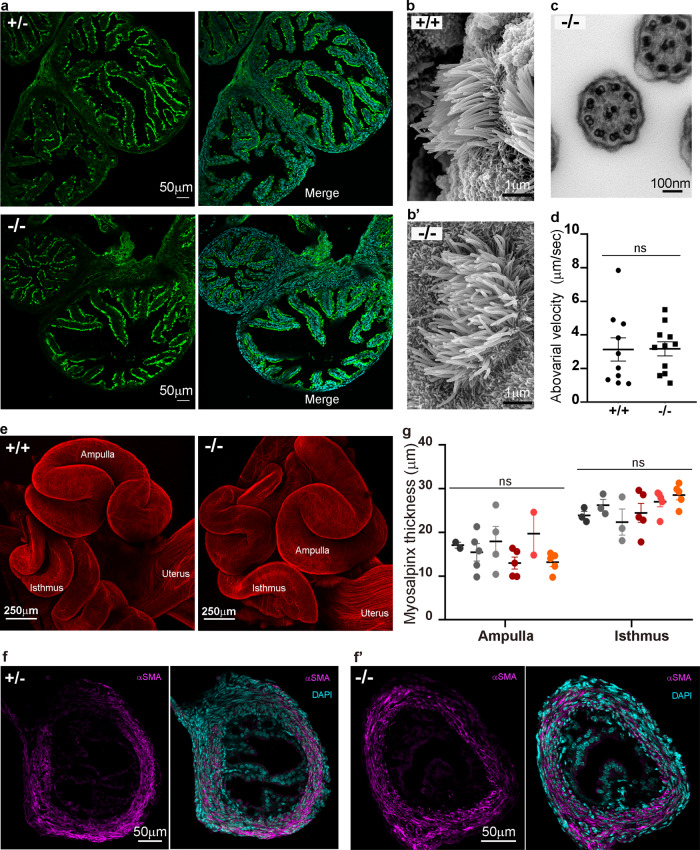
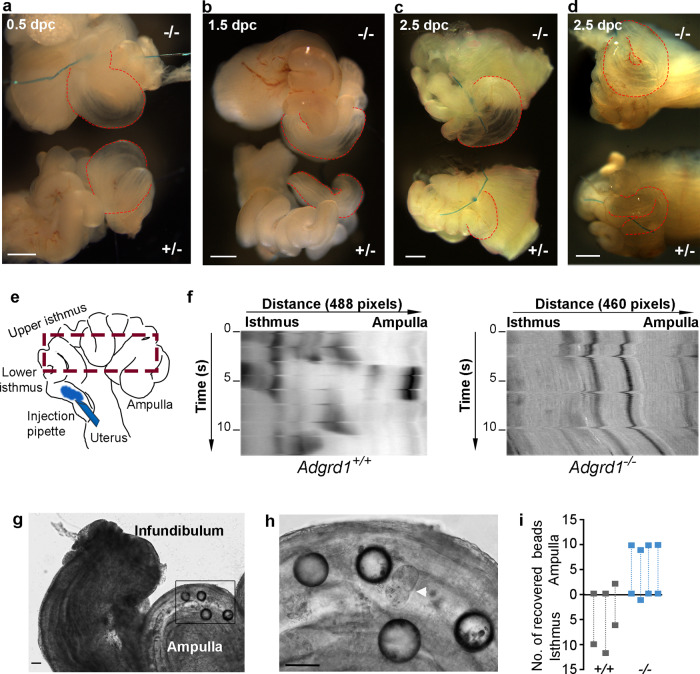
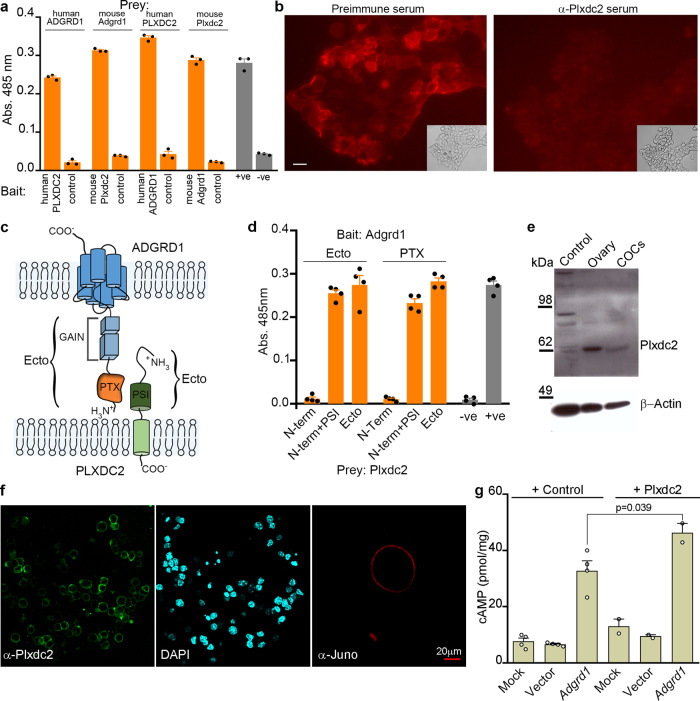
Dysfunction of embryo transport causes ectopic pregnancy which affects approximately 2% of conceptions in the US and Europe, and is the most common cause of pregnancy-related death in the first trimester. Embryo transit involves a valve-like tubal-locking phenomenon that temporarily arrests oocytes at the ampullary-isthmic junction (AIJ) where fertilisation occurs, but the mechanisms involved are unknown. Here we show that female mice lacking the orphan adhesion G-protein coupled receptor Adgrd1 are sterile because they do not relieve the AIJ restraining mechanism, inappropriately retaining embryos within the oviduct. Adgrd1 is expressed on the oviductal epithelium and the post-ovulatory attenuation of tubal fluid flow is dysregulated in Adgrd1-deficient mice. Using a large-scale extracellular protein interaction screen, we identified Plxdc2 as an activating ligand for Adgrd1 displayed on cumulus cells. Our findings demonstrate that regulating oviductal fluid flow by Adgrd1 controls embryo transit and we present a model where embryo arrest at the AIJ is due to the balance of abovarial ciliary action and the force of adovarial tubal fluid flow, and in wild-type oviducts, fluid flow is gradually attenuated through Adgrd1 activation to enable embryo release. Our findings provide important insights into the molecular mechanisms involved in embryo transport in mice.
胚胎运输功能障碍导致宫外孕,这在美国和欧洲约占妊娠的 2%,是妊娠早期相关死亡的最常见原因。胚胎转运涉及到一种瓣膜样的输卵管锁定现象,暂时阻止卵母细胞在壶腹-峡部交界处(AIJ)受精,但其涉及的机制尚不清楚。在这里,我们发现缺乏孤儿粘附 G 蛋白偶联受体 Adgrd1 的雌性小鼠是不育的,因为它们不能解除 AIJ 的抑制机制,导致胚胎不恰当地滞留在输卵管内。Adgrd1 在输卵管上皮细胞中表达,并且在 Adgrd1 缺陷型小鼠中,排卵后输卵管液体流动的衰减被失调。通过大规模的细胞外蛋白相互作用筛选,我们鉴定出 Plxdc2 是在卵丘细胞上显示的 Adgrd1 的激活配体。我们的研究结果表明,Adgrd1 控制胚胎转运,通过调节输卵管液流,我们提出了一个模型,即胚胎在 AIJ 的停滞是由于卵巢顶端的纤毛作用和卵巢顶端输卵管液流的力之间的平衡,在野生型输卵管中,通过 Adgrd1 的激活逐渐减弱液流,从而使胚胎释放。我们的研究结果为小鼠胚胎运输中涉及的分子机制提供了重要的见解。