Kim Hyun-Jeong, Park Junhee, Lee Sun Kyoung, Kim Ki Rim, Park Kwang-Kyun, Chung Won-Yoon
Department of Oral Biology, Oral Cancer Research Institute, BK21 PLUS Project, Yonsei University College of Dentistry, 50-1 Yonsei-ro, Seodaemun-gu, Seoul, Korea.
Department of Applied Life Science, The Graduate School, Yonsei University, 50 Yonsei-ro, Seodaemun-gu, Seoul, Korea.
J Pathol. 2015 Dec;237(4):520-31. doi: 10.1002/path.4597. Epub 2015 Sep 28.
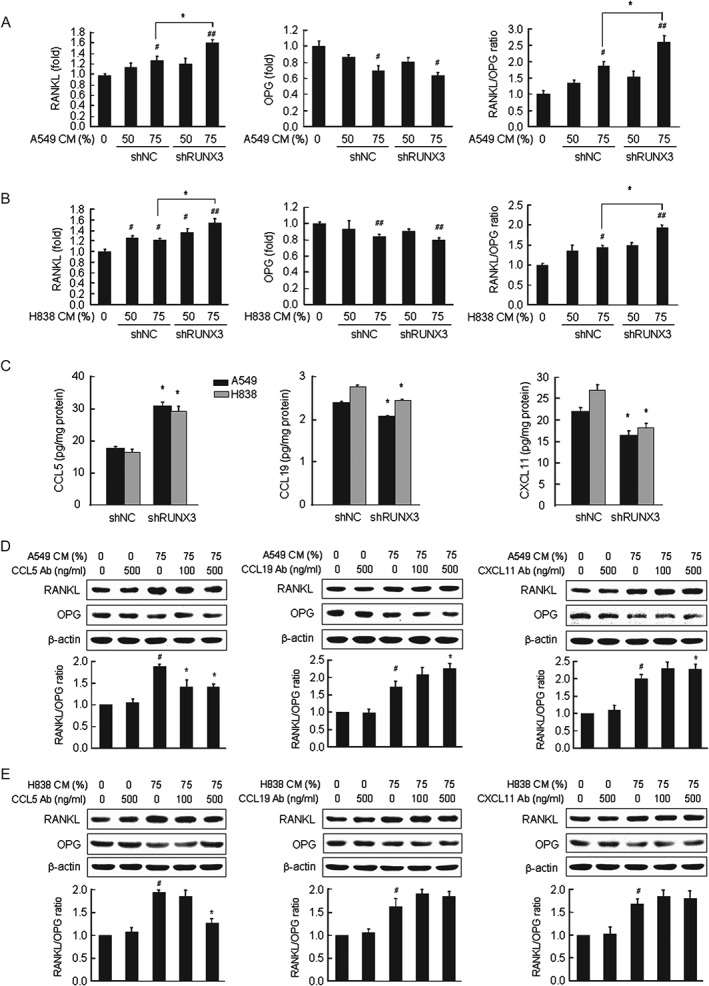
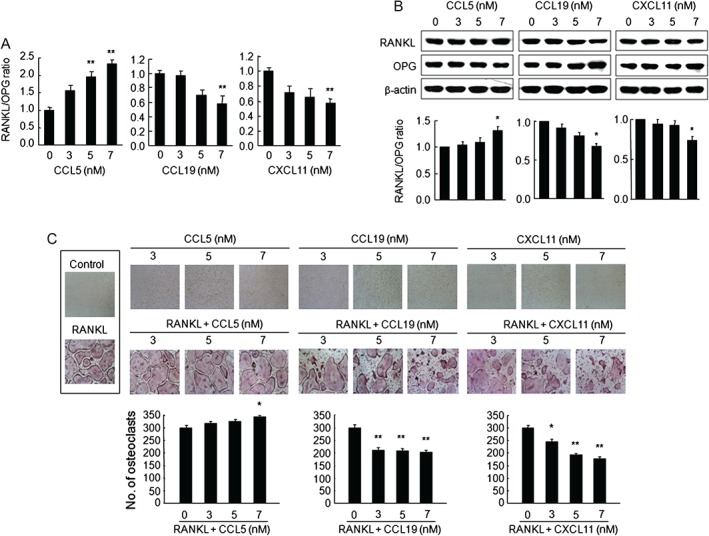
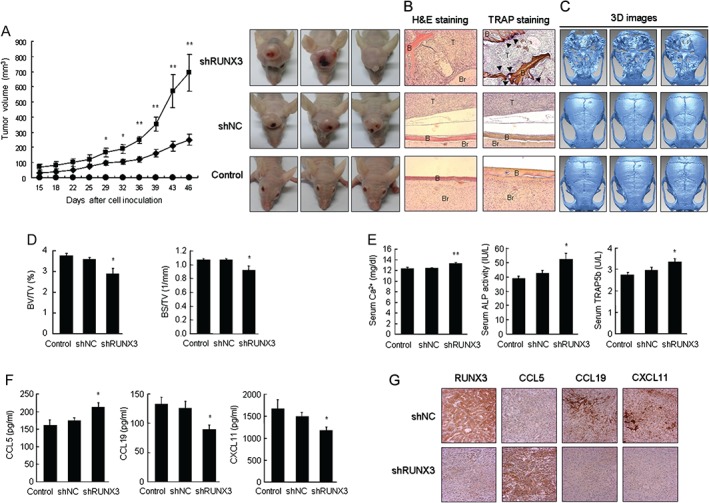
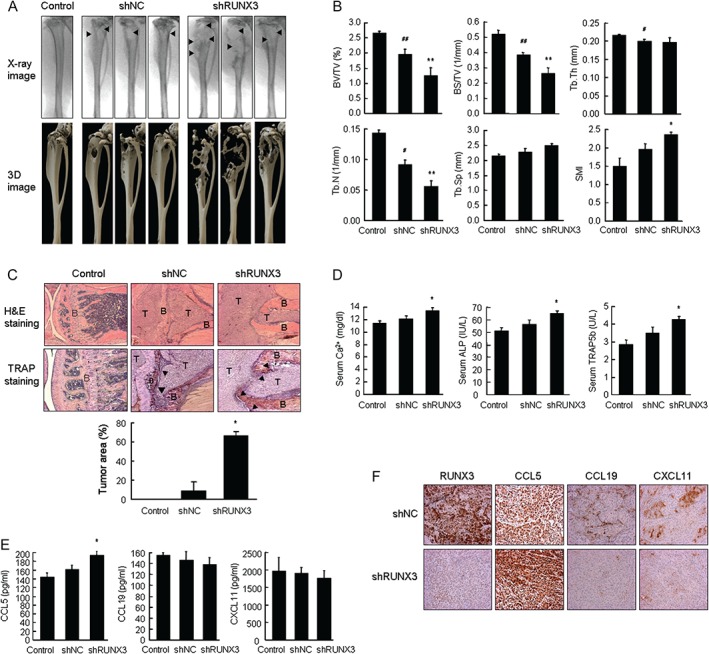
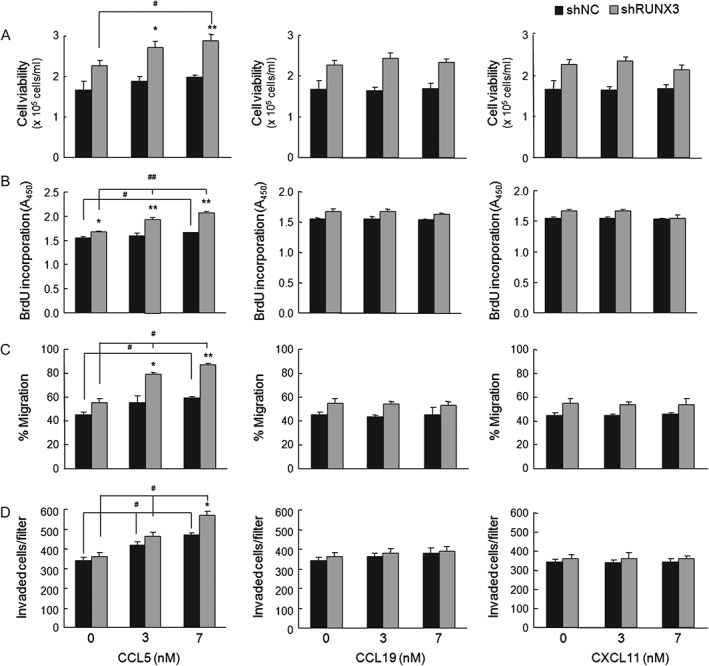
Non-small cell lung cancer (NSCLC) frequently metastasizes to bone, which is associated with significant morbidity and a dismal prognosis. RUNX3 functions as a tumour suppressor in lung cancer and loss of expression occurs more frequently in invasive lung adenocarcinoma than in pre-invasive lesions. Here, we show that RUNX3 and RUNX3-regulated chemokines are linked to NSCLC-mediated bone resorption. Notably, the receptor activator of nuclear factor-κB ligand (RANKL)/osteoprotegerin (OPG) ratio, an index of osteoclastogenic stimulation, was significantly increased in human osteoblastic cells treated with conditioned media derived from RUNX3-knockdown NSCLC cells. We aimed to identify RUNX3-regulated factors that modify the osteoblastic RANKL/OPG ratio and found that RUNX3 knockdown led to CCL5 up-regulation and down-regulation of CCL19 and CXCL11 in NSCLC cells. Tumour size was noticeably increased and more severe osteolytic lesions were induced in the calvaria and tibiae of mice that received RUNX3-knockdown cells. In response to RUNX3 knockdown, serum and tissue levels of CCL5 increased, whereas CCL19 and CXCL11 decreased. Furthermore, CCL5 increased the proliferation, migration, and invasion of lung cancer cells in a dose-dependent manner; however, CCL19 and CXCL11 did not show any significant effects. The RANKL/OPG ratio in osteoblastic cells was increased by CCL5 but reduced by CCL19 and CXCL11. CCL5 promoted osteoclast differentiation, but CCL19 and CXCL11 reduced osteoclastogenesis in RANKL-treated bone marrow macrophages. These findings suggest that RUNX3 and related chemokines are useful markers for the prediction and/or treatment of NSCLC-induced bone destruction.
非小细胞肺癌(NSCLC)常转移至骨骼,这与严重的发病率和不良预后相关。RUNX3在肺癌中作为一种肿瘤抑制因子发挥作用,其表达缺失在浸润性肺腺癌中比在癌前病变中更频繁地出现。在此,我们表明RUNX3和RUNX3调节的趋化因子与NSCLC介导的骨吸收有关。值得注意的是,在用源自RUNX3敲低的NSCLC细胞的条件培养基处理的人成骨细胞中,破骨细胞生成刺激指数核因子κB受体激活剂配体(RANKL)/骨保护素(OPG)比值显著增加。我们旨在鉴定调节成骨细胞RANKL/OPG比值的RUNX3调节因子,发现RUNX3敲低导致NSCLC细胞中CCL5上调以及CCL19和CXCL11下调。在接受RUNX3敲低细胞的小鼠的颅骨和胫骨中,肿瘤大小明显增加且诱导出更严重的溶骨性病变。响应RUNX3敲低,血清和组织中CCL5水平升高,而CCL19和CXCL11水平降低。此外,CCL5以剂量依赖的方式增加肺癌细胞的增殖、迁移和侵袭;然而,CCL19和CXCL11未显示任何显著影响。成骨细胞中的RANKL/OPG比值因CCL5而增加,但因CCL19和CXCL11而降低。CCL5促进破骨细胞分化,但CCL19和CXCL11在RANKL处理的骨髓巨噬细胞中减少破骨细胞生成。这些发现表明RUNX3和相关趋化因子是预测和/或治疗NSCLC诱导的骨破坏的有用标志物。