Bressloff Paul C, Karamched Bhargav R
Department of Mathematics, University of Utah Salt Lake City, UT, USA.
Front Cell Neurosci. 2015 Jul 21;9:281. doi: 10.3389/fncel.2015.00281. eCollection 2015.
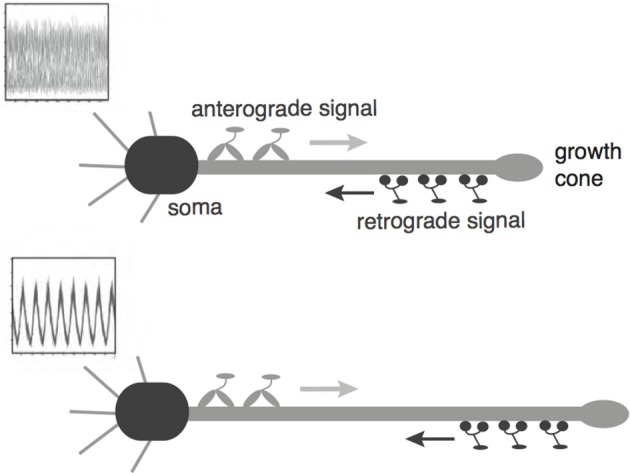
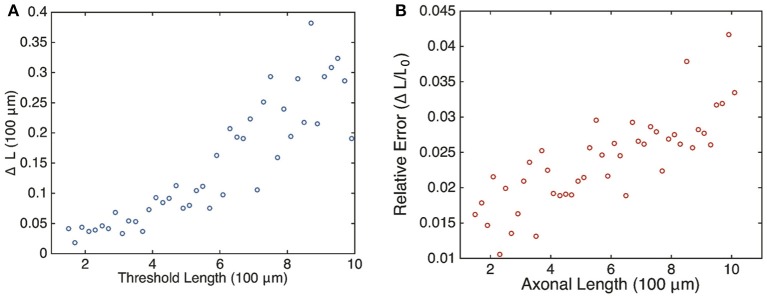
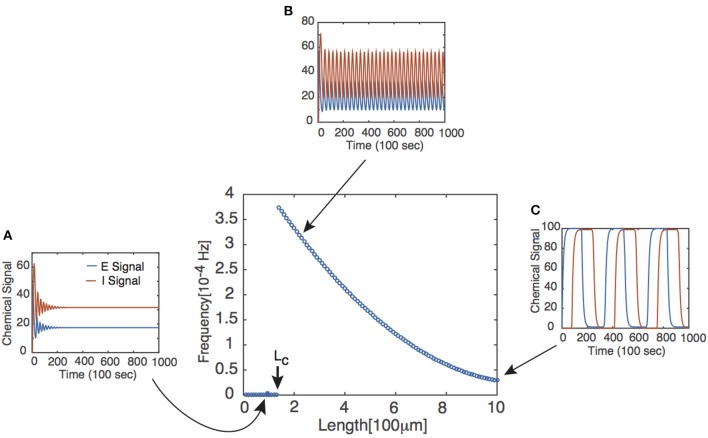
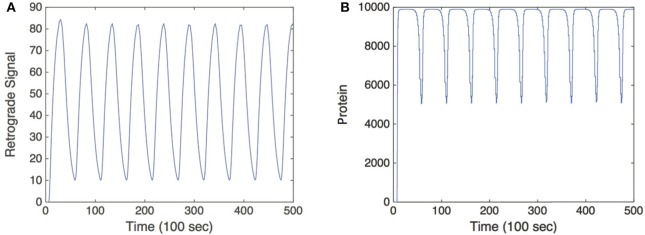
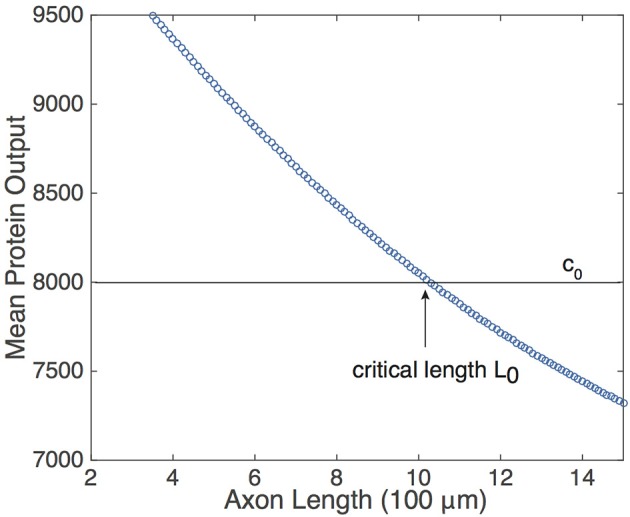
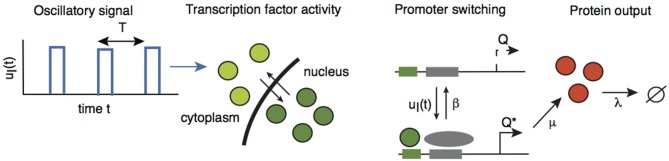
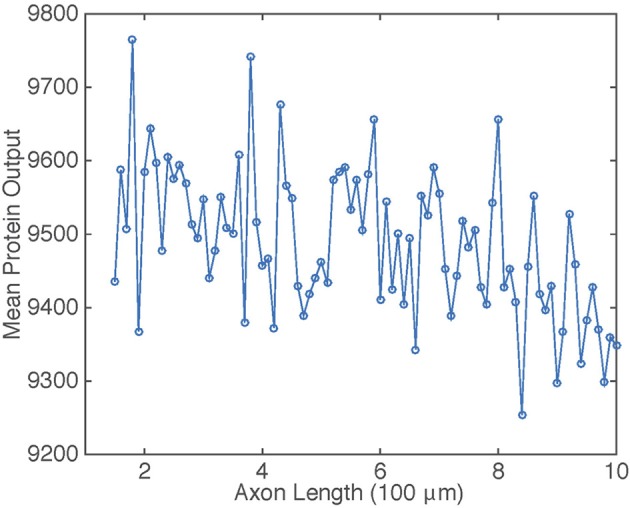
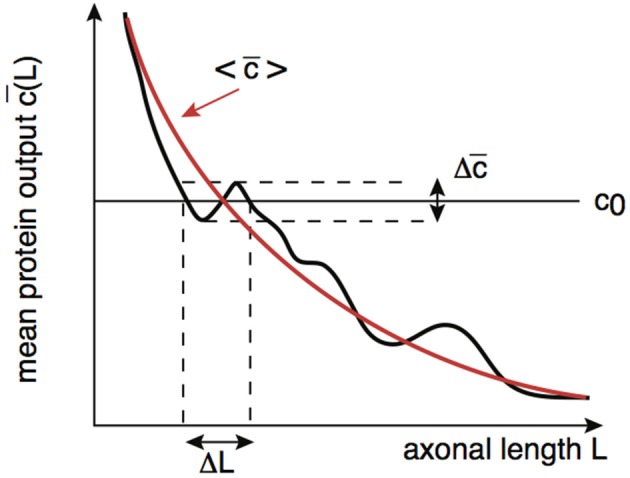
We have recently developed a mathematical model of axonal length sensing in which a system of delay differential equations describe a chemical signaling network. We showed that chemical oscillations emerge due to delayed negative feedback via a Hopf bifurcation, resulting in a frequency that is a monotonically decreasing function of axonal length. In this paper, we explore how frequency-encoding of axonal length can be decoded by a frequency-modulated gene network. If the protein output were thresholded, then this could provide a mechanism for axonal length control. We analyze the robustness of such a mechanism in the presence of intrinsic noise due to finite copy numbers within the gene network.
我们最近开发了一种轴突长度感知的数学模型,其中一个延迟微分方程组描述了一个化学信号网络。我们表明,由于通过霍普夫分岔的延迟负反馈,化学振荡出现,导致频率是轴突长度的单调递减函数。在本文中,我们探讨了轴突长度的频率编码如何被一个频率调制基因网络解码。如果蛋白质输出被设定阈值,那么这可以为轴突长度控制提供一种机制。我们分析了在基因网络内由于有限拷贝数导致的内在噪声存在的情况下这种机制的鲁棒性。