Benlloch Reyes, Berbel Ana, Ali Latifeh, Gohari Gholamreza, Millán Teresa, Madueño Francisco
Molecular Genetics Department, Center for Research in Agricultural Genomics, Consortium CSIC-IRTA-UAB-UB, Parc de Recerca Universitat Autònoma de Barcelona Barcelona, Spain.
Instituto de Biología Molecular y Celular de Plantas, Consejo Superior de Investigaciones Científicas - Universidad Politécnica de Valencia Valencia, Spain.
Front Plant Sci. 2015 Jul 21;6:543. doi: 10.3389/fpls.2015.00543. eCollection 2015.
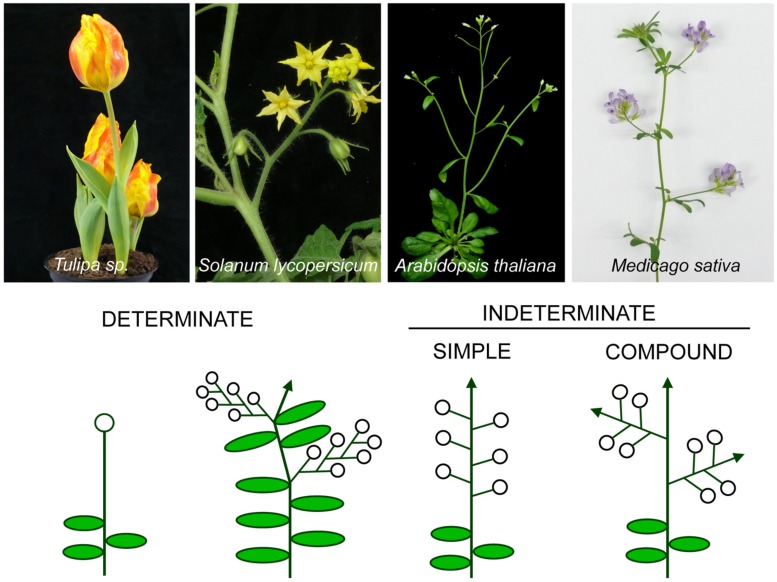
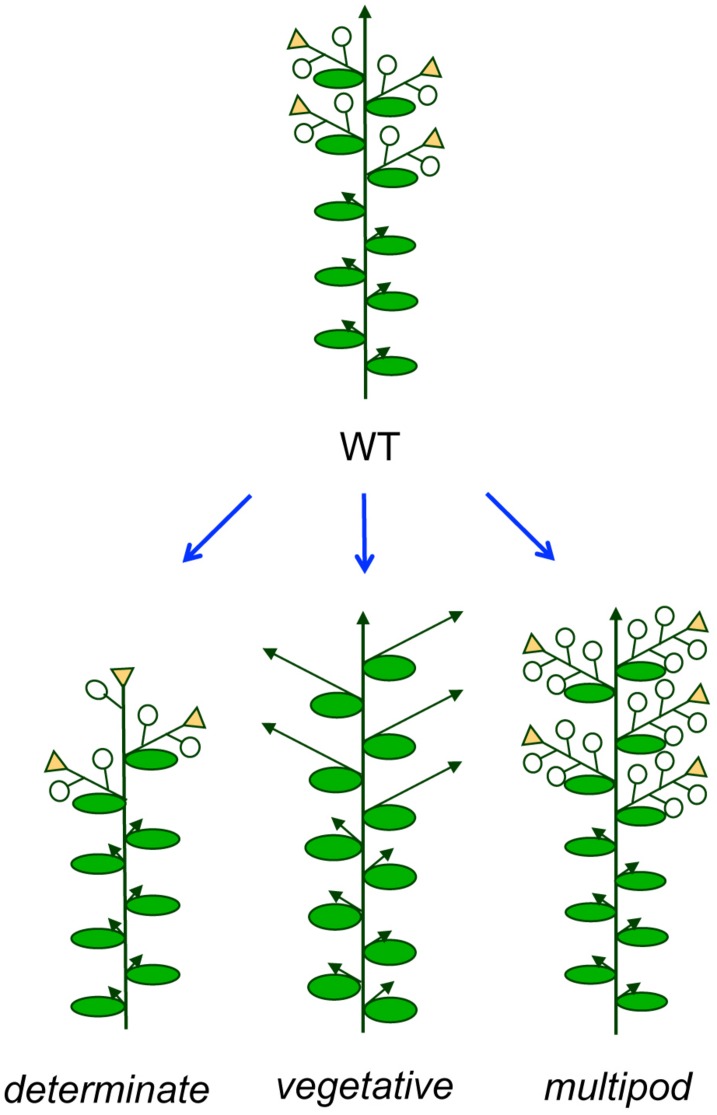
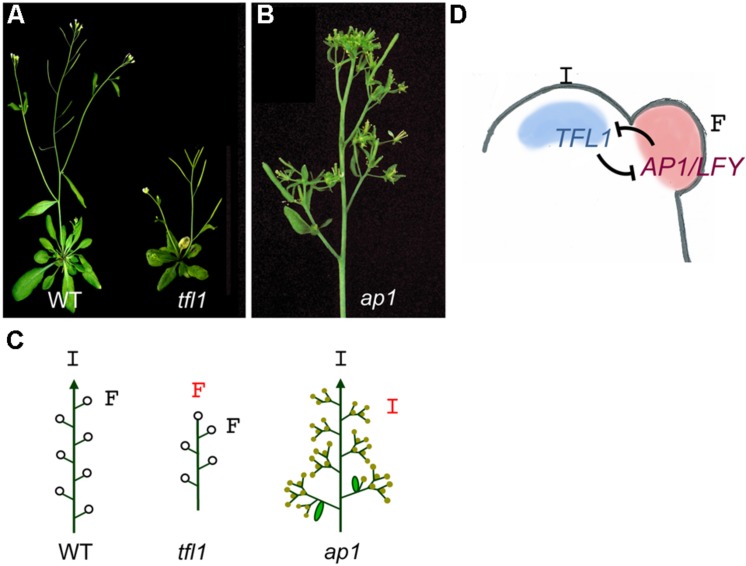
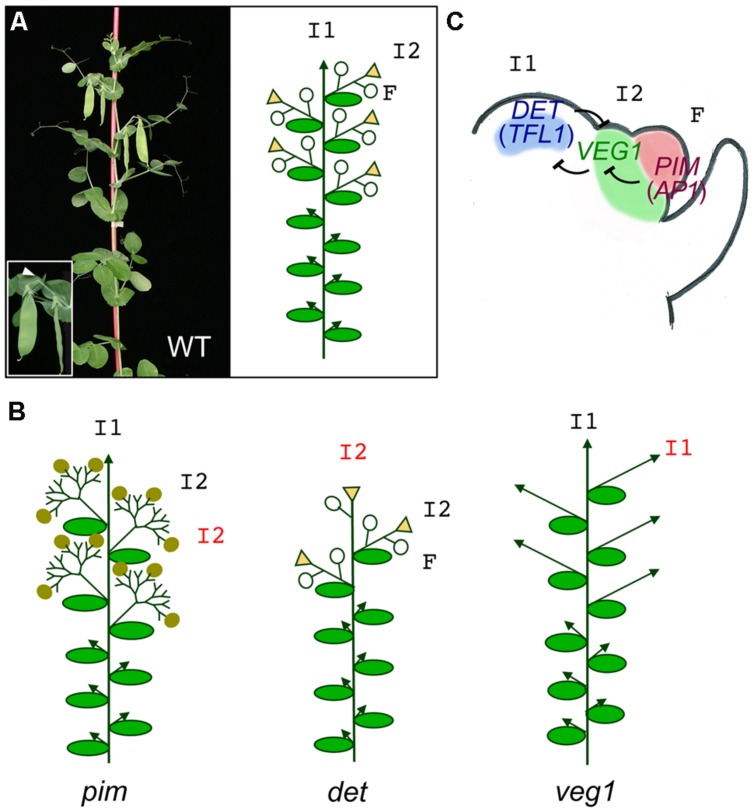
The architecture of the inflorescence, the shoot system that bears the flowers, is a main component of the huge diversity of forms found in flowering plants. Inflorescence architecture has also a strong impact on the production of fruits and seeds, and on crop management, two highly relevant agronomical traits. Elucidating the genetic networks that control inflorescence development, and how they vary between different species, is essential to understanding the evolution of plant form and to being able to breed key architectural traits in crop species. Inflorescence architecture depends on the identity and activity of the meristems in the inflorescence apex, which determines when flowers are formed, how many are produced and their relative position in the inflorescence axis. Arabidopsis thaliana, where the genetic control of inflorescence development is best known, has a simple inflorescence, where the primary inflorescence meristem directly produces the flowers, which are thus borne in the main inflorescence axis. In contrast, legumes represent a more complex inflorescence type, the compound inflorescence, where flowers are not directly borne in the main inflorescence axis but, instead, they are formed by secondary or higher order inflorescence meristems. Studies in model legumes such as pea (Pisum sativum) or Medicago truncatula have led to a rather good knowledge of the genetic control of the development of the legume compound inflorescence. In addition, the increasing availability of genetic and genomic tools for legumes is allowing to rapidly extending this knowledge to other grain legume crops. This review aims to describe the current knowledge of the genetic network controlling inflorescence development in legumes. It also discusses how the combination of this knowledge with the use of emerging genomic tools and resources may allow rapid advances in the breeding of grain legume crops.
花序作为承载花朵的茎系统,其结构是开花植物中丰富多样形态的主要组成部分。花序结构对果实和种子的产量以及作物管理(这两个高度相关的农艺性状)也有很大影响。阐明控制花序发育的遗传网络以及它们在不同物种间的差异,对于理解植物形态的进化以及能够在作物品种中培育关键的结构性状至关重要。花序结构取决于花序顶端分生组织的特性和活性,这决定了花朵何时形成、产生多少以及它们在花序轴上的相对位置。拟南芥的花序发育遗传控制最为人所知,它具有简单的花序,其中初级花序分生组织直接产生花朵,这些花朵因此着生于主花序轴上。相比之下,豆科植物代表了一种更复杂的花序类型,即复合花序,其中花朵并非直接着生于主花序轴上,而是由二级或更高级别的花序分生组织形成。对豌豆(Pisum sativum)或蒺藜苜蓿等豆科模式植物的研究,使我们对豆科复合花序发育的遗传控制有了相当深入的了解。此外,豆科植物遗传和基因组工具的日益丰富,使得我们能够迅速将这一知识扩展到其他豆科粮食作物上。本综述旨在描述目前关于控制豆科植物花序发育的遗传网络的知识。它还讨论了如何将这些知识与新兴基因组工具和资源的使用相结合,可能会推动豆科粮食作物育种的快速进展。