Yeh Chia-Ming, Chen Pi-Che, Hsieh Hsiao-Yen, Jou Yeong-Chin, Lin Chang-Te, Tsai Ming-Hsuan, Huang Wen-Yu, Wang Yi-Ting, Lin Ru-Inn, Chen Szu-Shan, Tung Chun-Liang, Wu Shu-Fen, Chang D Ching, Shen Cheng-Huang, Hsu Cheng-Da, Chan Michael W Y
Department of Life Science, National Chung Cheng University, Min-Hsiung, Chia-Yi, Taiwan.
Institute of Molecular Biology, National Chung Cheng University, Min-Hsiung, Chia-Yi, Taiwan.
Oncotarget. 2015 Oct 6;6(30):29555-72. doi: 10.18632/oncotarget.4986.
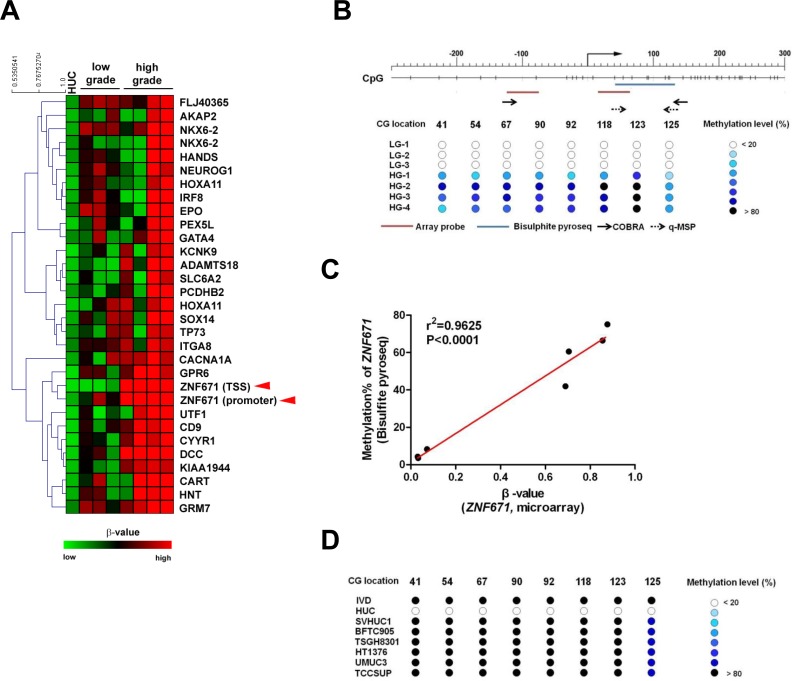
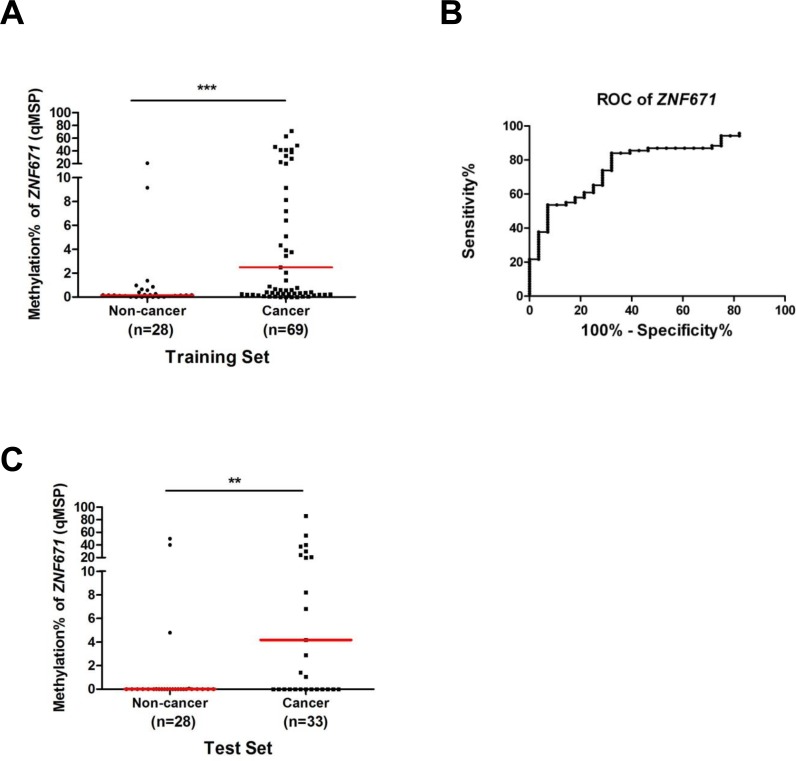
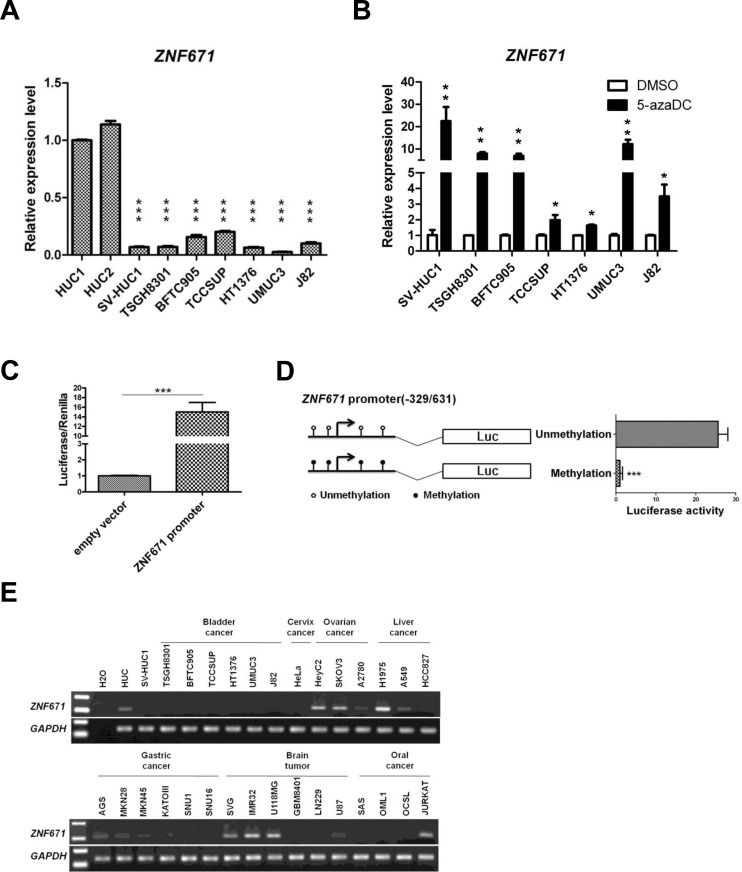
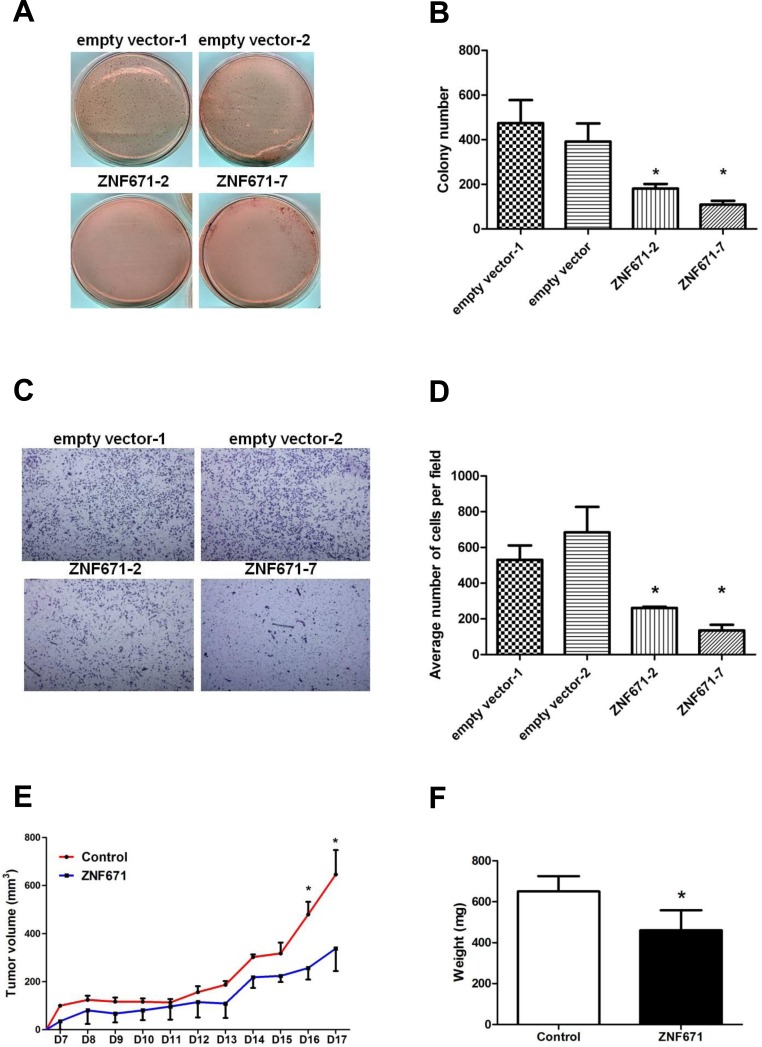
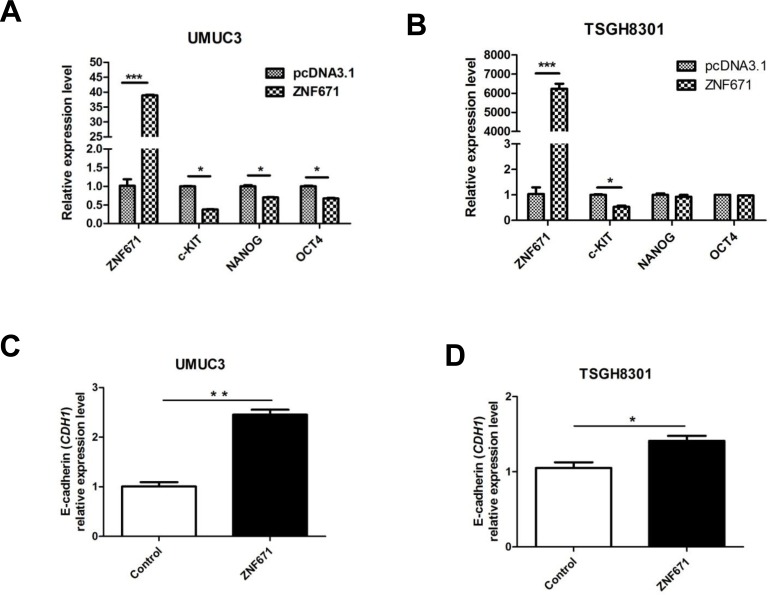
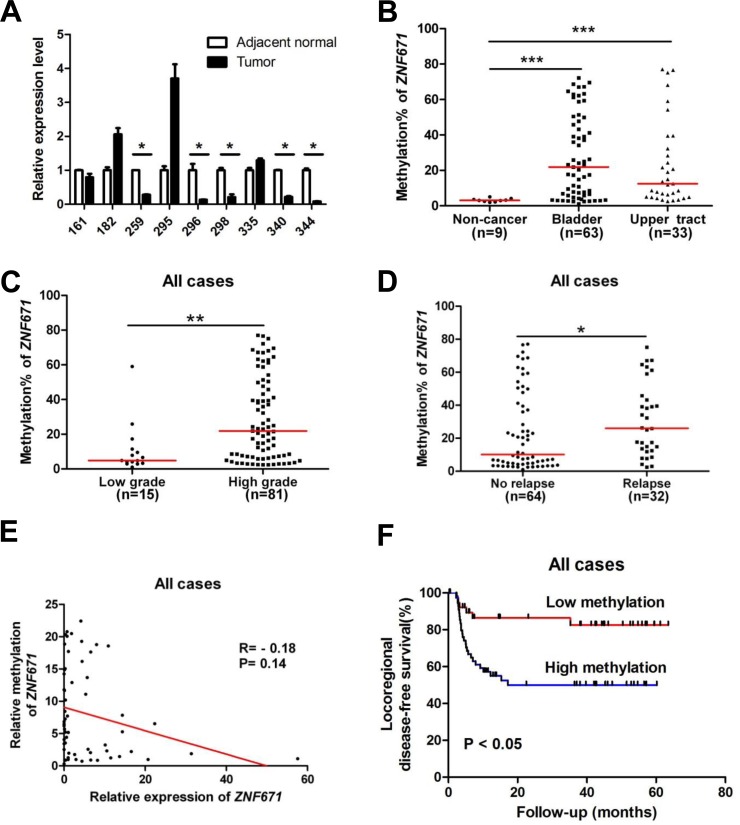
The molecular mechanism underlying the lethal phenomenon of urothelial carcinoma (UC) tumor recurrence remains unresolved. Here, by methylation microarray, we identified promoter methylation of the zinc-finger protein gene, ZNF671 in bladder UC tumor tissue samples, a finding that was independently validated by bisulphite pyrosequencing in cell lines and tissue samples. Subsequent assays including treatment with epigenetic depressive agents and in vitro methylation showed ZNF671 methylation to result in its transcriptional repression. ZNF671 re-expression in UC cell lines, via ectopic expression, inhibited tumor growth and invasion, in possible conjunction with downregulation of cancer stem cell markers (c-KIT, NANOG, OCT4). Clinically, high ZNF671 methylation in UC tumor tissues (n=96; 63 bladder, 33 upper urinary tract) associated with tumor grade and poor locoregional disease-free survival. Quantitative MSP analysis in a training (n=97) and test (n=61) sets of voided urine samples from bladder UC patients revealed a sensitivity and specificity of 42%-48% and 89%-92.8%, respectively, for UC cancer detection. Moreover, combining DNA methylation of ZNF671 and 2 other genes (IRF8 and sFRP1) further increased the sensitivity to 96.2%, suggesting a possible three-gene UC biomarker. In summary, ZNF671, an epigenetically silenced novel tumor suppressor, represents a potential predictor for UC relapse and non-invasive biomarker that could assist in UC clinical decision-making.
尿路上皮癌(UC)肿瘤复发致死现象背后的分子机制仍未明确。在此,我们通过甲基化微阵列技术,在膀胱UC肿瘤组织样本中鉴定出锌指蛋白基因ZNF671的启动子甲基化,这一发现通过细胞系和组织样本中的亚硫酸氢盐焦磷酸测序得到独立验证。随后的实验,包括使用表观遗传抑制剂处理和体外甲基化实验,表明ZNF671甲基化导致其转录抑制。通过异位表达使ZNF671在UC细胞系中重新表达,抑制了肿瘤生长和侵袭,可能与癌症干细胞标志物(c-KIT、NANOG、OCT4)的下调有关。临床上,UC肿瘤组织(n = 96;63例膀胱肿瘤,33例上尿路肿瘤)中ZNF671的高甲基化与肿瘤分级及局部无病生存期差相关。对膀胱UC患者的训练组(n = 97)和测试组(n = 61)的晨尿样本进行定量甲基化特异性PCR分析显示,检测UC癌症的敏感性和特异性分别为42% - 48%和89% - 92.8%。此外,将ZNF671与其他两个基因(IRF8和sFRP1)的DNA甲基化相结合,可将敏感性进一步提高至96.2%,提示可能存在一个三基因UC生物标志物。总之,ZNF671是一种表观遗传沉默的新型肿瘤抑制因子,是UC复发的潜在预测指标和无创生物标志物,可协助UC的临床决策。