Best Maisy, Lawrence Natalia S, Logan Gordon D, McLaren Ian P L, Verbruggen Frederick
School of Psychology.
Department of Psychology.
J Exp Psychol Hum Percept Perform. 2016 Jan;42(1):115-37. doi: 10.1037/xhp0000116. Epub 2015 Aug 31.
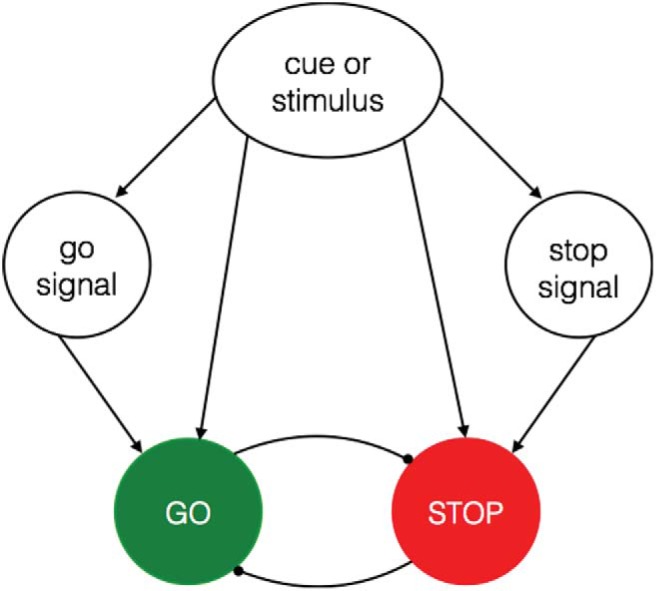
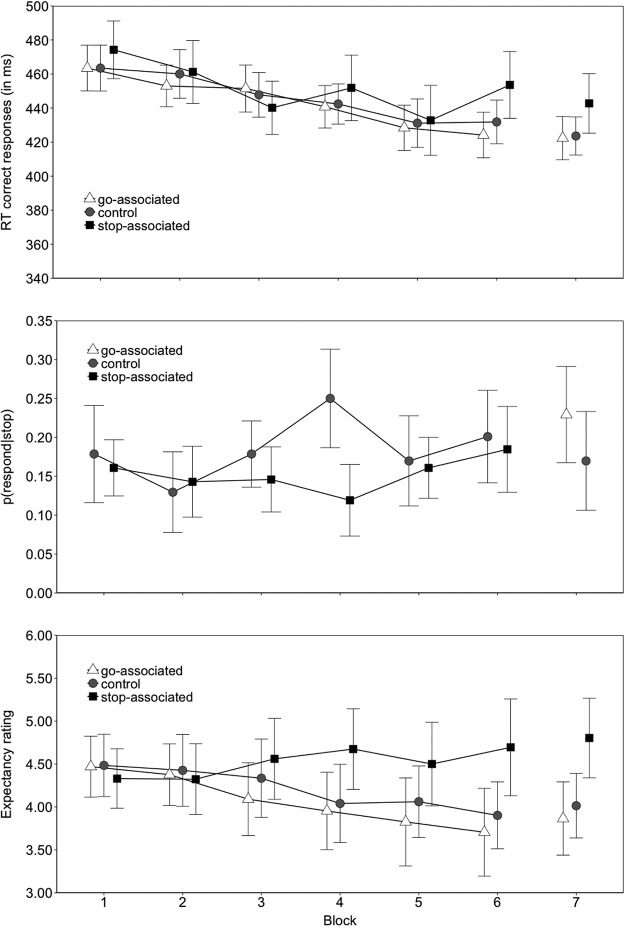
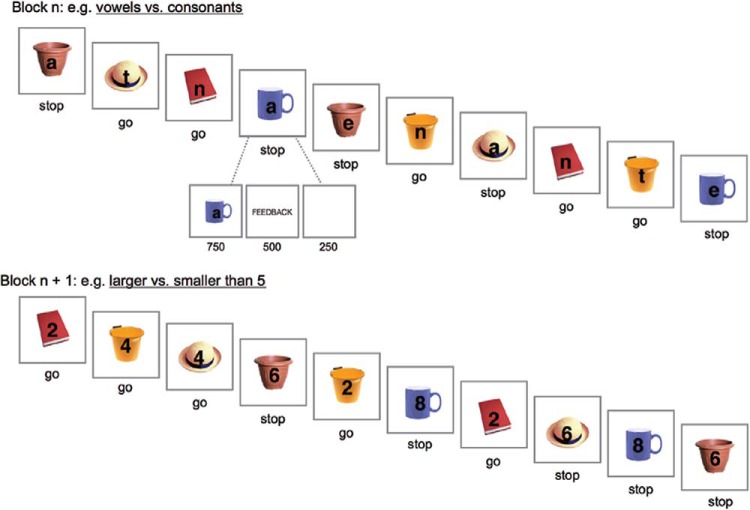
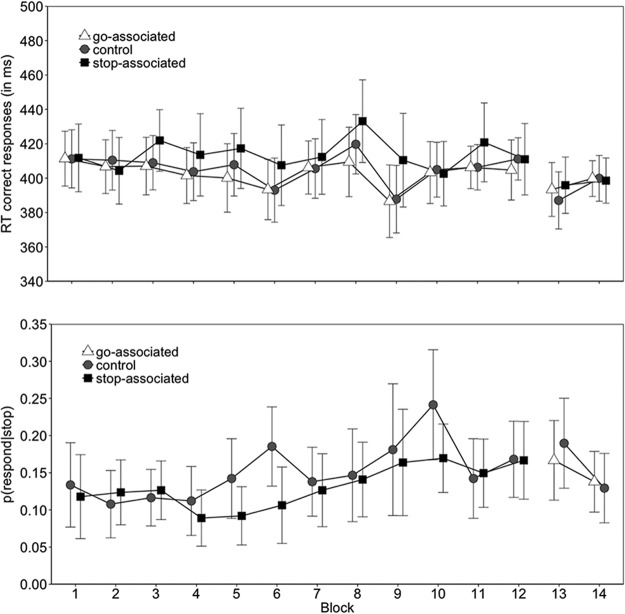
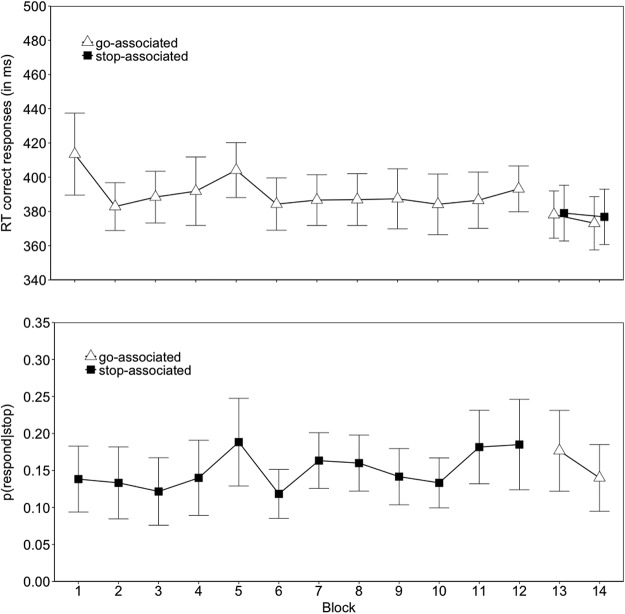
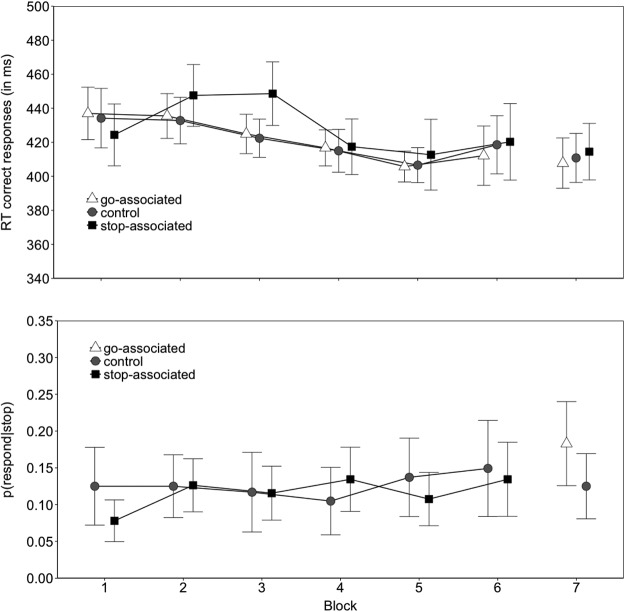
Following exposure to consistent stimulus-stop mappings, response inhibition can become automatized with practice. What is learned is less clear, even though this has important theoretical and practical implications. A recent analysis indicates that stimuli can become associated with a stop signal or with a stop goal. Furthermore, expectancy may play an important role. Previous studies that have used stop or no-go signals to manipulate stimulus-stop learning cannot distinguish between stimulus-signal and stimulus-goal associations, and expectancy has not been measured properly. In the present study, participants performed a task that combined features of the go/no-go task and the stop-signal task in which the stop-signal rule changed at the beginning of each block. The go and stop signals were superimposed over 40 task-irrelevant images. Our results show that participants can learn direct associations between images and the stop goal without mediation via the stop signal. Exposure to the image-stop associations influenced task performance during training, and expectancies measured following task completion or measured within the task. But, despite this, we found an effect of stimulus-stop learning on test performance only when the task increased the task-relevance of the images. This could indicate that the influence of stimulus-stop learning on go performance is strongly influenced by attention to both task-relevant and task-irrelevant stimulus features. More generally, our findings suggest a strong interplay between automatic and controlled processes.
在接触一致的刺激-停止映射后,反应抑制可以通过练习而自动化。尽管这具有重要的理论和实践意义,但所学到的内容尚不清楚。最近的一项分析表明,刺激可以与停止信号或停止目标相关联。此外,预期可能起着重要作用。以往使用停止或不执行信号来操纵刺激-停止学习的研究无法区分刺激-信号和刺激-目标关联,并且预期也没有得到恰当测量。在本研究中,参与者执行了一项结合了执行/不执行任务和停止信号任务特征的任务,其中停止信号规则在每个组块开始时改变。执行信号和停止信号叠加在40张与任务无关的图像上。我们的结果表明,参与者可以在不通过停止信号介导的情况下学习图像与停止目标之间的直接关联。接触图像-停止关联会影响训练期间的任务表现,以及任务完成后或任务过程中测量的预期。但是,尽管如此,我们发现只有当任务增加了图像的任务相关性时,刺激-停止学习才会对测试表现产生影响。这可能表明刺激-停止学习对执行表现的影响受到对任务相关和任务无关刺激特征的关注的强烈影响。更一般地说,我们的研究结果表明自动过程和控制过程之间存在强烈的相互作用。