Min Byungjoon, Liljeros Fredrik, Makse Hernán A
Levich Institute and Physics Department, City College of New York, New York, NY, United States of America.
Department of Sociology, Stockholm University, Stockholm, Sweden; Institute for Futures Study, Stockholm, Sweden.
PLoS One. 2015 Aug 31;10(8):e0136831. doi: 10.1371/journal.pone.0136831. eCollection 2015.
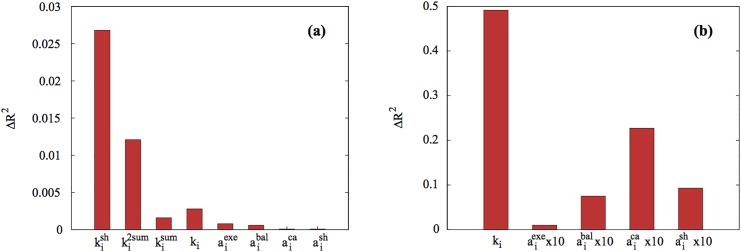
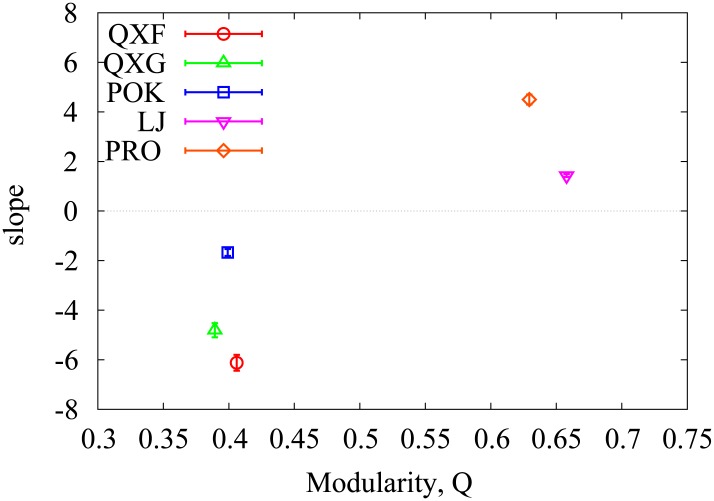
Most centralities proposed for identifying influential spreaders on social networks to either spread a message or to stop an epidemic require the full topological information of the network on which spreading occurs. In practice, however, collecting all connections between agents in social networks can be hardly achieved. As a result, such metrics could be difficult to apply to real social networks. Consequently, a new approach for identifying influential people without the explicit network information is demanded in order to provide an efficient immunization or spreading strategy, in a practical sense. In this study, we seek a possible way for finding influential spreaders by using the social mechanisms of how social connections are formed in real networks. We find that a reliable immunization scheme can be achieved by asking people how they interact with each other. From these surveys we find that the probabilistic tendency to connect to a hub has the strongest predictive power for influential spreaders among tested social mechanisms. Our observation also suggests that people who connect different communities is more likely to be an influential spreader when a network has a strong modular structure. Our finding implies that not only the effect of network location but also the behavior of individuals is important to design optimal immunization or spreading schemes.
大多数用于识别社交网络上有影响力的传播者以传播信息或阻止流行病传播的中心性指标,都需要知道传播发生所在网络的完整拓扑信息。然而在实际中,收集社交网络中个体之间的所有连接几乎是不可能实现的。因此,这类指标可能难以应用于真实的社交网络。所以,从实际意义上讲,为了提供一种有效的免疫或传播策略,需要一种无需明确网络信息就能识别有影响力人物的新方法。在本研究中,我们探寻一种利用真实网络中社会连接形成的社会机制来寻找有影响力传播者的可能方法。我们发现,通过询问人们如何相互作用,可以实现一种可靠的免疫方案。从这些调查中我们发现,在测试的社会机制中,连接到枢纽节点的概率倾向对有影响力的传播者具有最强的预测能力。我们的观察还表明,当网络具有强大的模块化结构时,连接不同社区的人更有可能成为有影响力的传播者。我们的发现意味着,设计最优的免疫或传播方案时,不仅网络位置的影响很重要,个体行为也很重要。