Kang Peng, Tang Bihan, Liu Yuan, Liu Xu, Liu Zhipeng, Lv Yipeng, Zhang Lulu
Institute of Military Health Management, Second Military Medical University, 800 Xiangyin Rd, 200433, Shanghai, China.
Int J Environ Res Public Health. 2015 Aug 31;12(9):10723-38. doi: 10.3390/ijerph120910723.
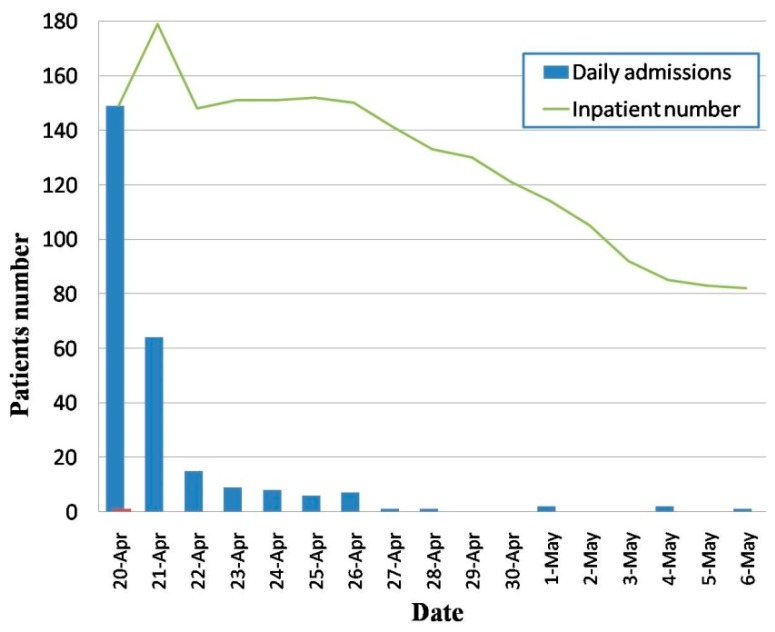
The aim of this paper is to investigate medical efforts and injury profiles of victims of the Lushan earthquake admitted to three military hospitals. This study retrospectively investigated the clinical records of 266 admitted patients evacuated from the Lushan earthquake area. The 2005 version of the Abbreviated Injury Scale (AIS-2005) was used to identify the severity of each injury. Patient demographic data, complaints, diagnoses, injury types, prognosis, means of transportation, and cause of injury were all reviewed individually. The statistical analysis of the study was conducted primarily using descriptive statistics. Of the 266 patients, 213 (80.1%) were admitted in the first two days. A total of 521 injury diagnoses were recorded in 266 patients. Earthquake-related injuries were primarily caused by buildings collapsing (38.4%) and victims being struck by objects (33.8%); the most frequently injured anatomic sites were the lower extremities and pelvis (34.2%) and surface area of the body (17.9%). Fracture (41.5%) was the most frequent injury, followed by soft tissue injury (27.5%), but crush syndrome was relatively low (1.2%) due to the special housing structures in the Lushan area. The most commonly used procedure was suture and dressings (33.7%), followed by open reduction and internal fixation (21.9%).The results of this study help formulate recommendations to improve future disaster relief and emergency planning in remote, isolated, and rural regions of developing countries.
本文旨在调查收治于三家军队医院的芦山地震受害者的医疗救治情况及损伤概况。本研究回顾性调查了从芦山地震灾区后送入院的266例患者的临床记录。采用2005版简明损伤定级标准(AIS - 2005)确定各损伤的严重程度。对患者的人口统计学数据、主诉、诊断、损伤类型、预后、转运方式及致伤原因均进行了逐一审查。本研究的统计分析主要采用描述性统计方法。266例患者中,213例(80.1%)在最初两天内入院。266例患者共记录了521项损伤诊断。与地震相关的损伤主要由建筑物倒塌(38.4%)和物体砸伤(33.8%)所致;最常受伤的解剖部位是下肢和骨盆(34.2%)以及身体表面积(17.9%)。骨折(41.5%)是最常见的损伤,其次是软组织损伤(27.5%),但由于芦山地区特殊的房屋结构,挤压综合征相对较少(1.2%)。最常用的治疗方法是缝合和包扎(33.7%),其次是切开复位内固定(21.9%)。本研究结果有助于制定相关建议,以改进发展中国家偏远、孤立及农村地区未来的救灾和应急规划。