Keedle Hazel, Schmied Virginia, Burns Elaine, Dahlen Hannah G
School of Nursing and Midwifery, Western Sydney University, Locked Bag 1797, Penrith, NSW, 2751, Australia.
BMC Pregnancy Childbirth. 2015 Sep 3;15:206. doi: 10.1186/s12884-015-0639-4.
Caesarean section is rising in the developed world and vaginal birth after caesarean (VBAC) is declining. There are increased reports of women seeking a homebirth following a caesarean section (HBAC) in Australia but little is known about the reasons for this study aimed to explore women's reasons for and experiences of choosing a HBAC.
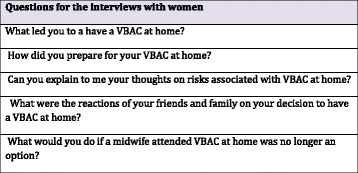
Twelve women participated in a semi-structured one-to-one interview. The interviews were digitally recorded, then transcribed verbatim. These data were analysed using thematic analysis.
The overarching theme that emerged was 'It's never happening again'. Women clearly articulated why it [caesarean section] was never happening again under the following sub themes: 'treated like a piece of meat', 'I was traumatised by it for years', 'you can smell the fear in the room', 're-traumatised by the system'. They also described how it [caesarean section] was never happening again under the sub themes: 'getting informed and gaining confidence', 'avoiding judgment through selective telling', 'preparing for birth', 'gathering support' and 'all about safety but I came first'. The women then identified the impact of their HBAC under the subthemes 'I felt like superwoman' and 'there is just no comparison'.
Birth intervention may cause physical and emotional trauma that can have a significant impact on some women. Inflexible hospital systems and inflexible attitudes around policy and care led some women to seek other options. Women report that achieving a HBAC has benefits for the relationship with their baby. VBAC policies and practices in hospitals need to be flexible to enable women to negotiate the care that they wish to have.
在发达国家,剖宫产率呈上升趋势,而剖宫产后阴道分娩(VBAC)率则在下降。在澳大利亚,越来越多的报道称,剖宫产后的女性寻求在家分娩(HBAC),但对于其原因知之甚少。本研究旨在探讨女性选择HBAC的原因及经历。
12名女性参与了一对一的半结构化访谈。访谈进行了数字录音,然后逐字转录。这些数据采用主题分析法进行分析。
出现的总体主题是“再也不会这样了”。女性们明确阐述了为什么剖宫产“再也不会发生了”,具体体现在以下子主题中:“像对待一块肉一样对待我”“多年来我一直深受其害”“你能闻到房间里的恐惧”“被医疗系统再次伤害”。她们还在“获取信息并增强信心”“通过有选择地讲述来避免评判”“为分娩做准备”“寻求支持”以及“一切都是为了安全,但我是第一位的”等子主题下描述了剖宫产“再也不会发生了”的原因。然后,这些女性在“我感觉自己像个超级女人”和“没有可比性”等子主题下阐述了她们HBAC的影响。
分娩干预可能会造成身体和情感创伤,对一些女性产生重大影响。僵化的医院系统以及围绕政策和护理的僵化态度导致一些女性寻求其他选择。女性报告称,实现HBAC对她们与宝宝的关系有益。医院的VBAC政策和做法需要更加灵活,以便女性能够争取到她们希望得到的护理。