Haile Yohannes, Carmine-Simmen Katia, Olechowski Camille, Kerr Bradley, Bleackley R Chris, Giuliani Fabrizio
Department of Medicine, Division of Neurology, University of Alberta, 4C Kaye Edmonton Clinic, Edmonton, Alberta, T6G 1Z1, Canada.
Department of Biochemistry, University of Alberta, Edmonton, Canada.
J Neuroinflammation. 2015 Sep 4;12:157. doi: 10.1186/s12974-015-0376-7.
Multiple sclerosis (MS) is an autoimmune inflammatory and neurodegenerative disease of the central nervous system (CNS). It is widely accepted that inflammatory cells play major roles in the pathogenesis of MS, possibly through the use of serine protease granzyme B (GrB) secreted from the granules of cytotoxic T cells. We have previously identified GrB as a mediator of axonal injury and neuronal death. In this study, our goal was to evaluate the effect of GrB inhibition in the human system in vitro, and in vivo in EAE using the newly isolated GrB-inhibitor serpina3n.
We used a well-established in vitro model of neuroinflammation characterized by a co-culture system between human fetal neurons and lymphocytes. In vivo, we induced EAE in 10- to 12-week-old female C57/BL6 mice and treated them intravenously with serpina3n.
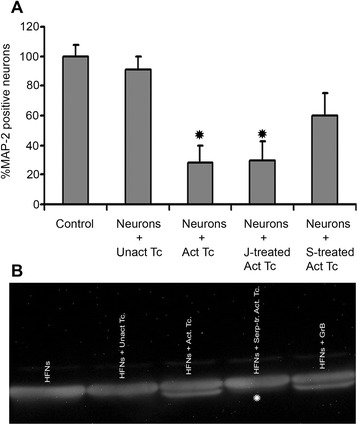
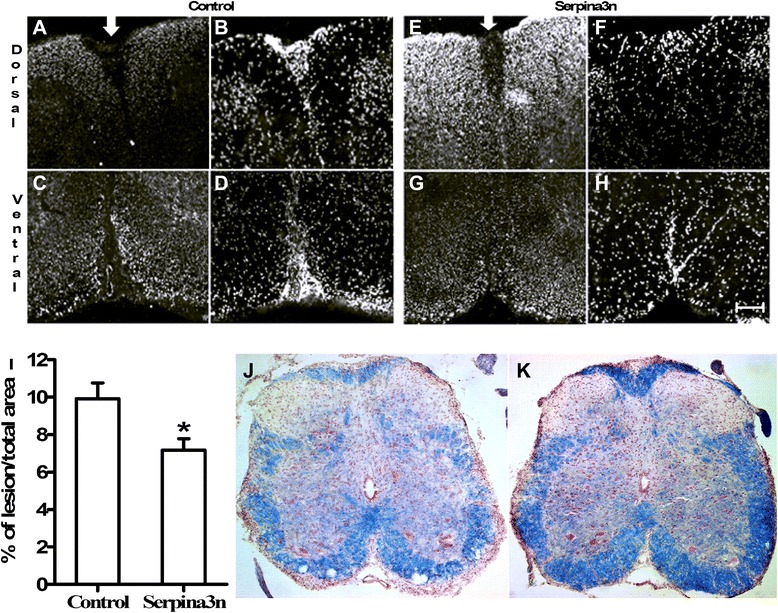
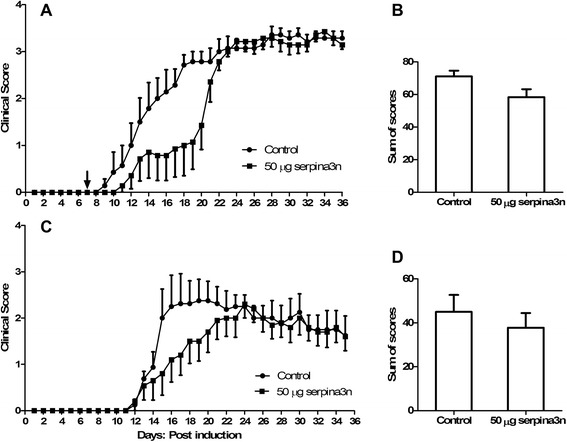
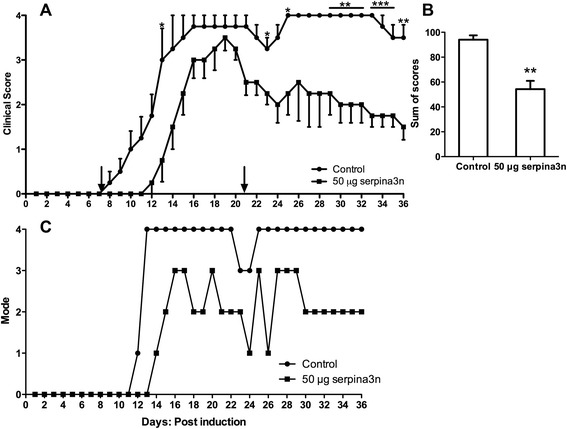
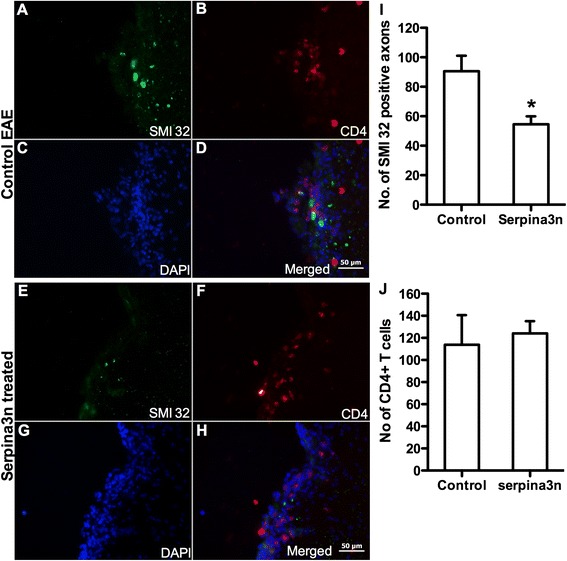
In the in vitro co-culture system, pre-treatment of lymphocytes with serpina3n prevented neuronal killing and cleavage of the cytoskeletal protein alpha-tubulin, a known substrate for GrB. Moreover, in EAE, 50 μg serpina3n substantially reduced the severity of the disease. This dose was administered intravenously twice at days 7 and 20 post EAE induction. serpina3n treatment reduced axonal and neuronal injury compared to the vehicle-treated control group and maintained the integrity of myelin. Interestingly, serpina3n treatment did not seem to reduce the infiltration of immune cells (CD4(+) and CD8(+) T cells) into the CNS.
Our data suggest further studies on serpina3n as a potentially novel therapeutic strategy for the treatment of inflammatory-mediated neurodegenerative diseases such as MS.
多发性硬化症(MS)是一种中枢神经系统(CNS)的自身免疫性炎症和神经退行性疾病。人们普遍认为,炎症细胞在MS的发病机制中起主要作用,可能是通过使用细胞毒性T细胞颗粒分泌的丝氨酸蛋白酶颗粒酶B(GrB)。我们之前已将GrB鉴定为轴突损伤和神经元死亡的介质。在本研究中,我们的目标是在体外人体系统以及在实验性自身免疫性脑脊髓炎(EAE)的体内实验中,使用新分离的GrB抑制剂丝氨酸蛋白酶抑制剂3N(serpina3n)来评估GrB抑制的效果。
我们使用了一种成熟的神经炎症体外模型,其特征在于人胎儿神经元和淋巴细胞之间的共培养系统。在体内实验中,我们在10至12周龄的雌性C57/BL6小鼠中诱导EAE,并静脉内给予它们serpina3n进行治疗。
在体外共培养系统中,用serpina3n预处理淋巴细胞可防止神经元死亡以及细胞骨架蛋白α-微管蛋白(已知的GrB底物)的裂解。此外,在EAE中,50μg serpina3n可显著降低疾病的严重程度。该剂量在EAE诱导后第7天和第20天静脉内给药两次。与载体处理的对照组相比,serpina3n治疗减少了轴突和神经元损伤,并维持了髓鞘的完整性。有趣的是,serpina3n治疗似乎并未减少免疫细胞(CD4(+)和CD8(+) T细胞)向CNS的浸润。
我们的数据表明,有必要进一步研究serpina3n作为治疗炎症介导的神经退行性疾病(如MS)的潜在新治疗策略。