Grasman Jonathan M, Do Duc M, Page Raymond L, Pins George D
Biomedical Engineering Department, Worcester Polytechnic Institute, Worcester, MA 01609, USA; Bioengineering Institute, Worcester Polytechnic Institute, Worcester, MA 01609, USA.
Biomedical Engineering Department, Worcester Polytechnic Institute, Worcester, MA 01609, USA.
Biomaterials. 2015 Dec;72:49-60. doi: 10.1016/j.biomaterials.2015.08.047. Epub 2015 Aug 28.
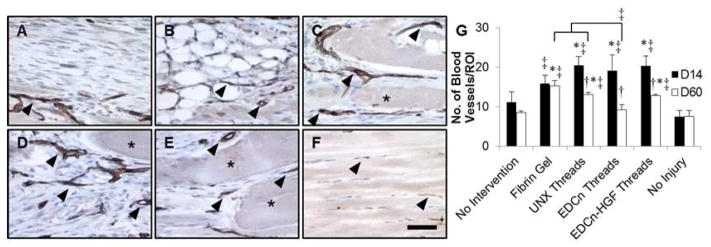
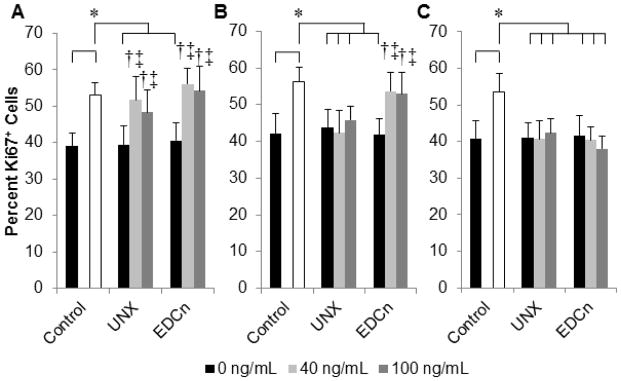
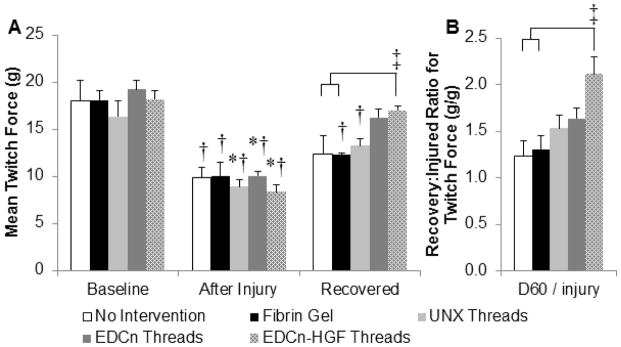
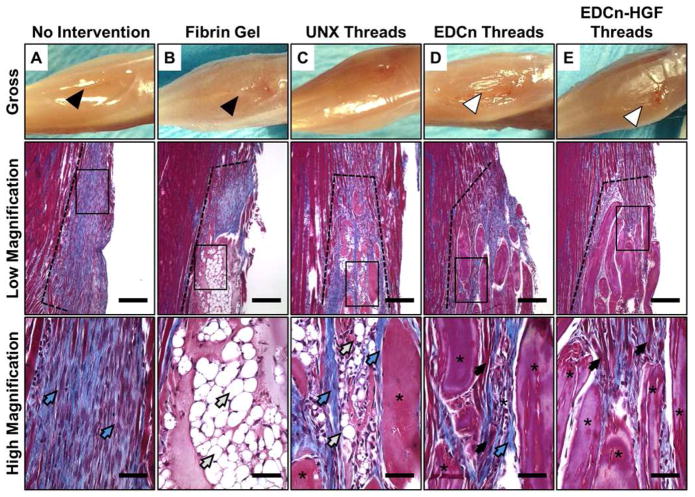
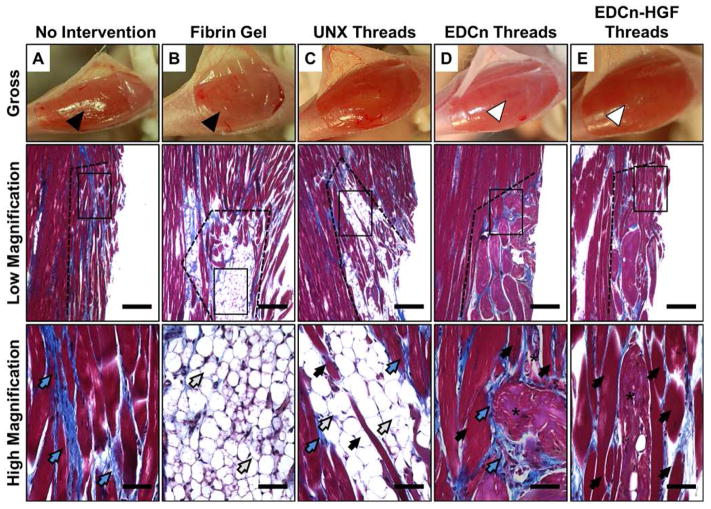
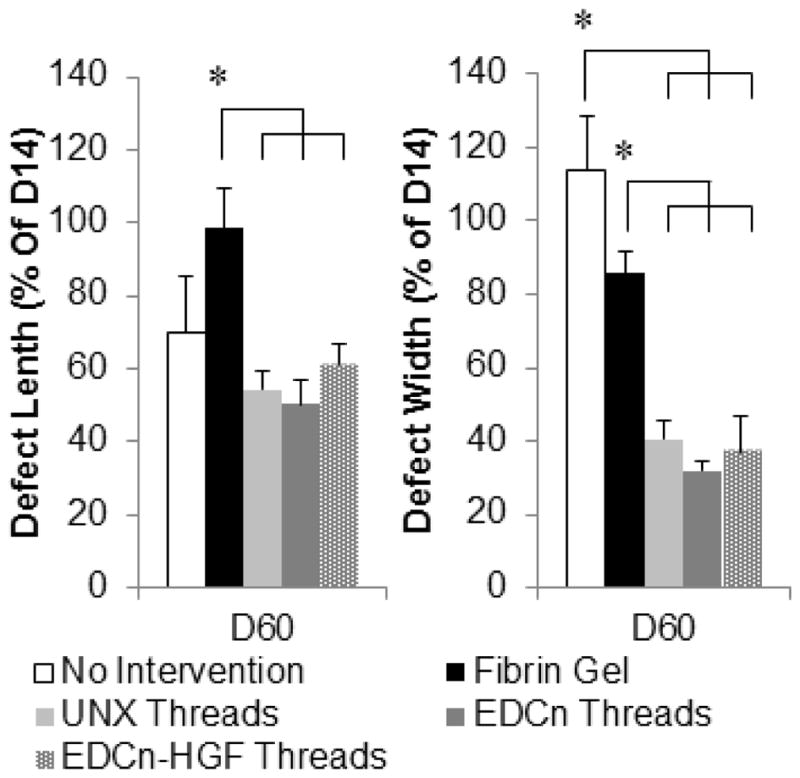
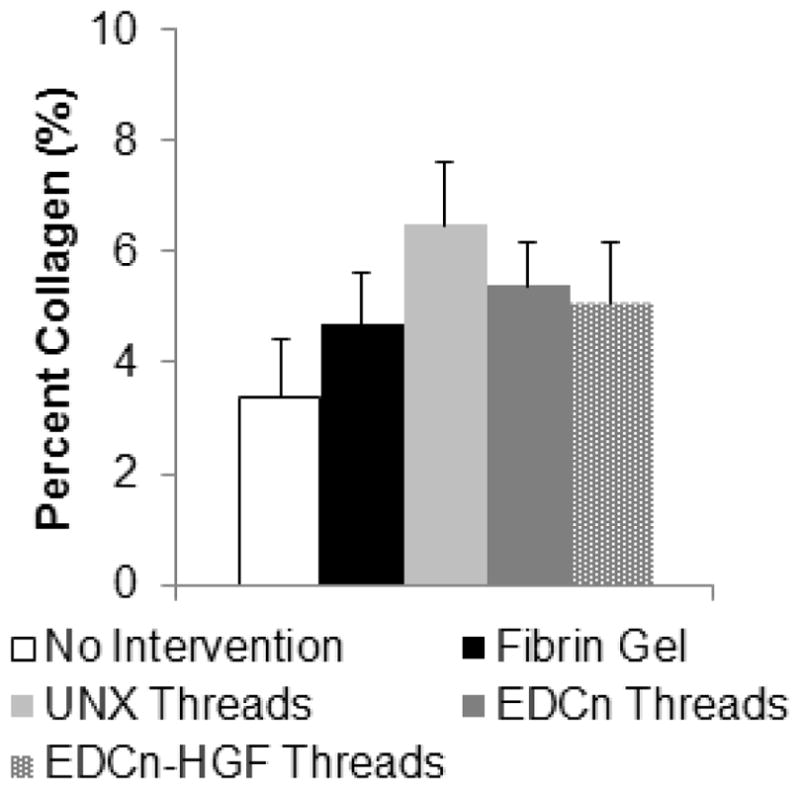
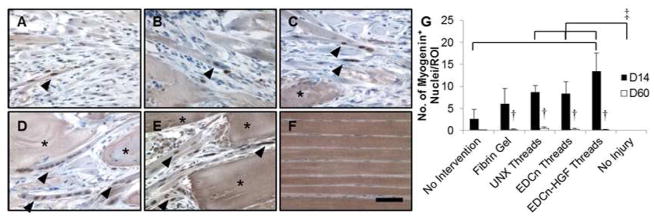
A significant challenge in the design and development of biomaterial scaffolds is to incorporate mechanical and biochemical cues to direct organized tissue growth. In this study, we investigated the effect of hepatocyte growth factor (HGF) loaded, crosslinked fibrin (EDCn-HGF) microthread scaffolds on skeletal muscle regeneration in a mouse model of volumetric muscle loss (VML). The rapid, sustained release of HGF significantly enhanced the force production of muscle tissue 60 days after injury, recovering more than 200% of the force output relative to measurements recorded immediately after injury. HGF delivery increased the number of differentiating myoblasts 14 days after injury, and supported an enhanced angiogenic response. The architectural morphology of microthread scaffolds supported the ingrowth of nascent myofibers into the wound site, in contrast to fibrin gel implants which did not support functional regeneration. Together, these data suggest that EDCn-HGF microthreads recapitulate several of the regenerative cues lost in VML injuries, promote remodeling of functional muscle tissue, and enhance the functional regeneration of skeletal muscle. Further, by strategically incorporating specific biochemical factors and precisely tuning the structural and mechanical properties of fibrin microthreads, we have developed a powerful platform technology that may enhance regeneration in other axially aligned tissues.
生物材料支架的设计与开发面临的一个重大挑战是整合机械和生化信号,以引导有组织的组织生长。在本研究中,我们研究了负载肝细胞生长因子(HGF)的交联纤维蛋白(EDCn-HGF)微丝支架对容积性肌肉损失(VML)小鼠模型骨骼肌再生的影响。HGF的快速、持续释放显著增强了损伤后60天肌肉组织的力量产生,相对于损伤后立即记录的测量值,力量输出恢复超过200%。HGF递送增加了损伤后14天分化的成肌细胞数量,并支持增强的血管生成反应。与不支持功能再生的纤维蛋白凝胶植入物相比,微丝支架的结构形态支持新生肌纤维长入伤口部位。总之,这些数据表明,EDCn-HGF微丝概括了VML损伤中丧失的几种再生信号,促进功能性肌肉组织的重塑,并增强骨骼肌的功能再生。此外,通过策略性地整合特定生化因子并精确调整纤维蛋白微丝的结构和机械性能,我们开发了一种强大的平台技术,可能增强其他轴向排列组织的再生。