Kolb Philipp, Wallich Reinhard, Nassal Michael
University Hospital Freiburg, Internal Medicine 2 / Molecular Biology, Hugstetter Str. 55, D-79106, Freiburg, Germany; University of Freiburg, Biological Faculty, Schänzlestr. 1, D-79104, Freiburg, Germany.
University Hospital Heidelberg, Institute of Immunology, Im Neuenheimer Feld 305, D-69120, Heidelberg, Germany.
PLoS One. 2015 Sep 9;10(9):e0136180. doi: 10.1371/journal.pone.0136180. eCollection 2015.
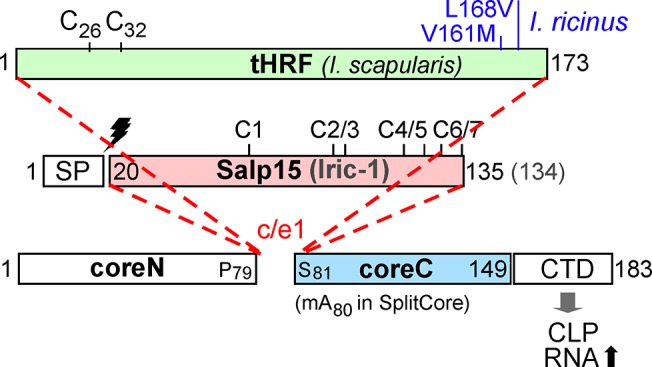
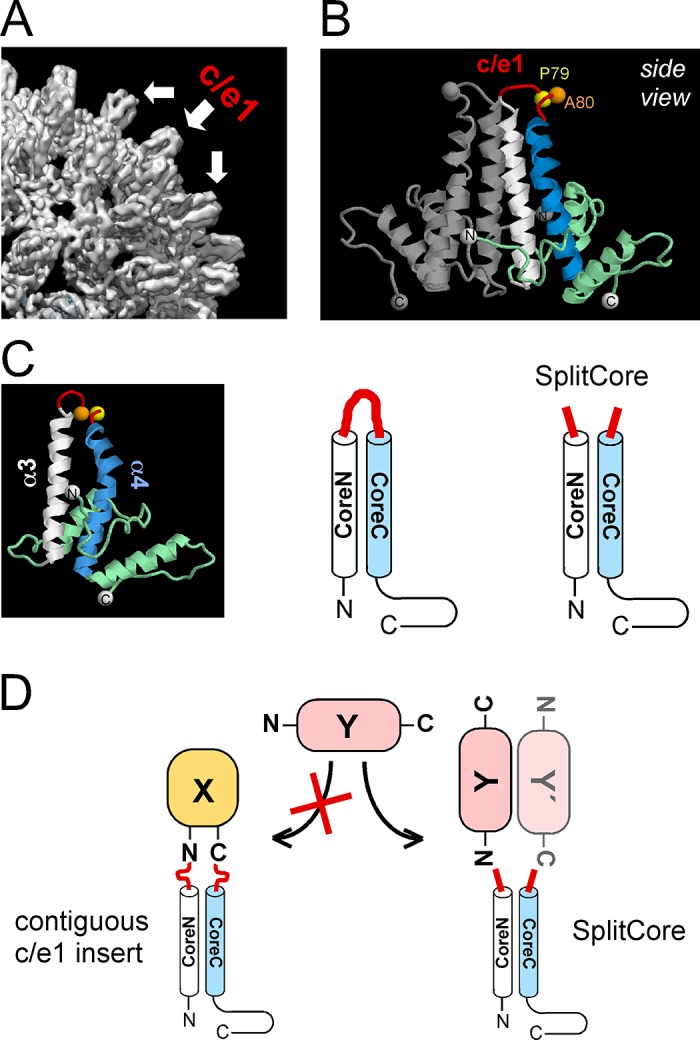
Ticks are vectors for various, including pathogenic, microbes. Tick saliva contains multiple anti-host defense factors that enable ticks their bloodmeals yet also facilitate microbe transmission. Lyme disease-causing borreliae profit specifically from the broadly conserved tick histamine release factor (tHRF), and from cysteine-rich glycoproteins represented by Salp15 from Ixodes scapularis and Iric-1 from Ixodes ricinus ticks which they recruit to their outer surface protein C (OspC). Hence these tick proteins are attractive targets for anti-tick vaccines that simultaneously impair borrelia transmission. Main obstacles are the tick proteins´ immunosuppressive activities, and for Salp15 orthologs, the lack of efficient recombinant expression systems. Here, we exploited the immune-enhancing properties of hepatitis B virus core protein (HBc) derived capsid-like particles (CLPs) to generate, in E. coli, nanoparticulate vaccines presenting tHRF and, as surrogates for the barely soluble wild-type proteins, cysteine-free Salp15 and Iric-1 variants. The latter CLPs were exclusively accessible in the less sterically constrained SplitCore system. Mice immunized with tHRF CLPs mounted a strong anti-tHRF antibody response. CLPs presenting cysteine-free Salp15 and Iric-1 induced antibodies to wild-type, including glycosylated, Salp15 and Iric-1. The broadly distributed epitopes included the OspC interaction sites. In vitro, the anti-Salp15 antibodies interfered with OspC binding and enhanced human complement-mediated killing of Salp15 decorated borreliae. A mixture of all three CLPs induced high titered antibodies against all three targets, suggesting the feasibility of combination vaccines. These data warrant in vivo validation of the new candidate vaccines´ protective potential against tick infestation and Borrelia transmission.
蜱是多种微生物(包括致病微生物)的传播媒介。蜱唾液含有多种抗宿主防御因子,这些因子使蜱能够吸食血液,但也有助于微生物传播。引起莱姆病的疏螺旋体特别受益于广泛保守的蜱组胺释放因子(tHRF),以及由肩突硬蜱的Salp15和蓖麻硬蜱的Iric-1所代表的富含半胱氨酸的糖蛋白,它们会将这些蛋白募集到其外表面蛋白C(OspC)上。因此,这些蜱蛋白是抗蜱疫苗的有吸引力的靶点,这些疫苗可同时削弱疏螺旋体的传播。主要障碍是蜱蛋白的免疫抑制活性,以及对于Salp15直系同源物而言,缺乏高效的重组表达系统。在这里,我们利用乙肝病毒核心蛋白(HBc)衍生的衣壳样颗粒(CLP)的免疫增强特性,在大肠杆菌中生成呈现tHRF的纳米颗粒疫苗,以及作为几乎不溶性野生型蛋白替代物的无半胱氨酸的Salp15和Iric-1变体。后者的CLP仅在空间限制较小的SplitCore系统中可获得。用tHRF CLP免疫的小鼠产生了强烈的抗tHRF抗体反应。呈现无半胱氨酸的Salp15和Iric-1的CLP诱导产生了针对野生型(包括糖基化的)Salp15和Iric-1的抗体。广泛分布的表位包括OspC相互作用位点。在体外,抗Salp15抗体干扰OspC结合,并增强人补体介导的对Salp15修饰的疏螺旋体的杀伤作用。所有三种CLP的混合物诱导产生了针对所有三个靶点的高滴度抗体,表明联合疫苗具有可行性。这些数据证明了新候选疫苗对蜱侵袭和疏螺旋体传播的保护潜力进行体内验证的必要性。