de Goede Olivia M, Razzaghian Hamid R, Price E Magda, Jones Meaghan J, Kobor Michael S, Robinson Wendy P, Lavoie Pascal M
Child & Family Research Institute, 950 W 28th Avenue, Vancouver, BC V5Z 4H4 Canada ; Department of Medical Genetics, University of British Columbia, Vancouver, BC V6T 1Z3 Canada.
Child & Family Research Institute, 950 W 28th Avenue, Vancouver, BC V5Z 4H4 Canada ; Department of Pediatrics, University of British Columbia, Vancouver, BC V6T 1Z3 Canada.
Clin Epigenetics. 2015 Sep 11;7(1):95. doi: 10.1186/s13148-015-0129-6. eCollection 2015.
Genome-wide DNA methylation (DNAm) studies have proven extremely useful to understand human hematopoiesis. Due to their active DNA content, nucleated red blood cells (nRBCs) contribute to epigenetic and transcriptomic studies derived from whole cord blood. Genomic studies of cord blood hematopoietic cells isolated by fluorescence-activated cell sorting (FACS) may be significantly altered by heterotopic interactions with nRBCs during conventional cell sorting.
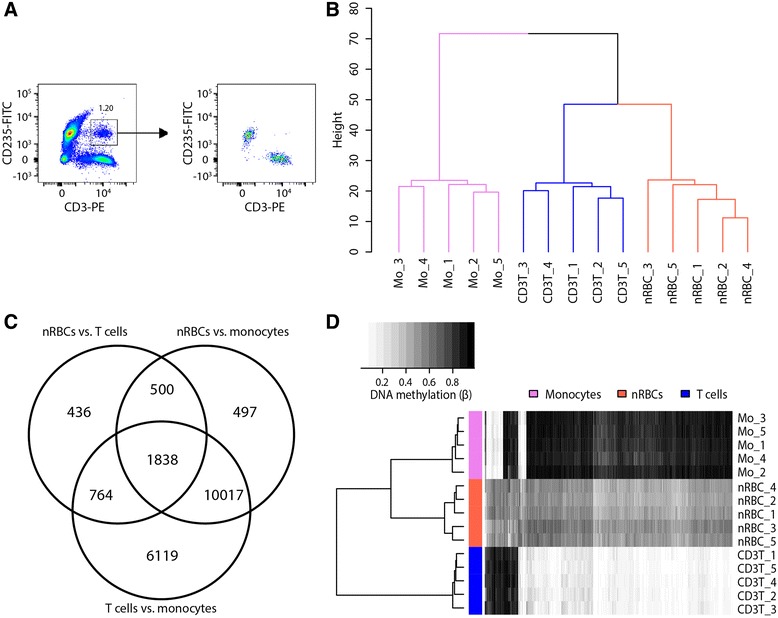
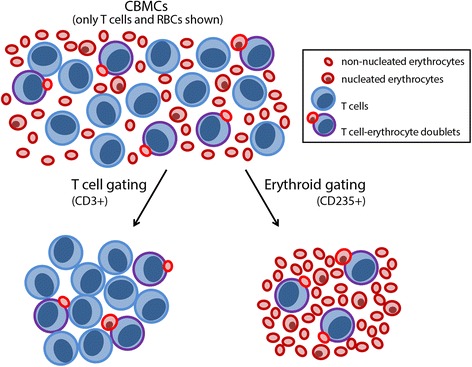
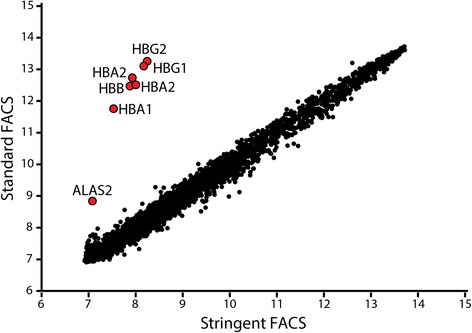
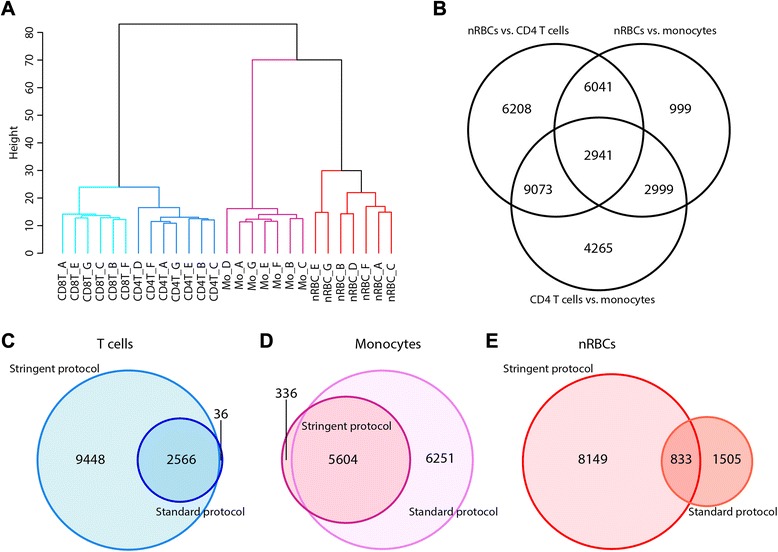
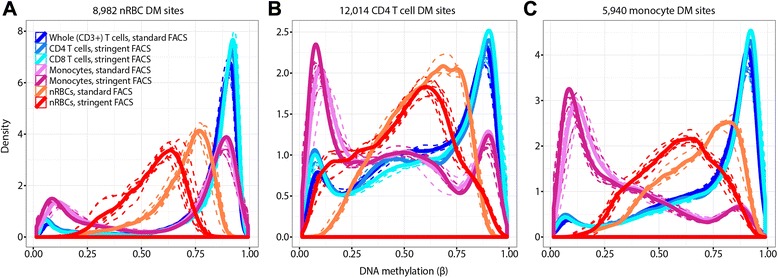
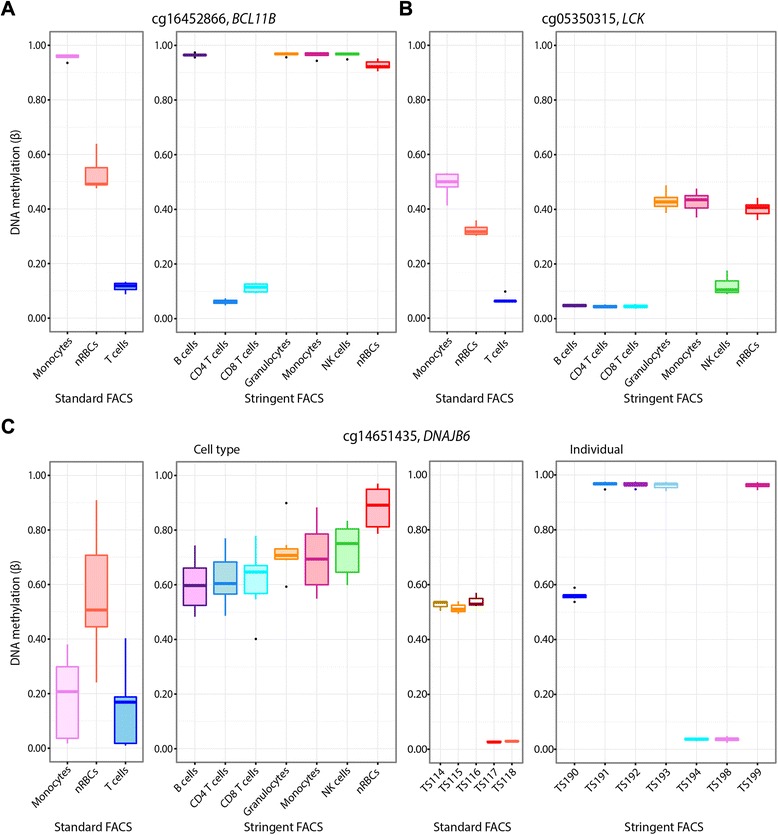
We report that cord blood T cells, and to a lesser extent monocytes and B cells, physically engage with nRBCs during FACS. These heterotopic interactions resulted in significant cross-contamination of genome-wide epigenetic and transcriptomic data. Formal exclusion of erythroid lineage-specific markers yielded DNAm profiles (measured by the Illumina 450K array) of cord blood CD4 and CD8 T lymphocytes, B lymphocytes, natural killer (NK) cells, granulocytes, monocytes, and nRBCs that were more consistent with expected hematopoietic lineage relationships. Additionally, we identified eight highly differentially methylated CpG sites in nRBCs (false detection rate <5 %, |Δβ| >0.50) that can be used to detect nRBC contamination of purified hematopoietic cells or to assess the impact of nRBCs on whole cord blood DNAm profiles. Several of these erythroid markers are located in or near genes involved in erythropoiesis (ZFPM1, HDAC4) or immune function (MAP3K14, IFIT1B), reinforcing a possible immune regulatory role for nRBCs in early life.
Heterotopic interactions between erythroid cells and white blood cells can result in contaminated cell populations if not properly excluded during cell sorting. Cord blood nRBCs have a distinct DNAm profile that can significantly skew epigenetic studies. Our findings have major implications for the design and interpretation of genome-wide epigenetic and transcriptomic studies using human cord blood.
全基因组DNA甲基化(DNAm)研究已被证明对于理解人类造血作用极为有用。由于其活跃的DNA含量,有核红细胞(nRBCs)有助于源自全脐带血的表观遗传学和转录组学研究。在传统细胞分选过程中,通过荧光激活细胞分选(FACS)分离的脐带血造血细胞的基因组研究可能会因与nRBCs的异位相互作用而发生显著改变。
我们报告称,在FACS过程中,脐带血T细胞以及程度较轻的单核细胞和B细胞会与nRBCs发生物理接触。这些异位相互作用导致全基因组表观遗传学和转录组学数据出现显著交叉污染。正式排除红系谱系特异性标记物后,获得了脐带血CD4和CD8 T淋巴细胞、B淋巴细胞、自然杀伤(NK)细胞、粒细胞、单核细胞和nRBCs的DNAm谱(通过Illumina 450K芯片测量),这些谱与预期的造血谱系关系更为一致。此外,我们在nRBCs中鉴定出8个高度差异甲基化的CpG位点(错误发现率<5%,|Δβ|>0.50),可用于检测纯化造血细胞中的nRBC污染或评估nRBCs对全脐带血DNAm谱的影响。其中一些红系标记物位于参与红细胞生成(ZFPM1、HDAC4)或免疫功能(MAP3K14、IFIT1B)的基因内或附近,这强化了nRBCs在生命早期可能具有的免疫调节作用。
如果在细胞分选过程中未适当排除,红系细胞与白细胞之间的异位相互作用可能导致细胞群体受到污染。脐带血nRBCs具有独特的DNAm谱,可显著扭曲表观遗传学研究。我们的发现对使用人类脐带血进行全基因组表观遗传学和转录组学研究的设计和解释具有重要意义。