Snider Joseph, Lee Dongpyo, Poizner Howard, Gepshtein Sergei
Institute for Neural Computation, University of California at San Diego, La Jolla, California, United States of America.
Institute for Neural Computation, University of California at San Diego, La Jolla, California, United States of America; Graduate Program in Neurosciences, University of California at San Diego, La Jolla, California, United States of America.
PLoS Comput Biol. 2015 Sep 14;11(9):e1004501. doi: 10.1371/journal.pcbi.1004501. eCollection 2015 Sep.
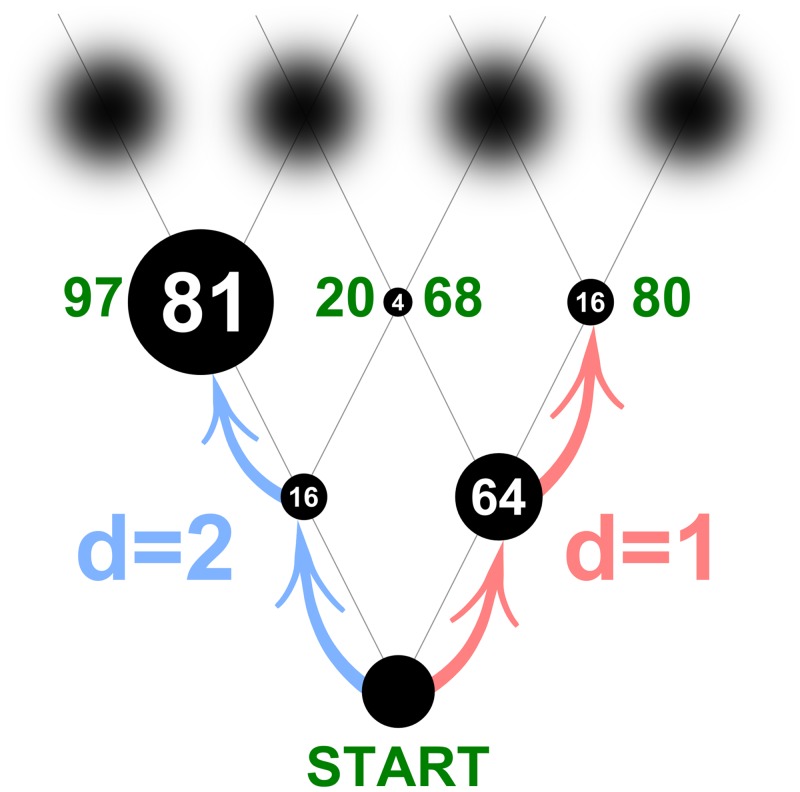
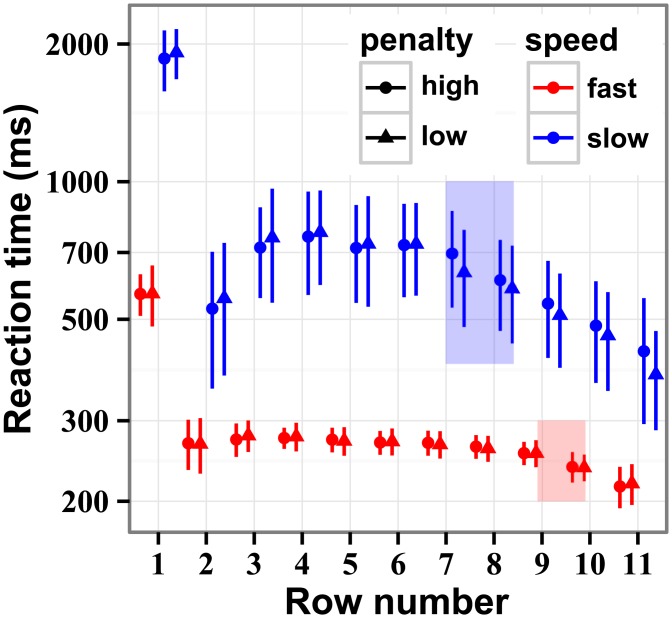
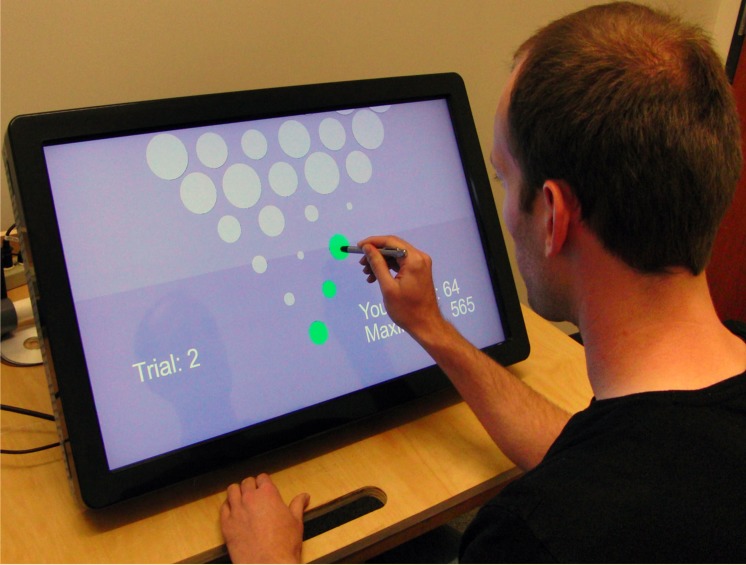
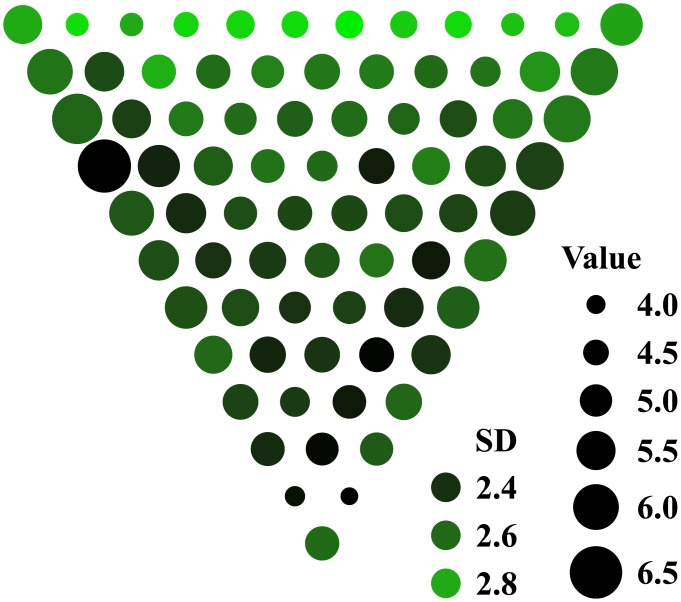
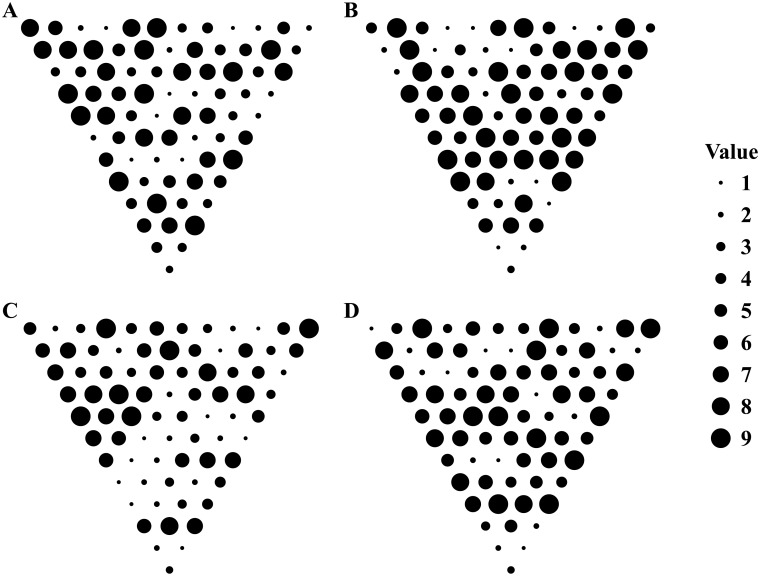
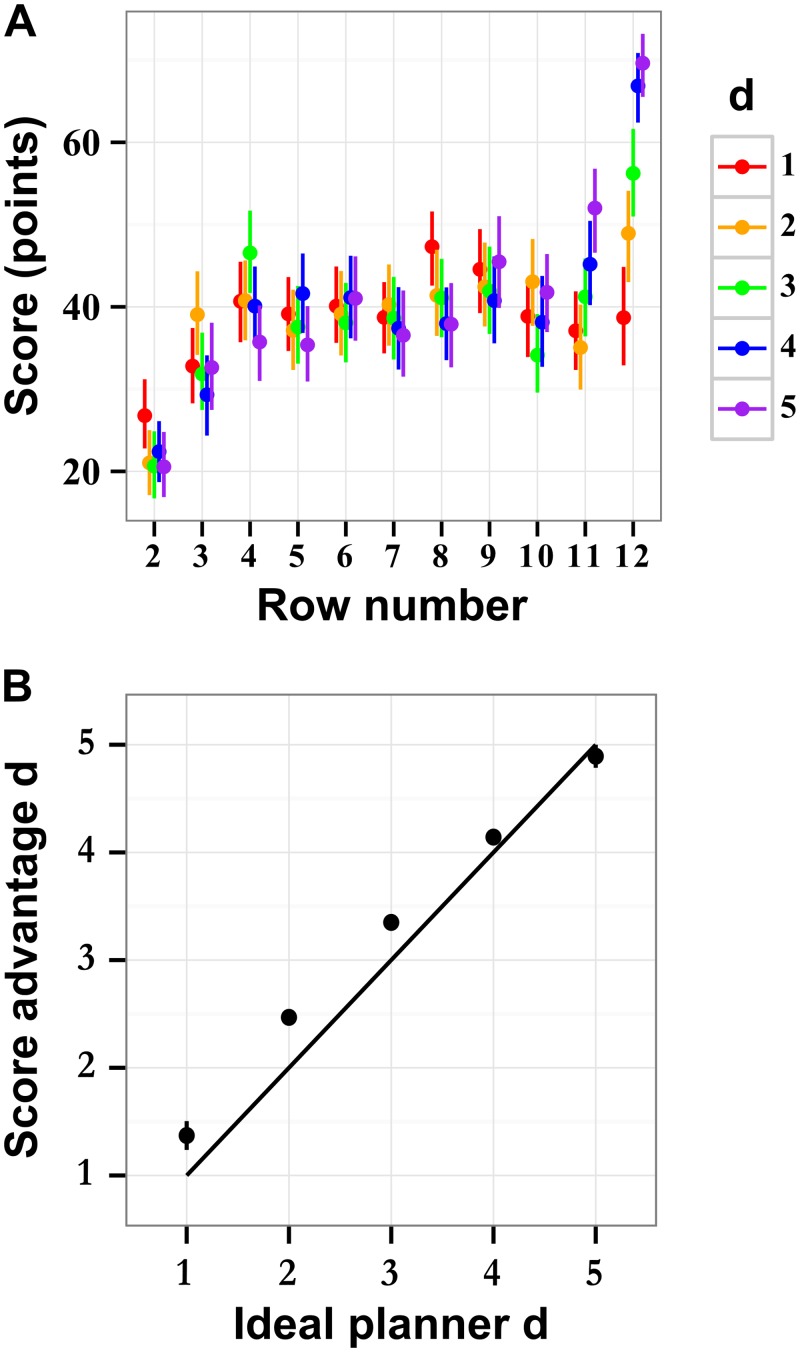
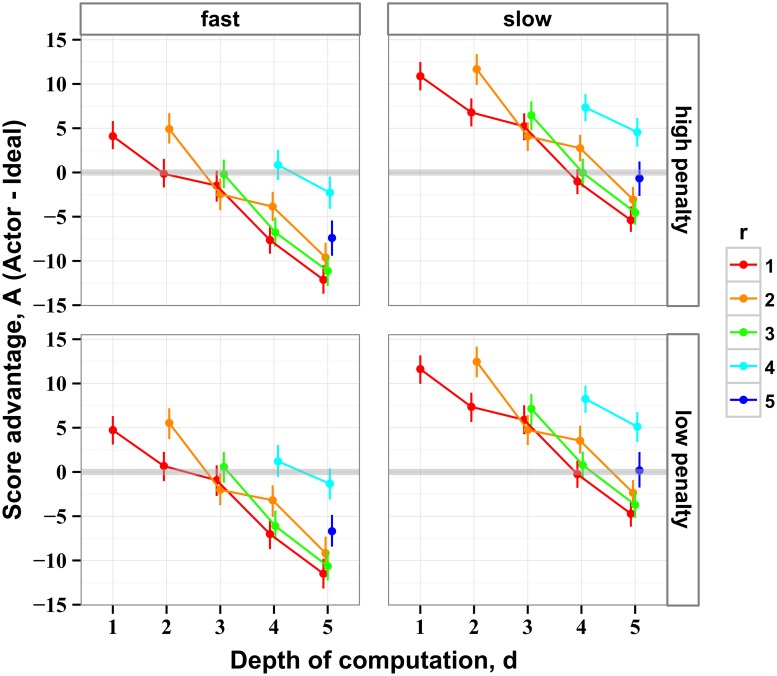
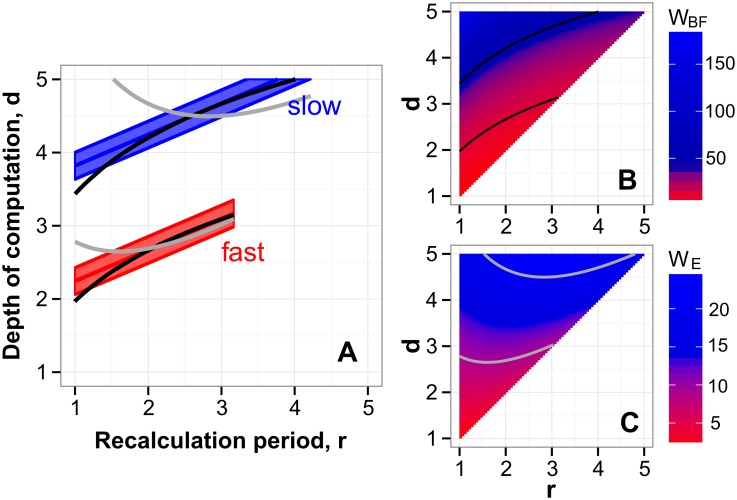
The future is uncertain because some forthcoming events are unpredictable and also because our ability to foresee the myriad consequences of our own actions is limited. Here we studied how humans select actions under such extrinsic and intrinsic uncertainty, in view of an exponentially expanding number of prospects on a branching multivalued visual stimulus. A triangular grid of disks of different sizes scrolled down a touchscreen at a variable speed. The larger disks represented larger rewards. The task was to maximize the cumulative reward by touching one disk at a time in a rapid sequence, forming an upward path across the grid, while every step along the path constrained the part of the grid accessible in the future. This task captured some of the complexity of natural behavior in the risky and dynamic world, where ongoing decisions alter the landscape of future rewards. By comparing human behavior with behavior of ideal actors, we identified the strategies used by humans in terms of how far into the future they looked (their "depth of computation") and how often they attempted to incorporate new information about the future rewards (their "recalculation period"). We found that, for a given task difficulty, humans traded off their depth of computation for the recalculation period. The form of this tradeoff was consistent with a complete, brute-force exploration of all possible paths up to a resource-limited finite depth. A step-by-step analysis of the human behavior revealed that participants took into account very fine distinctions between the future rewards and that they abstained from some simple heuristics in assessment of the alternative paths, such as seeking only the largest disks or avoiding the smaller disks. The participants preferred to reduce their depth of computation or increase the recalculation period rather than sacrifice the precision of computation.
未来是不确定的,这是因为一些即将发生的事件无法预测,还因为我们预见自身行为无数后果的能力有限。在此,鉴于分支多值视觉刺激上前景数量呈指数级增长,我们研究了人类在这种外在和内在不确定性下如何选择行动。一个由不同大小圆盘组成的三角形网格以可变速度在触摸屏上向下滚动。较大的圆盘代表较大的奖励。任务是通过快速依次触摸一个圆盘,在网格上形成一条向上的路径,以最大化累积奖励,而路径上的每一步都会限制未来可访问的网格部分。这项任务捕捉到了风险和动态世界中自然行为的一些复杂性,即持续的决策会改变未来奖励的格局。通过将人类行为与理想行为者的行为进行比较,我们从人类展望未来的距离(他们的“计算深度”)以及他们尝试纳入未来奖励新信息的频率(他们的“重新计算周期”)方面确定了人类使用的策略。我们发现,对于给定的任务难度,人类会在计算深度和重新计算周期之间进行权衡。这种权衡的形式与对所有可能路径进行完整、强力探索直至资源受限的有限深度一致。对人类行为的逐步分析表明,参与者考虑到了未来奖励之间非常细微的差别,并且在评估替代路径时摒弃了一些简单的启发式方法,比如只寻找最大的圆盘或避开较小的圆盘。参与者更倾向于减少计算深度或增加重新计算周期,而不是牺牲计算精度。