Diaz-Ruiz Carmen, Rodriguez-Perez Ana I, Beiroa Daniel, Rodriguez-Pallares Jannette, Labandeira-Garcia Jose L
Laboratory of Neuroanatomy and Experimental Neurology, Dept. of Morphological Sciences, CIMUS, University of Santiago de Compostela, Santiago de Compostela, Spain.
Networking Research Center on Neurodegenerative Diseases (CIBERNED), Madrid, Spain.
Oncotarget. 2015 Sep 29;6(29):26675-89. doi: 10.18632/oncotarget.5596.
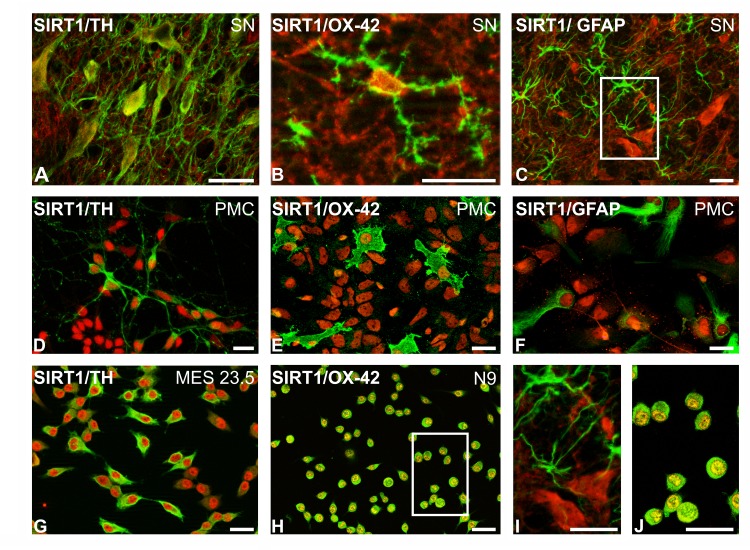
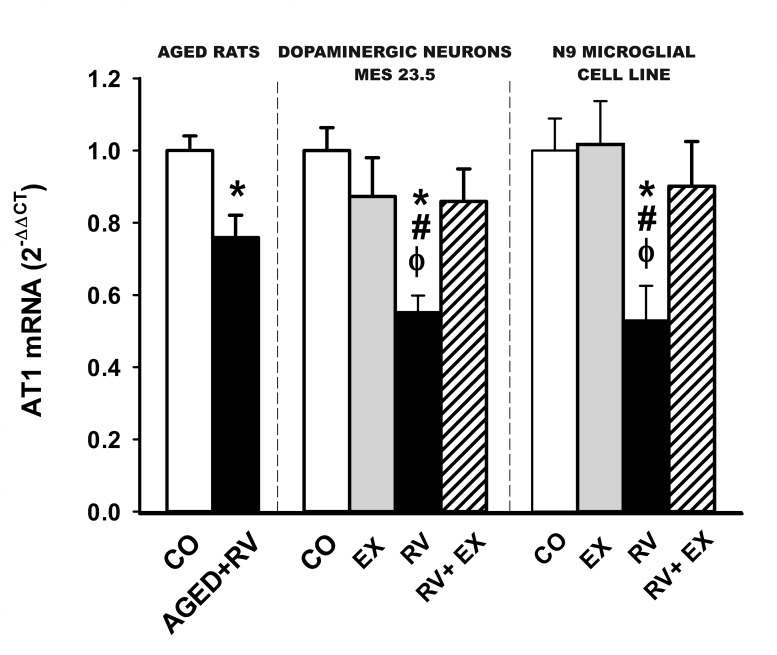
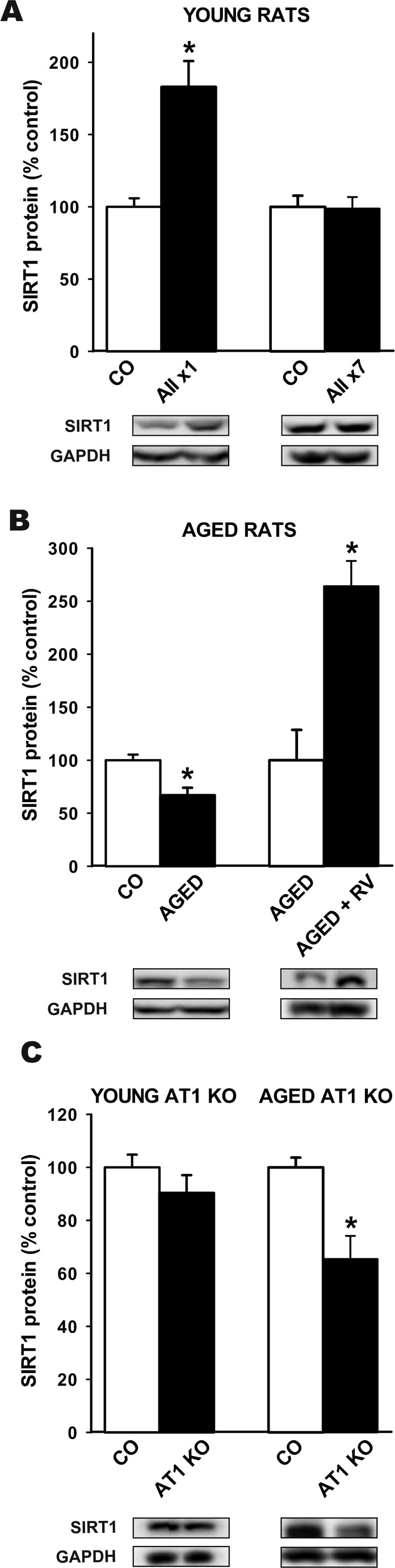
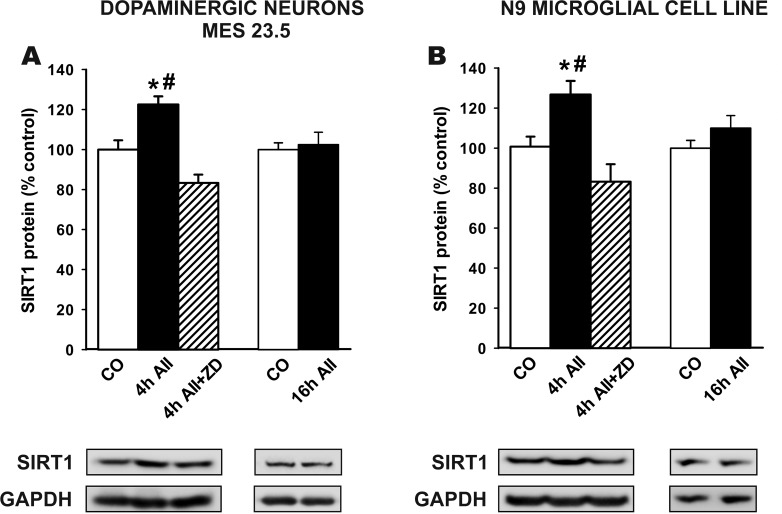
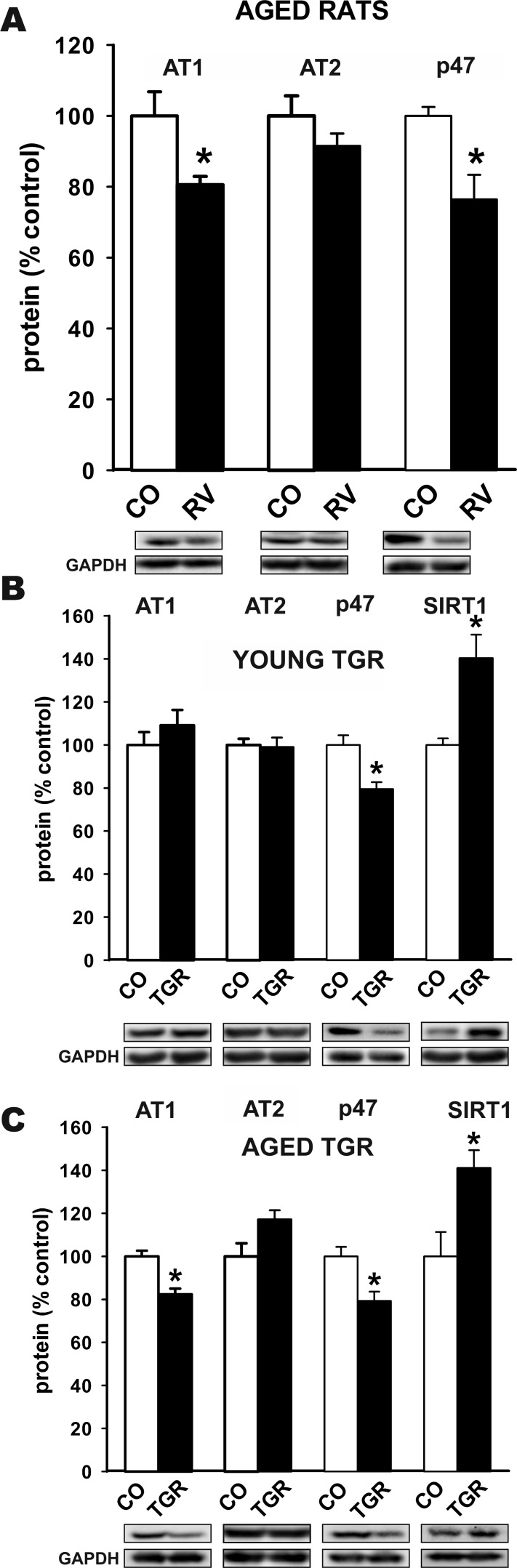
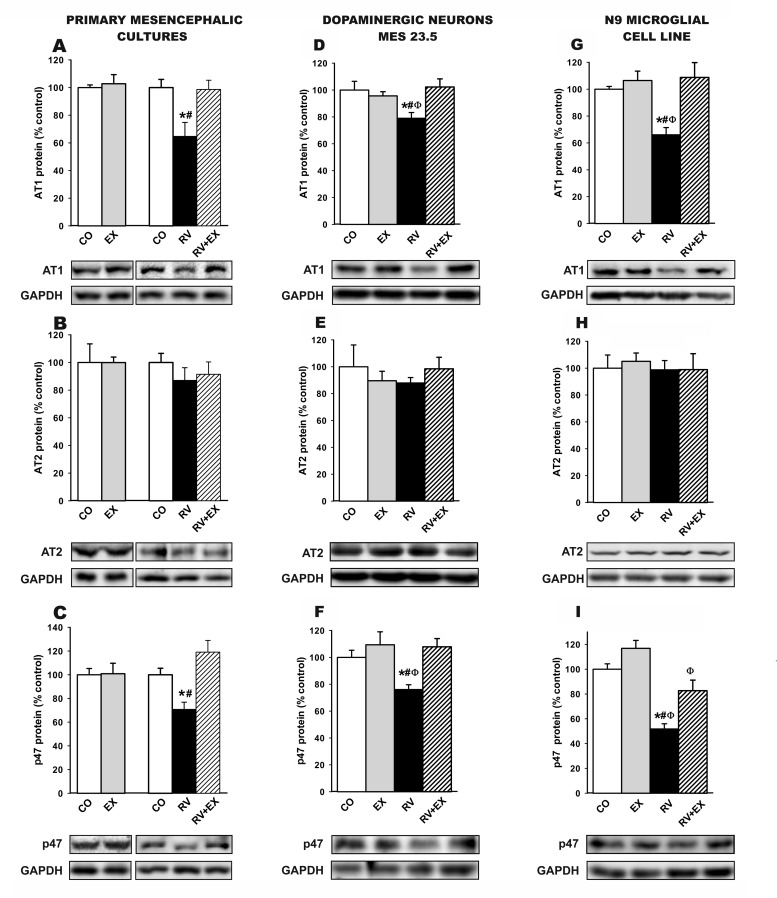
Local angiotensin II (AII) and sirtuin 1 (SIRT1) play a major role in the modulation of neuroinflammation, oxidative stress and aging-related dopaminergic vulnerability to damage. However, it is not known whether the modulation is related to reciprocal regulation between SIRT1 and AII. In the present study, a single intraventricular injection of AII increased nigral SIRT1 levels in young adult rats. Although AII activity is known to be increased in aged rats, levels of SIRT1 were significantly lower than in young controls. Treatment with the SIRT1-activating compound resveratrol increased nigral SIRT1 levels in aged rats. Levels of SIRT1 were significantly higher in aged wild type mice than in AII type-1 receptor (AT1) deficient mice. In cell culture studies, treatment with AII also induced a transitory increase in levels of SIRT1 in the MES 23.5 dopaminergic neuron and the N9 microglial cell lines. In aged rats, treatment with resveratrol induced a significant decrease in the expression of AT1 receptors and markers of NADPH-oxidase activation (p47phox). In aged transgenic mice over-expressing SIRT1, levels of AT1 and p47 phox were lower than in aged wild type controls. In vitro, the inhibitory effects of resveratrol on AII/AT1/NADPH-oxidase activity were confirmed in primary mesencephalic cultures, the N9 microglial cell line, and the dopaminergic neuron cell line MES 23.5, and they were blocked by the SIRT1 specific inhibitor EX527. The present findings show that SIRT1 and the axis AII/AT1/NADPH-oxidase regulate each other. This is impaired in aged animals and may be mitigated with sirtuin-activating compounds.
局部血管紧张素II(AII)和沉默调节蛋白1(SIRT1)在神经炎症、氧化应激以及衰老相关的多巴胺能神经元易损性调节中起主要作用。然而,尚不清楚这种调节是否与SIRT1和AII之间的相互调节有关。在本研究中,成年幼鼠脑室内单次注射AII可使黑质SIRT1水平升高。虽然已知老年大鼠体内AII活性会升高,但SIRT1水平显著低于年轻对照。用SIRT1激活化合物白藜芦醇处理可使老年大鼠黑质SIRT1水平升高。老年野生型小鼠的SIRT1水平显著高于AII 1型受体(AT1)缺陷小鼠。在细胞培养研究中,用AII处理也可使MES 23.5多巴胺能神经元和N9小胶质细胞系中的SIRT1水平短暂升高。在老年大鼠中,白藜芦醇处理可使AT1受体表达及NADPH氧化酶激活标志物(p47phox)显著降低。在过表达SIRT1的老年转基因小鼠中,AT1和p47phox水平低于老年野生型对照。在体外,白藜芦醇对AII/AT1/NADPH氧化酶活性的抑制作用在原代中脑培养物、N9小胶质细胞系和多巴胺能神经元细胞系MES 23.5中得到证实,且被SIRT1特异性抑制剂EX527阻断。本研究结果表明,SIRT1与AII/AT1/NADPH氧化酶轴相互调节。在老年动物中这种调节受损,而用沉默调节蛋白激活化合物可能会改善这种情况。