Ashe Alyson, Sarkies Peter, Le Pen Jérémie, Tanguy Mélanie, Miska Eric A
Wellcome Trust Cancer Research United Kingdom Gurdon Institute, University of Cambridge, Cambridge, United Kingdom Department of Biochemistry, University of Cambridge, Cambridge, United Kingdom School of Molecular Bioscience, University of Sydney, Sydney, NSW, Australia
Wellcome Trust Cancer Research United Kingdom Gurdon Institute, University of Cambridge, Cambridge, United Kingdom Department of Biochemistry, University of Cambridge, Cambridge, United Kingdom MRC Clinical Sciences Centre, Imperial College London, London, United Kingdom.
J Virol. 2015 Dec;89(23):12035-46. doi: 10.1128/JVI.03664-14. Epub 2015 Sep 23.
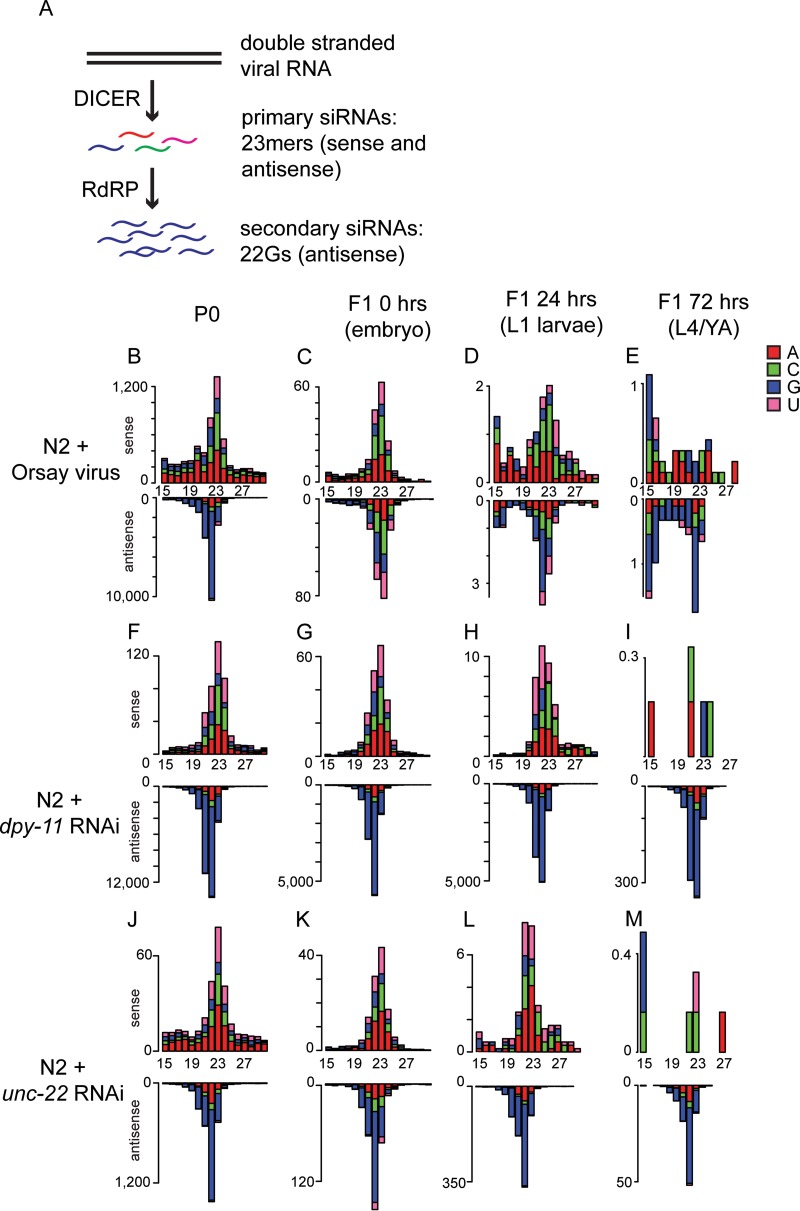
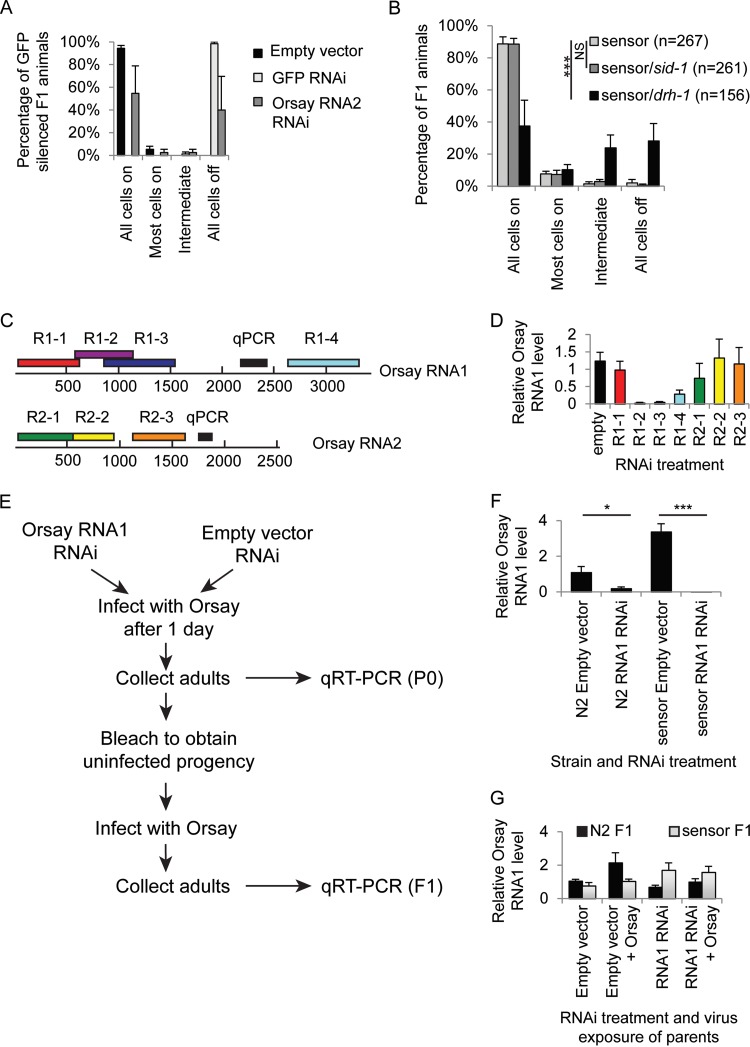
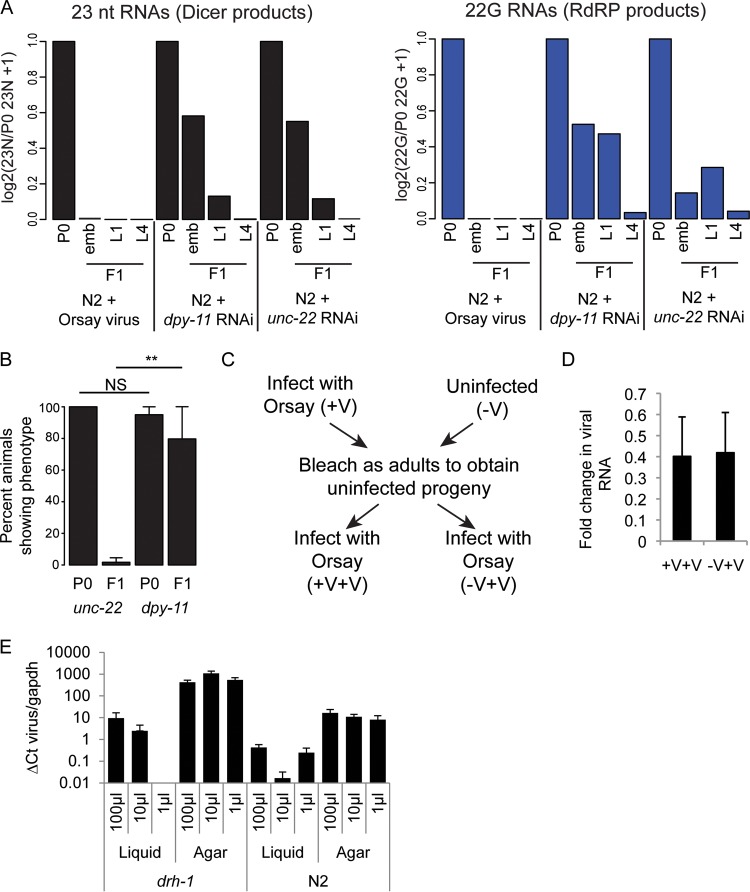
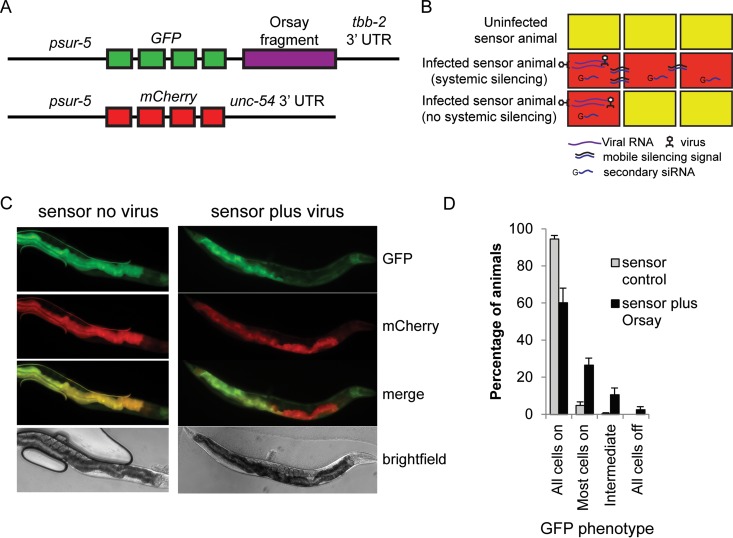
Antiviral RNA-mediated silencing (RNA interference [RNAi]) acts as a powerful innate immunity defense in plants, invertebrates, and mammals. In Caenorhabditis elegans, RNAi is systemic; i.e., RNAi silencing signals can move between cells and tissues. Furthermore, RNAi effects can be inherited transgenerationally and may last for many generations. Neither the biological relevance of systemic RNAi nor transgenerational RNAi is currently understood. Here we examined the role of both pathways in the protection of C. elegans from viral infection. We studied the Orsay virus, a positive-strand RNA virus related to Nodaviridae and the first and only virus known to infect C. elegans. Immunity to Orsay virus infection requires the RNAi pathway. Surprisingly, we found that genes required for systemic or transgenerational RNAi did not have a role in antiviral defense. Furthermore, we found that Orsay virus infection did not elicit a systemic RNAi response even when a target for RNAi was provided by using transgenes. Finally, we show that viral siRNAs, the effectors of RNAi, are not inherited to a level that provides any significant resistance to viral infection in the next generation. We conclude that systemic or transgenerational RNAi does not play a role in the defense against natural Orsay virus infection. Furthermore, our data suggest that there is a qualitative difference between experimental RNAi and antiviral RNAi. Our data are consistent with a model of systemic and transgenerational RNAi that requires a nuclear or germ line component that is lacking in almost all RNA virus infections.
Since its discovery in Caenorhabditis elegans, RNAi has proven a valuable scientific tool in many organisms. In C. elegans, exogenous RNAi spreads throughout the organism and can be passed between generations; however, there has been controversy as to the endogenous role(s) that the RNAi pathway plays. One endogenous role for which spreading both within the infected organism and between generations would be advantageous is a role in viral defense. In plants, antiviral RNAi is systemic and the spread of RNAi between cells provides protection against subsequent viral infection. Here we investigated this by using the only naturally occurring virus known to infect C. elegans, Orsay virus, and surprisingly found that, in contrast to the exogenous RNAi pathway, the antiviral RNAi response targeted against this virus does not spread systemically throughout the organism and cannot be passed between generations. These results suggest that there are differences between the two pathways that remain to be discovered.
抗病毒RNA介导的沉默(RNA干扰[RNAi])在植物、无脊椎动物和哺乳动物中作为一种强大的先天免疫防御机制发挥作用。在秀丽隐杆线虫中,RNAi是系统性的;即RNAi沉默信号可以在细胞和组织之间移动。此外,RNAi效应可以跨代遗传,并且可能持续许多代。目前,系统性RNAi和跨代RNAi的生物学相关性均未得到理解。在此,我们研究了这两种途径在保护秀丽隐杆线虫免受病毒感染中的作用。我们研究了奥赛病毒,一种与诺达病毒科相关的正链RNA病毒,也是已知感染秀丽隐杆线虫的第一种且唯一的病毒。对奥赛病毒感染的免疫需要RNAi途径。令人惊讶的是,我们发现系统性或跨代RNAi所需的基因在抗病毒防御中不起作用。此外,我们发现即使通过转基因提供RNAi的靶标,奥赛病毒感染也不会引发系统性RNAi反应。最后,我们表明RNAi的效应分子病毒小干扰RNA(viral siRNAs)不会遗传到为下一代提供任何显著抗病毒感染抗性的水平。我们得出结论,系统性或跨代RNAi在抵御自然奥赛病毒感染中不起作用。此外,我们的数据表明实验性RNAi和抗病毒RNAi之间存在质的差异。我们的数据与一种系统性和跨代RNAi模型一致,该模型需要一个在几乎所有RNA病毒感染中都缺乏的核或生殖系成分。
自RNAi在秀丽隐杆线虫中被发现以来,它已被证明是许多生物体中一种有价值的科学工具。在秀丽隐杆线虫中,外源性RNAi在整个生物体中传播并且可以在代与代之间传递;然而,RNAi途径所起的内源性作用一直存在争议。在感染的生物体内以及在代与代之间传播都有利的一种内源性作用是在病毒防御中发挥作用。在植物中,抗病毒RNAi是系统性的,RNAi在细胞之间的传播提供了对后续病毒感染的保护。在此,我们通过使用已知感染秀丽隐杆线虫的唯一自然发生的病毒奥赛病毒对此进行了研究,并且令人惊讶地发现,与外源性RNAi途径相反,针对这种病毒的抗病毒RNAi反应不会在整个生物体中系统性地传播,也不能在代与代之间传递。这些结果表明这两种途径之间存在有待发现的差异。