Wladyka Benedykt, Piejko Marcin, Bzowska Monika, Pieta Piotr, Krzysik Monika, Mazurek Łukasz, Guevara-Lora Ibeth, Bukowski Michał, Sabat Artur J, Friedrich Alexander W, Bonar Emilia, Międzobrodzki Jacek, Dubin Adam, Mak Paweł
Department of Analytical Biochemistry, Faculty of Biochemistry, Biophysics and Biotechnology, Jagiellonian University, 30-387 Krakow, Poland.
Malopolska Centre of Biotechnology, Jagiellonian University, 30-387 Krakow, Poland.
Sci Rep. 2015 Sep 28;5:14569. doi: 10.1038/srep14569.
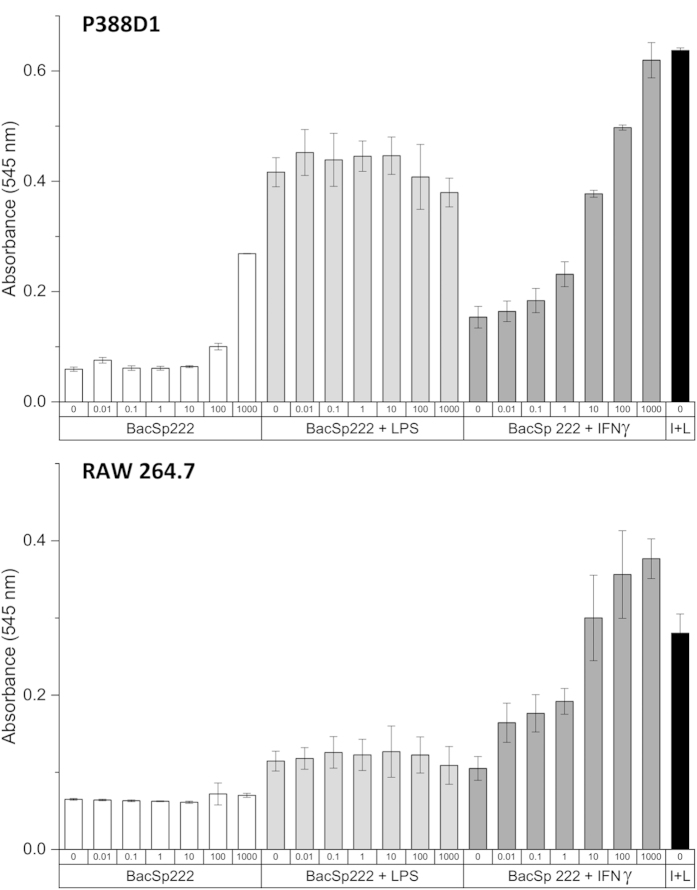
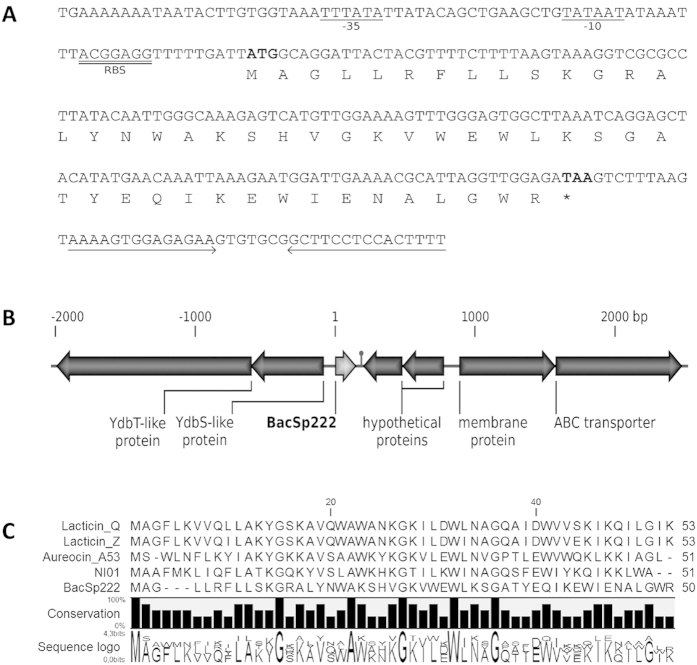
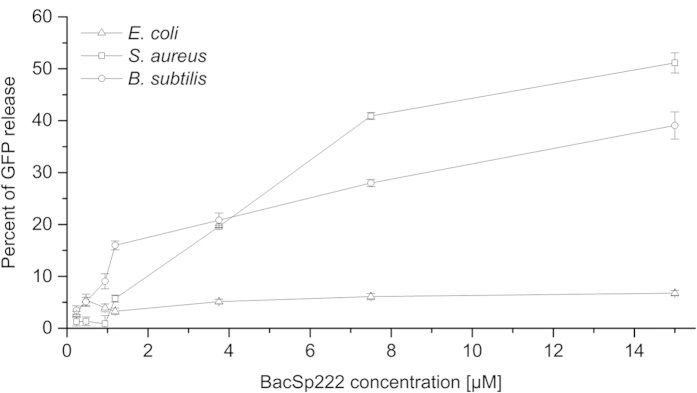
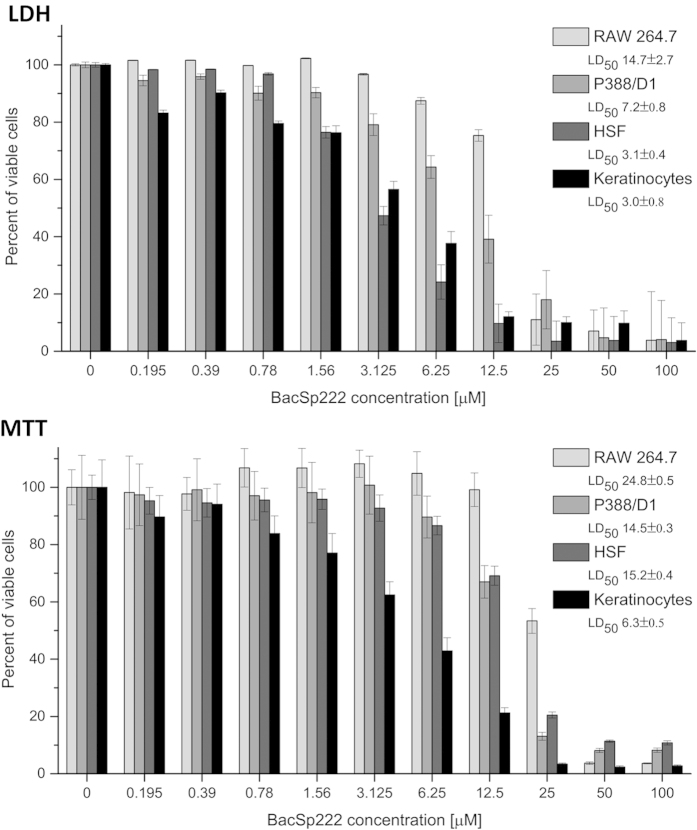
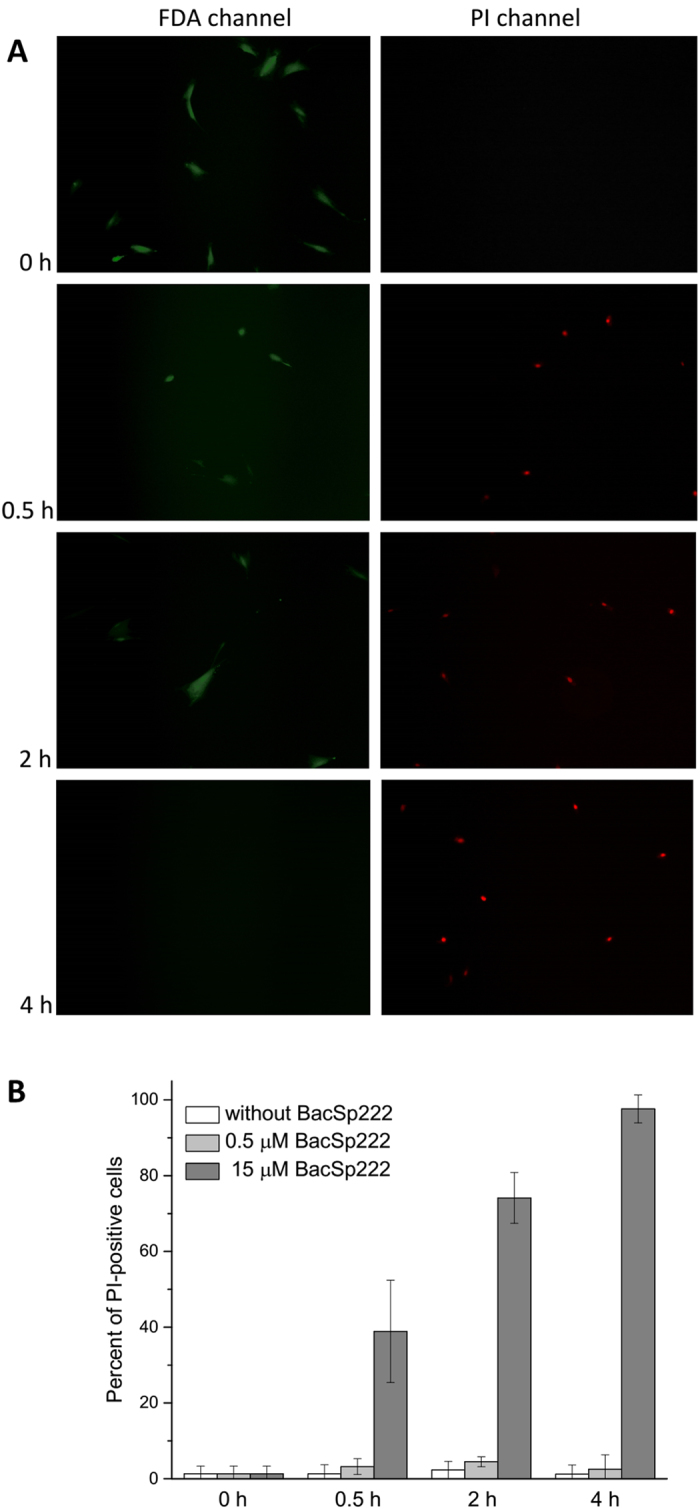
Staphylococcus pseudintermedius is a common commensal bacterium colonizing the skin and mucosal surfaces of household animals. However, it has recently emerged as a dangerous opportunistic pathogen, comparable to S. aureus for humans. The epidemiological situation is further complicated by the increasing number of methicillin-resistant S. pseudintermedius infections and evidence of gene transmission driving antibiotic resistance between staphylococci colonizing human and zoonotic hosts. In the present study, we describe a unique peptide, BacSp222, that possesses features characteristic of both bacteriocins and virulence factors. BacSp222 is secreted in high quantities by S. pseudintermedius strain 222 isolated from dog skin lesions. This linear, fifty-amino-acid highly cationic peptide is plasmid-encoded and does not exhibit significant sequence similarities to any other known peptides or proteins. BacSp222 kills gram-positive bacteria (at doses ranging from 0.1 to several micromol/l) but also demonstrates significant cytotoxic activities towards eukaryotic cells at slightly higher concentrations. Moreover, at nanomolar concentrations, the peptide also possesses modulatory properties, efficiently enhancing interferon gamma-induced nitric oxide release in murine macrophage-like cell lines. BacSp222 appears to be one of the first examples of multifunctional peptides that breaks the convention of splitting bacteriocins and virulence factors into two unrelated groups.
中间型假单胞菌是一种常见的共生细菌,定殖于家养动物的皮肤和粘膜表面。然而,它最近已成为一种危险的机会致病菌,对人类而言堪比金黄色葡萄球菌。耐甲氧西林中间型假单胞菌感染数量的增加以及在定殖于人类和人畜共患病宿主的葡萄球菌之间驱动抗生素耐药性的基因传播证据,使流行病学情况更加复杂。在本研究中,我们描述了一种独特的肽BacSp222,它具有细菌素和毒力因子的特征。BacSp222由从狗皮肤损伤中分离出的中间型假单胞菌菌株222大量分泌。这种线性的、由五十个氨基酸组成的高度阳离子肽由质粒编码,与任何其他已知的肽或蛋白质均无显著的序列相似性。BacSp222能杀死革兰氏阳性菌(剂量范围为0.1至数微摩尔/升),但在稍高浓度下对真核细胞也表现出显著的细胞毒性活性。此外,在纳摩尔浓度下,该肽还具有调节特性,能有效增强小鼠巨噬细胞样细胞系中干扰素γ诱导的一氧化氮释放。BacSp222似乎是打破将细菌素和毒力因子分为两个不相关类别的传统的多功能肽的首批例子之一。