Wang Yi-Qun, Li Rui, Zhang Meng-Qi, Zhang Ze, Qu Wei-Min, Huang Zhi-Li
Department of Pharmacology, School of Basic Medical Sciences, Fudan University, Shanghai 200032, China.
Curr Neuropharmacol. 2015;13(4):543-53. doi: 10.2174/1570159x13666150310002540.
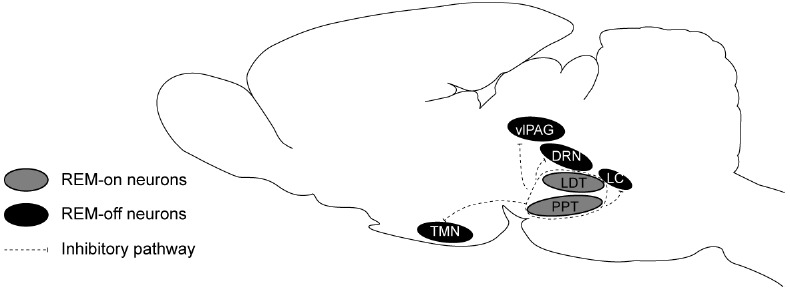
Most depressed patients suffer from sleep abnormalities, which are one of the critical symptoms of depression. They are robust risk factors for the initiation and development of depression. Studies about sleep electroencephalograms have shown characteristic changes in depression such as reductions in non-rapid eye movement sleep production, disruptions of sleep continuity and disinhibition of rapid eye movement (REM) sleep. REM sleep alterations include a decrease in REM sleep latency, an increase in REM sleep duration and REM sleep density with respect to depressive episodes. Emotional brain processing dependent on the normal sleep-wake regulation seems to be failed in depression, which also promotes the development of clinical depression. Also, REM sleep alterations have been considered as biomarkers of depression. The disturbances of norepinephrine and serotonin systems may contribute to REM sleep abnormalities in depression. Lastly, this review also discusses the effects of different antidepressants on REM sleep disturbances in depression.
大多数抑郁症患者存在睡眠异常,这是抑郁症的关键症状之一。它们是抑郁症发病和发展的有力风险因素。关于睡眠脑电图的研究表明,抑郁症存在特征性变化,如非快速眼动睡眠产生减少、睡眠连续性中断以及快速眼动(REM)睡眠去抑制。REM睡眠改变包括REM睡眠潜伏期缩短、REM睡眠持续时间增加以及相对于抑郁发作的REM睡眠密度增加。依赖正常睡眠-觉醒调节的情绪脑加工在抑郁症中似乎出现故障,这也促进了临床抑郁症的发展。此外,REM睡眠改变被认为是抑郁症的生物标志物。去甲肾上腺素和5-羟色胺系统的紊乱可能导致抑郁症患者的REM睡眠异常。最后,本综述还讨论了不同抗抑郁药对抑郁症患者REM睡眠障碍的影响。