Kibele Eva U B, Klüsener Sebastian, Scholz Rembrandt D
Population Research Centre, Faculty of Spatial Sciences; Healthy Ageing, Population and Society (HAPS), University of Groningen, Groningen, The Netherlands.
Max Planck Institute for Demographic Research, 18057 Rostock, Germany.
Kolner Z Soz Sozpsychol. 2015;67(Suppl 1):241-270. doi: 10.1007/s11577-015-0329-2.
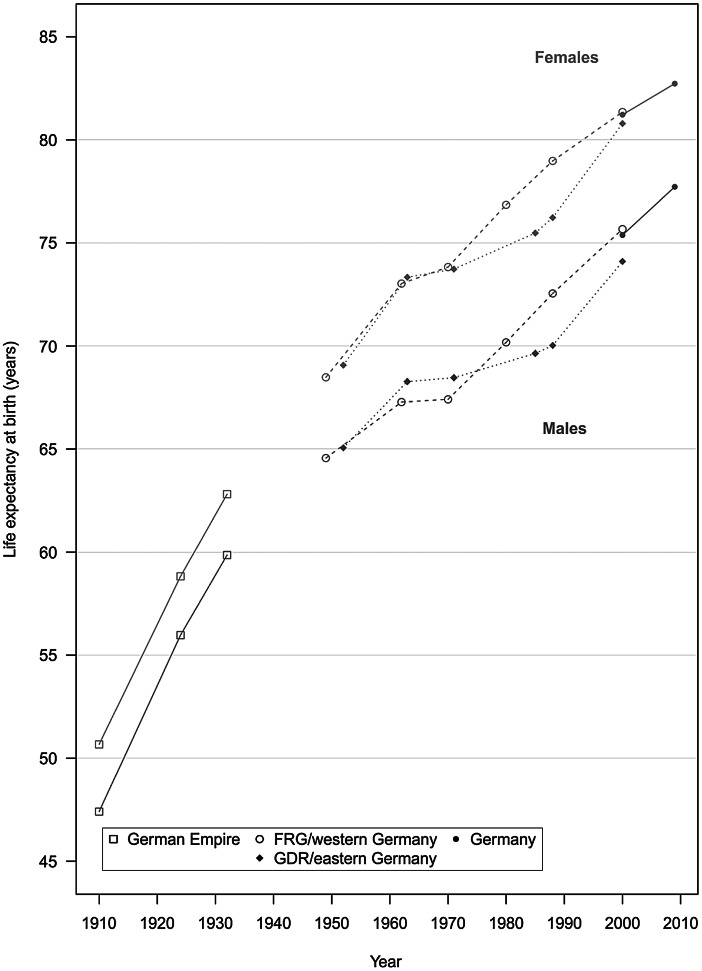
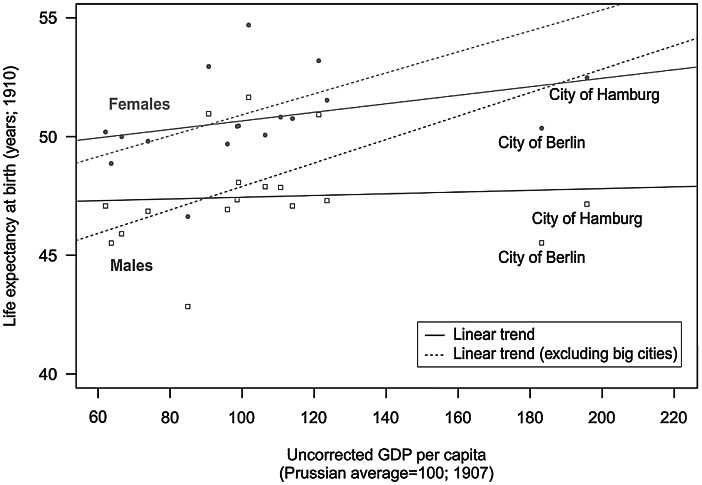
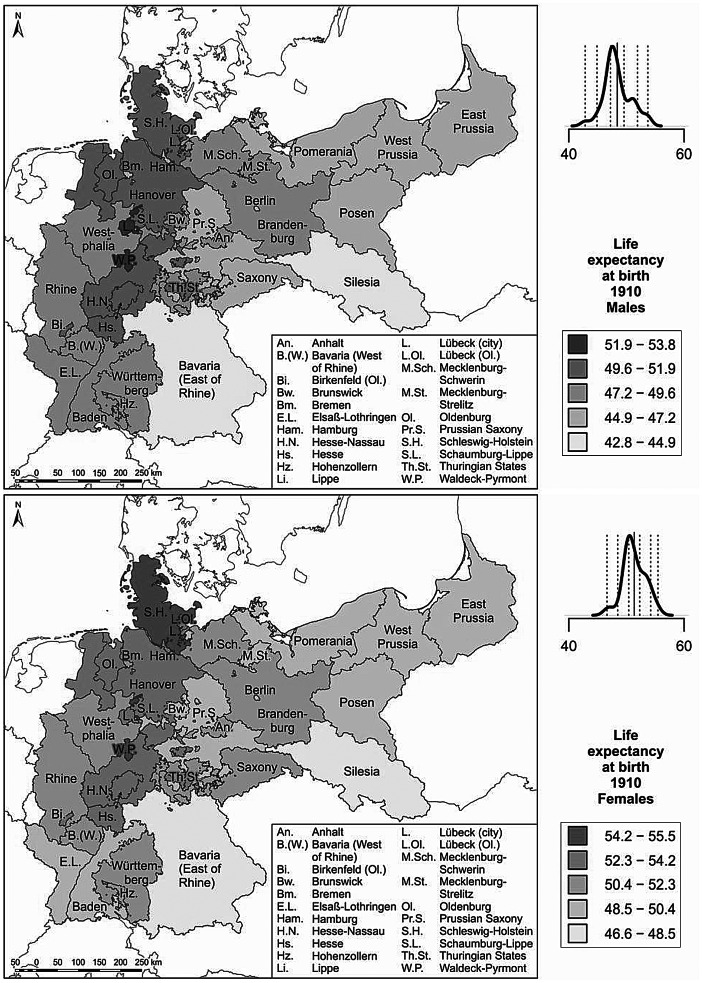
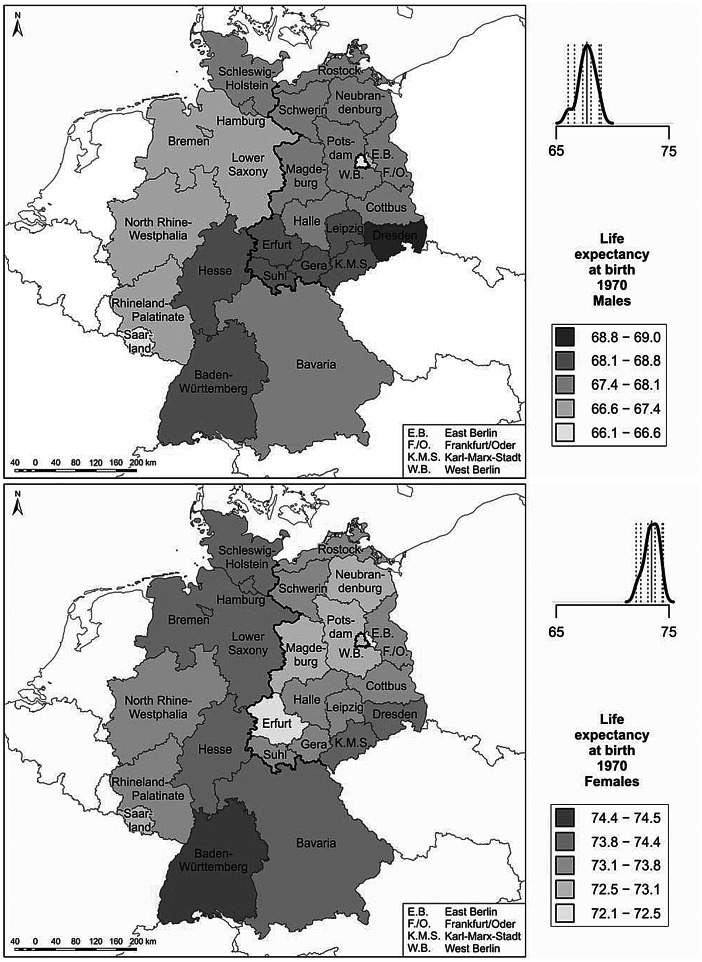
While regional mortality inequalities in Germany tend to be relatively stable in the short run, over the course of the past century marked changes have occurred in the country's regional mortality patterns. These changes include not only the re-emergence of stark differences between eastern and western Germany after 1970, which have almost disappeared again in the decades after the reunification of Germany in 1990; but also substantial changes in the disparities between northern and southern Germany. At the beginning of the twentieth century, the northern regions in Germany had the highest life expectancy levels, while the southern regions had the lowest. Today, this mortality pattern is reversed. In this paper, we study these long-term trends in spatial mortality disparities in Germany since 1910, and link them with theoretical considerations and existing research on the possible determinants of these patterns. Our findings support the view that the factors which contributed to shape spatial mortality variation have changed substantially over time, and suggest that the link between regional socioeconomic conditions and recorded mortality levels strengthened over the last 100 years.
虽然德国地区间的死亡率不平等在短期内往往相对稳定,但在过去一个世纪里,该国的地区死亡率模式发生了显著变化。这些变化不仅包括1970年后东德和西德之间再次出现的巨大差异,这些差异在1990年德国统一后的几十年里几乎又消失了;还包括德国北部和南部之间差距的实质性变化。在20世纪初,德国北部地区的预期寿命水平最高,而南部地区最低。如今,这种死亡率模式已发生逆转。在本文中,我们研究了自1910年以来德国空间死亡率差异的这些长期趋势,并将它们与理论思考以及关于这些模式可能决定因素的现有研究联系起来。我们的研究结果支持这样一种观点,即促成空间死亡率变化的因素随着时间的推移发生了重大变化,并表明地区社会经济状况与记录的死亡率水平之间的联系在过去100年里得到了加强。