Grigoriev Pavel, Pechholdová Markéta, Mühlichen Michael, Scholz Rembrandt D, Klüsener Sebastian
Bundesinstitut für Bevölkerungsforschung, Friedrich-Ebert-Allee 4, 65185, Wiesbaden, Deutschland.
Max-Planck-Institut für demografische Forschung, Rostock, Deutschland.
Bundesgesundheitsblatt Gesundheitsforschung Gesundheitsschutz. 2021 Apr;64(4):481-490. doi: 10.1007/s00103-021-03299-9. Epub 2021 Mar 25.
During the German division, two culturally very similar populations were exposed to very disparate socioeconomic conditions, which converged again after 1989. The impact of healthcare and life circumstances on mortality differences can better be estimated when cultural explanations are widely neglectable.
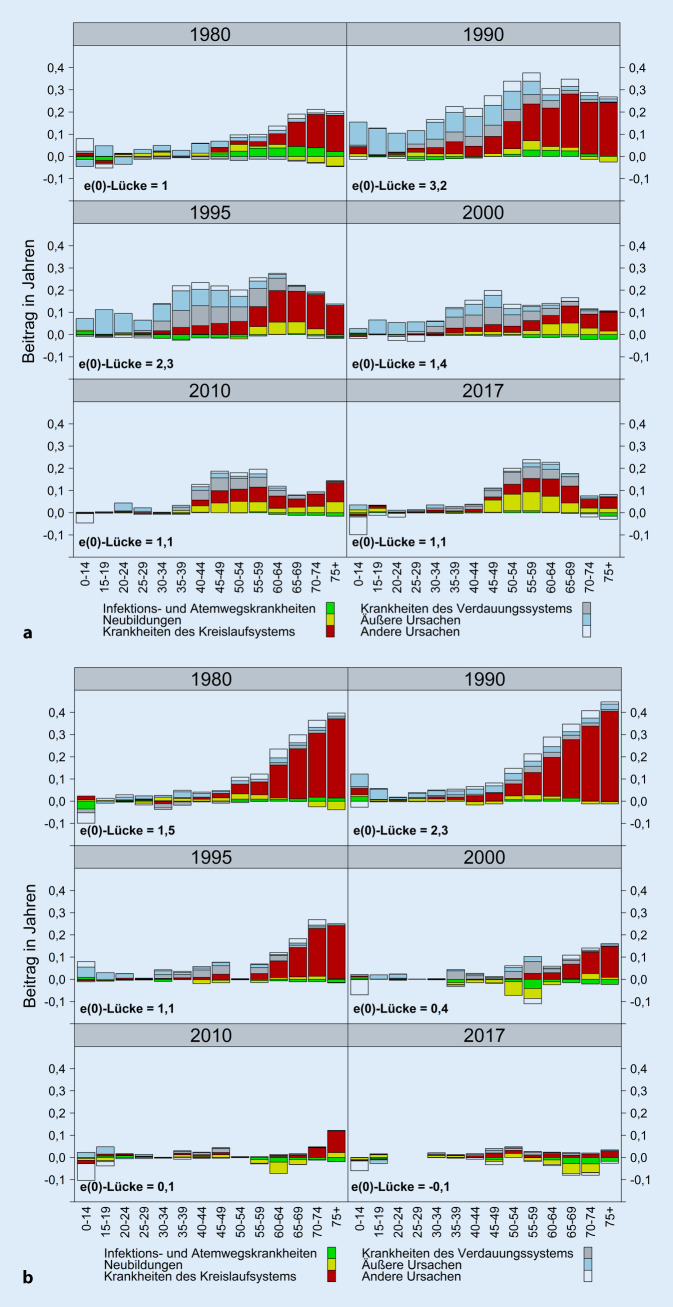
For the first time, we analyse harmonised cause-of-death data explicitly by age. Hereby, we can show which ages or birth cohorts were particularly affected by German division and reunification in their mortality and to which causes of death this is attributable.
We harmonised the German cause-of-death statistics by applying an internationally standardised harmonisation process to account for differences and breaks in cause-of-death coding practices. We analysed the data using decomposition methods.
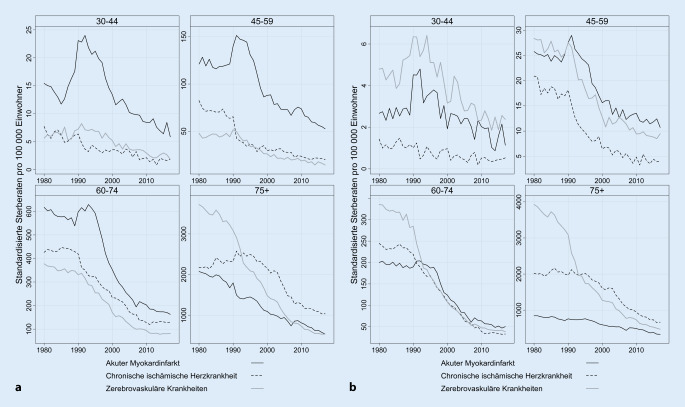
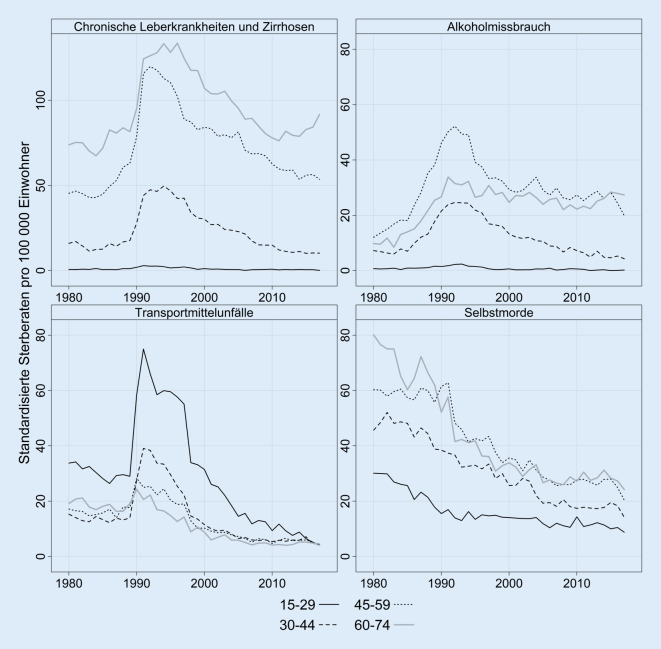
During the 1980s, east-west disparities were increasing as progress in the reduction of cardiovascular mortality was much stronger in West Germany, notably at older ages. After 1989, East Germany was able to catch up to the west in many areas. This is especially true for elderly persons and women, while east-west disparities are still visible today, particularly among male adult cohorts (1950-1970) strongly affected by the East German transition crisis.
The lower life expectancy of the East German population in the late 1980s was primarily caused by a slower pace of the cardiovascular revolution. The remaining present-day disparities are rather an aftermath of the East German transition crisis than direct aftereffects of the division.
在德国分裂期间,两个文化上非常相似的人群面临着截然不同的社会经济状况,1989年后这些状况又再次趋同。当文化因素的解释可被广泛忽略时,医疗保健和生活环境对死亡率差异的影响就能得到更好的评估。
我们首次按年龄明确分析了统一的死因数据。借此,我们能够表明哪些年龄或出生队列在死亡率方面受到德国分裂和统一的特别影响,以及这可归因于哪些死因。
我们通过应用国际标准化的统一流程来统一德国的死因统计数据,以考虑死因编码实践中的差异和间断。我们使用分解方法分析数据。
在20世纪80年代,东西部差异不断扩大,因为西德在降低心血管疾病死亡率方面进展更为显著,尤其是在老年人群中。1989年后,东德在许多领域能够赶上西德。老年人和女性尤其如此,而如今东西部差异仍然可见,特别是在受东德转型危机强烈影响的男性成年队列(1950 - 1970年)中。
20世纪80年代末东德人口预期寿命较低主要是由于心血管革命的步伐较慢。如今剩余的差异更多是东德转型危机的后果,而非分裂的直接后遗症。