Bondy-Denomy Joseph, Garcia Bianca, Strum Scott, Du Mingjian, Rollins MaryClare F, Hidalgo-Reyes Yurima, Wiedenheft Blake, Maxwell Karen L, Davidson Alan R
Department of Molecular Genetics, University of Toronto, Toronto, Ontario M5S 1A8, Canada.
Department of Biochemistry, University of Toronto, Toronto, Ontario M5S 1A8, Canada.
Nature. 2015 Oct 1;526(7571):136-9. doi: 10.1038/nature15254. Epub 2015 Sep 23.
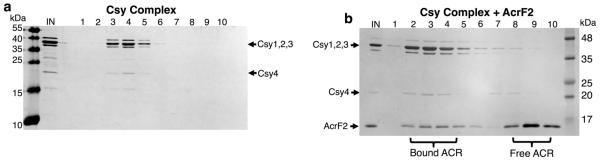
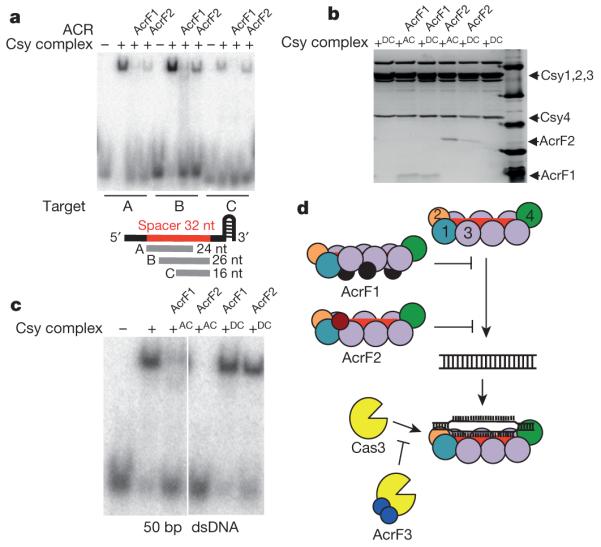
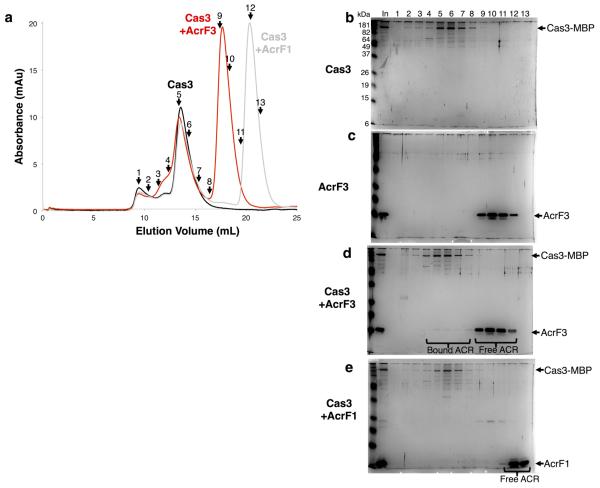
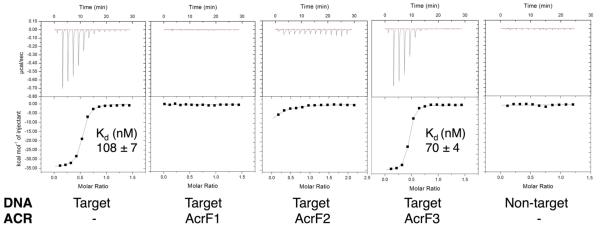
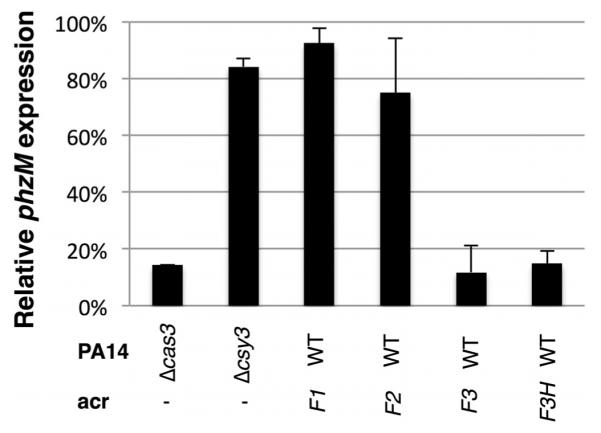
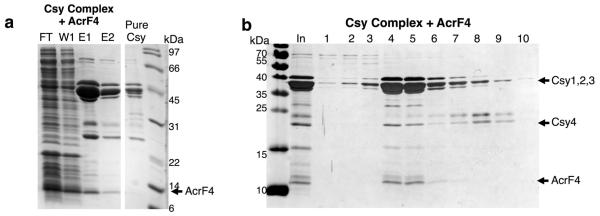
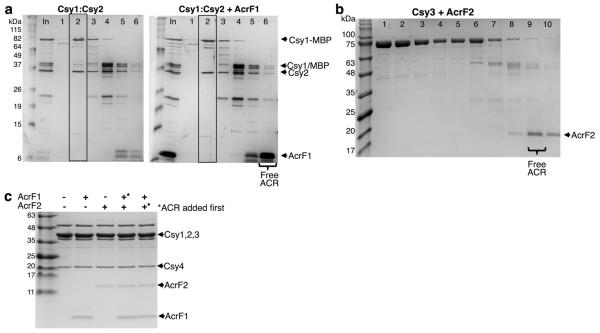
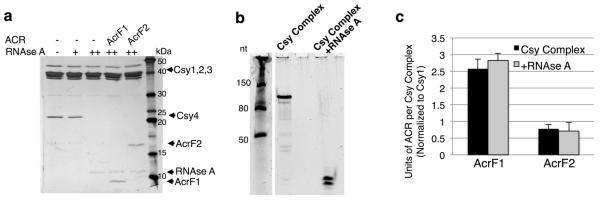
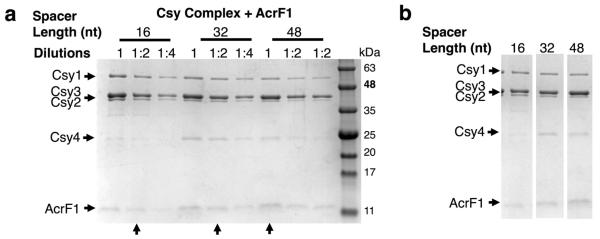
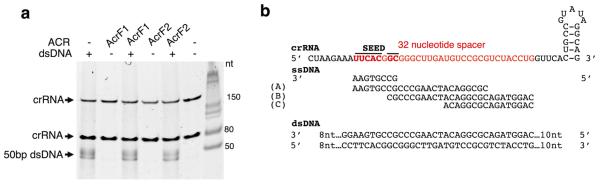
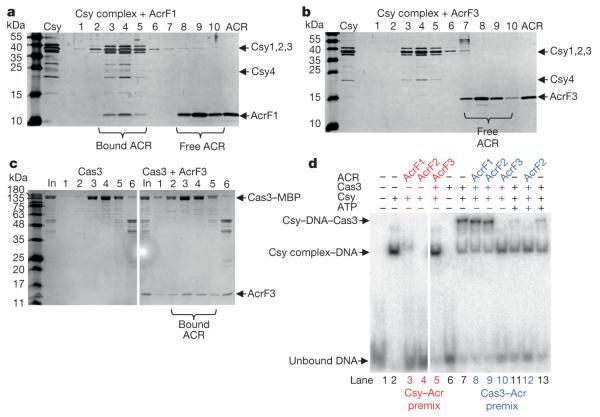
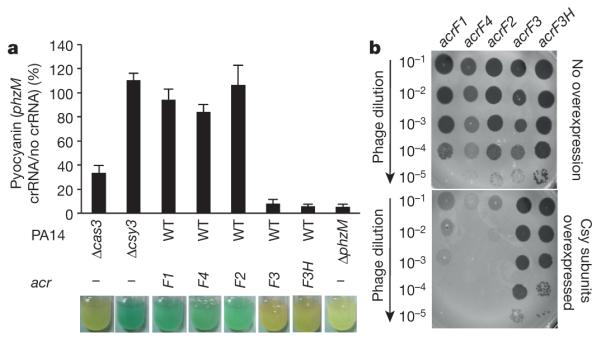
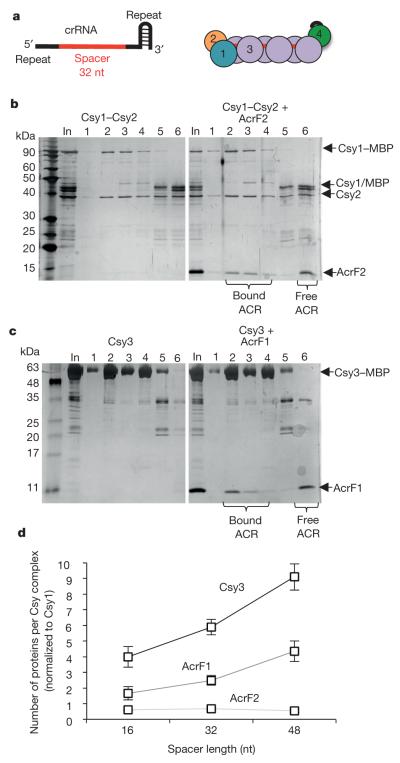
The battle for survival between bacteria and the viruses that infect them (phages) has led to the evolution of many bacterial defence systems and phage-encoded antagonists of these systems. Clustered regularly interspaced short palindromic repeats (CRISPR) and the CRISPR-associated (cas) genes comprise an adaptive immune system that is one of the most widespread means by which bacteria defend themselves against phages. We identified the first examples of proteins produced by phages that inhibit a CRISPR-Cas system. Here we performed biochemical and in vivo investigations of three of these anti-CRISPR proteins, and show that each inhibits CRISPR-Cas activity through a distinct mechanism. Two block the DNA-binding activity of the CRISPR-Cas complex, yet do this by interacting with different protein subunits, and using steric or non-steric modes of inhibition. The third anti-CRISPR protein operates by binding to the Cas3 helicase-nuclease and preventing its recruitment to the DNA-bound CRISPR-Cas complex. In vivo, this anti-CRISPR can convert the CRISPR-Cas system into a transcriptional repressor, providing the first example-to our knowledge-of modulation of CRISPR-Cas activity by a protein interactor. The diverse sequences and mechanisms of action of these anti-CRISPR proteins imply an independent evolution, and foreshadow the existence of other means by which proteins may alter CRISPR-Cas function.
细菌与其感染病毒(噬菌体)之间的生存之战导致了许多细菌防御系统以及这些系统的噬菌体编码拮抗剂的进化。成簇规律间隔短回文重复序列(CRISPR)和CRISPR相关(cas)基因构成了一种适应性免疫系统,是细菌抵御噬菌体最广泛使用的手段之一。我们鉴定出了噬菌体产生的抑制CRISPR-Cas系统的首批蛋白质实例。在此,我们对其中三种抗CRISPR蛋白进行了生化和体内研究,结果表明每种蛋白通过不同机制抑制CRISPR-Cas活性。两种蛋白阻断CRISPR-Cas复合物的DNA结合活性,但通过与不同的蛋白质亚基相互作用,并采用空间位阻或非空间位阻抑制模式来实现。第三种抗CRISPR蛋白通过与Cas3解旋酶-核酸酶结合并阻止其被招募到与DNA结合的CRISPR-Cas复合物上发挥作用。在体内,这种抗CRISPR蛋白可将CRISPR-Cas系统转变为转录阻遏物,据我们所知,这首次例证了蛋白质相互作用因子对CRISPR-Cas活性的调控。这些抗CRISPR蛋白多样的序列和作用机制意味着它们是独立进化的,也预示着可能存在其他蛋白质改变CRISPR-Cas功能的方式。