Yogendra Kalenahalli N, Kumar Arun, Sarkar Kobir, Li Yunliang, Pushpa Doddaraju, Mosa Kareem A, Duggavathi Raj, Kushalappa Ajjamada C
Department of Plant Science, McGill University, Ste Anne de Bellevue, Quebec, Canada.
Department of Animal Science, McGill University, Ste Anne de Bellevue, Quebec, Canada.
J Exp Bot. 2015 Dec;66(22):7377-89. doi: 10.1093/jxb/erv434. Epub 2015 Sep 28.
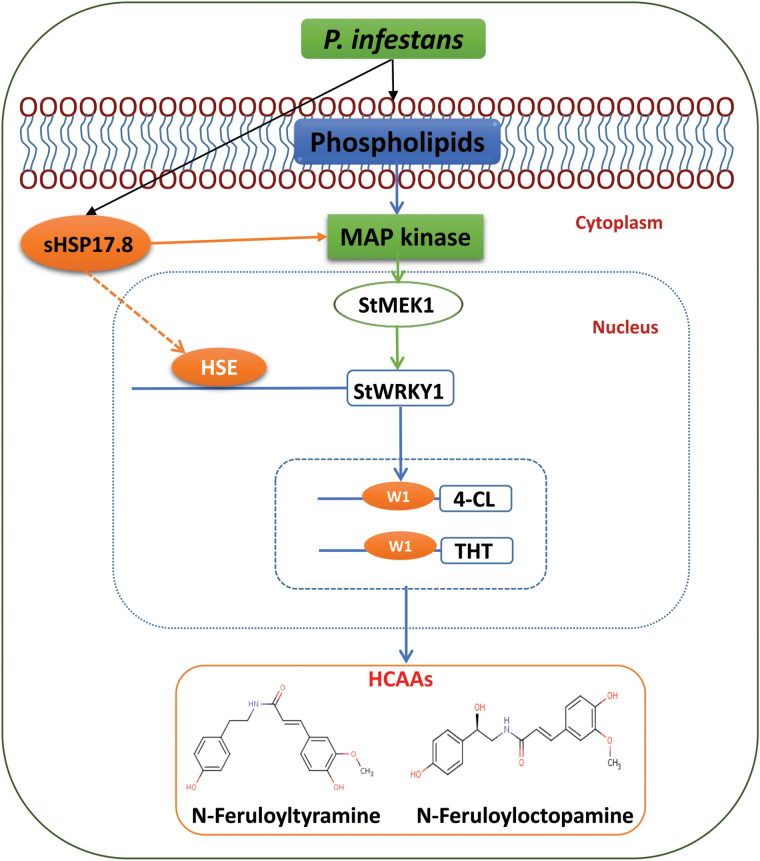
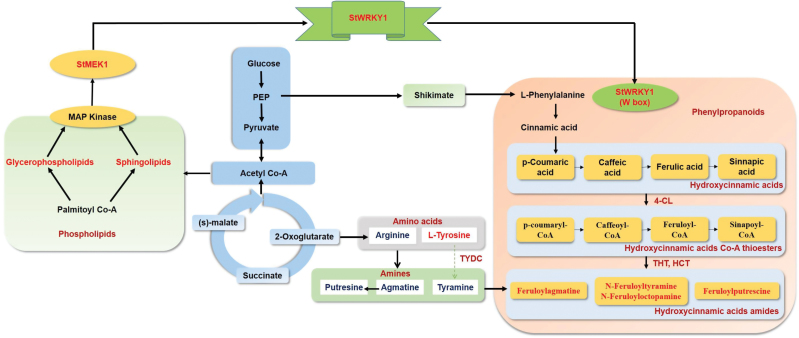
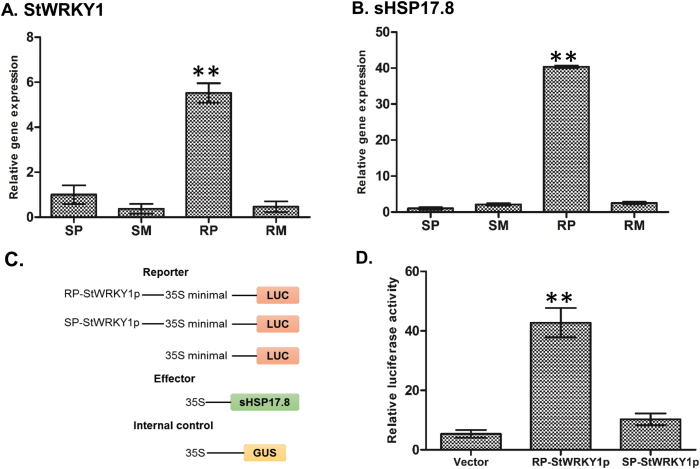
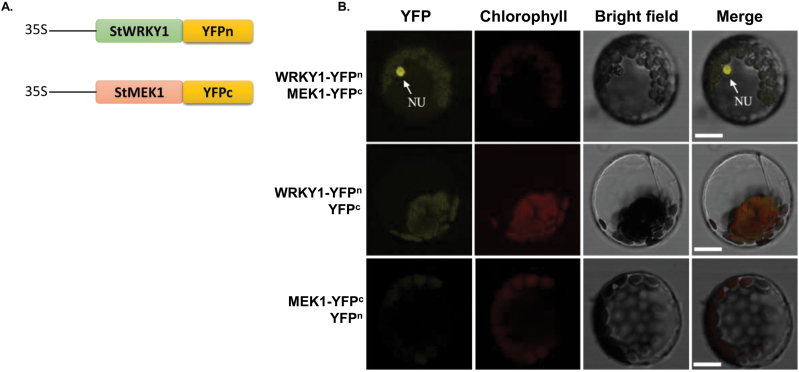
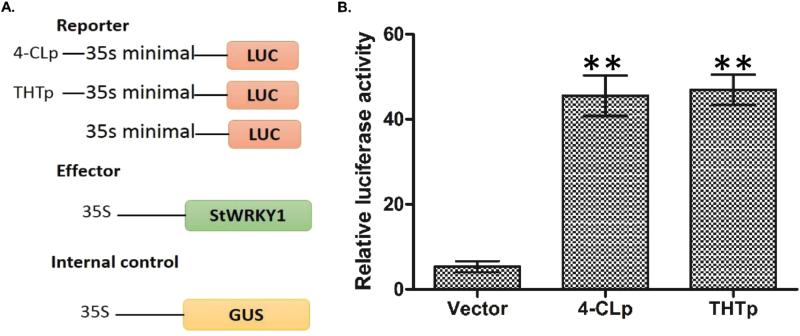
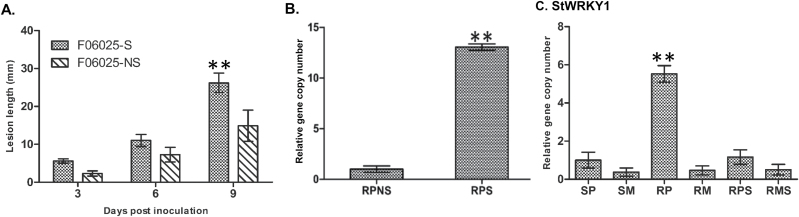
Quantitative resistance is polygenically controlled and durable, but the underlying molecular and biochemical mechanisms are poorly understood. Secondary cell wall thickening is a critical process in quantitative resistance, regulated by transcriptional networks. This paper provides compelling evidence on the functionality of StWRKY1 transcription factor, in a compatible interaction of potato-Phytophthora infestans, to extend our knowledge on the regulation of the metabolic pathway genes leading to strengthening the secondary cell wall. A metabolomics approach was used to identify resistance-related metabolites belonging to the phenylpropanoid pathway and their biosynthetic genes regulated by StWRKY1. The StWRKY1 gene in resistant potato was silenced to decipher its role in the regulation of phenylpropanoid pathway genes to strengthen the secondary cell wall. Sequencing of the promoter region of StWRKY1 in susceptible genotypes revealed the absence of heat shock elements (HSEs). Simultaneous induction of both the heat shock protein (sHSP17.8) and StWRKY1 following pathogen invasion enables functioning of the latter to interact with the HSE present in the resistant StWRKY1 promoter region. EMSA and luciferase transient expression assays further revealed direct binding of StWRKY1 to promoters of hydroxycinnamic acid amide (HCAA) biosynthetic genes encoding 4-coumarate:CoA ligase and tyramine hydroxycinnamoyl transferase. Silencing of the StWRKY1 gene was associated with signs of reduced late blight resistance by significantly increasing the pathogen biomass and decreasing the abundance of HCAAs. This study provides convincing evidence on the role of StWRKY1 in the regulation of downstream genes to biosynthesize HCAAs, which are deposited to reinforce secondary cell walls.
数量抗性受多基因控制且持久,但潜在的分子和生化机制尚不清楚。次生细胞壁加厚是数量抗性中的一个关键过程,受转录网络调控。本文提供了令人信服的证据,证明在马铃薯与致病疫霉的亲和互作中,StWRKY1转录因子具有功能,以扩展我们对导致次生细胞壁强化的代谢途径基因调控的认识。采用代谢组学方法来鉴定属于苯丙烷途径的抗性相关代谢物及其受StWRKY1调控的生物合成基因。沉默抗性马铃薯中的StWRKY1基因,以解读其在调控苯丙烷途径基因以强化次生细胞壁中的作用。对感病基因型中StWRKY1启动子区域进行测序,发现不存在热激元件(HSE)。病原体入侵后,热激蛋白(sHSP17.8)和StWRKY1同时被诱导,使得后者能够与抗性StWRKY1启动子区域中存在的HSE相互作用。电泳迁移率变动分析(EMSA)和荧光素酶瞬时表达分析进一步揭示了StWRKY1与编码4-香豆酸:辅酶A连接酶和酪胺羟基肉桂酰转移酶的羟基肉桂酰胺(HCAA)生物合成基因的启动子直接结合。StWRKY1基因的沉默与晚疫病抗性降低的迹象相关,表现为病原体生物量显著增加,HCAA丰度降低。本研究提供了令人信服的证据,证明StWRKY1在调控下游基因生物合成HCAA中的作用,HCAA沉积以增强次生细胞壁。