Huang Terry T-K, Ferris Emily, Crossley Rachel, Guillermin Michelle, Costa Sergio, Cawley John
School of Public Health, City University of New York, New York, NY USA.
Broadwaters Advisory Services Ltd., Tunbridge Wells, UK.
BMC Obes. 2015 Sep 24;2:36. doi: 10.1186/s40608-015-0066-0. eCollection 2015.
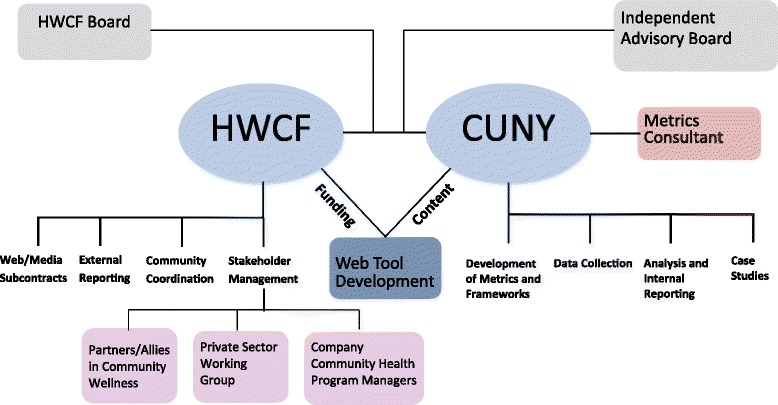
Public health leaders increasingly recognize the importance of multi-sector partnerships and systems approaches to address obesity. Public-private partnerships (PPP), which are joint ventures between government agencies and private sector entities, may help facilitate this process, but need to be delivered through comprehensive, transparent frameworks to maximize potential benefits and minimize potential risks for all partners. The City University of New York (CUNY) School of Public Health and the Healthy Weight Commitment Foundation (HWCF) propose to engage in a unique academic-private-sector research partnership to evaluate the impact and effectiveness of the food and beverage industry's investment in obesity and hunger prevention and reduction through community-level healthful eating and active living programs. The CUNY-HWCF academic-private partnership protocol described here incorporates best practices from the literature on PPP into the partnership's design. The CUNY-HWCF partnership design demonstrates how established guidelines for partnership components will actively incorporate and promote the principles of successful PPPs identified in various research papers. These identified principles of successful PPP, including mutuality (a reciprocal relationship between entities), and equality among partners, recognition of partners' unique strengths and roles, alignment of resources and expertise toward a common cause, and coordination and delegation of responsibilities, will be embedded throughout the design of governance, management, funding, intellectual property and accountability structures. The CUNY-HWCF partnership responds to the call for increased multi-sector work in obesity prevention and control. This framework aims to promote transparency and the shared benefits of complementary expertise while minimizing shared risks and conflicts of interest. This framework serves as a template for future academic-private research partnerships.
公共卫生领域的领导者越来越认识到多部门伙伴关系和系统方法对于解决肥胖问题的重要性。公私伙伴关系(PPP),即政府机构与私营部门实体之间的合资企业,可能有助于推动这一进程,但需要通过全面、透明的框架来实施,以最大限度地提高所有合作伙伴的潜在利益,并将潜在风险降至最低。纽约城市大学(CUNY)公共卫生学院和健康体重承诺基金会(HWCF)提议开展一项独特的学术 - 私营部门研究伙伴关系,以评估食品和饮料行业通过社区层面的健康饮食和积极生活计划在预防和减少肥胖及饥饿方面的投资所产生的影响和效果。本文所述的纽约城市大学 - 健康体重承诺基金会学术 - 私营伙伴关系协议将公私伙伴关系文献中的最佳实践纳入了伙伴关系的设计中。纽约城市大学 - 健康体重承诺基金会的伙伴关系设计展示了如何将既定的伙伴关系组成部分指南积极纳入并推广在各种研究论文中确定的成功公私伙伴关系的原则。这些已确定的成功公私伙伴关系原则,包括相互性(实体之间的互惠关系)、伙伴之间的平等、认可伙伴的独特优势和作用、使资源和专业知识与共同目标保持一致,以及责任的协调和委托,将贯穿于治理、管理、资金、知识产权和问责结构的设计之中。纽约城市大学 - 健康体重承诺基金会的伙伴关系回应了在肥胖预防和控制方面加强多部门合作的呼声。该框架旨在促进透明度以及互补专业知识的共享利益,同时将共同风险和利益冲突降至最低。这个框架可作为未来学术 - 私营研究伙伴关系的模板。