Kim Tae Jun, von dem Knesebeck Olaf
Department of Medical Sociology, University Medical Centre Hamburg-Eppendorf, Martinistrasse 52, 20246, Hamburg, Germany.
BMC Public Health. 2015 Sep 29;15:985. doi: 10.1186/s12889-015-2313-1.
Though previous research repeatedly found that being employed is better for health than having no job at all, evidence suggests that employment is not always beneficial for health. With especially job insecurity reflecting a contemporary health risk for the employed, a systematic review was performed to assess if insecure employment can be as detrimental for health as unemployment, and to determine whether these associations vary according to different health measures and among men and women.
The literature search was conducted in the databases Medline, Embase and PsychInfo. In order to allow a more accurate comparison between the two risk factors, studies were included if the data for job insecurity and unemployment was ascertained from the same sample, and contained a quantitative analysis for both exposures towards one (or more) health outcome(s).
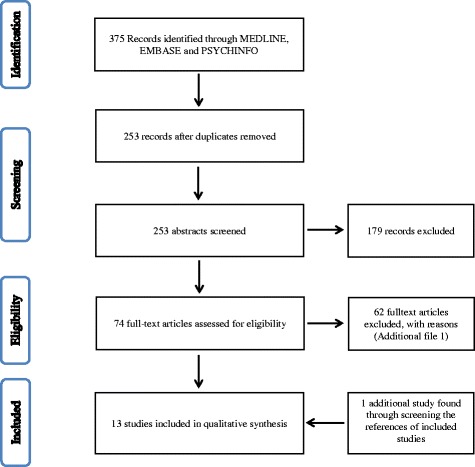
Out of 375 articles, in total, 13 studies were included in the systematic review. In 24 analyses contrasting the health-related associations between job insecurity and unemployment, 16 statistically significant associations were found for each exposure. According to the different health outcomes used, job insecurity and unemployment were strongly related to mental health, whereas job insecurity was more strongly associated with somatic symptoms. Unemployment showed stronger relations with worse general health and mortality. In 4 out of 16 gender-stratified analyses, significant associations between job insecurity/unemployment and health were found for men but not for women. Beyond that, associations were significant or insignificant in both gender groups.
Though there were moderate differences across the health outcomes, overall, it was found that job insecurity can pose a comparable threat to health than unemployment. Policy interventions should therefore not only consider health risks posed by unemployment, but should also aim at the reduction of insecure employment.
尽管先前的研究反复发现就业对健康比完全没有工作要好,但有证据表明就业并不总是对健康有益。特别是工作不安全感反映了就业者面临的一种当代健康风险,因此进行了一项系统综述,以评估工作不稳定对健康的危害是否与失业相当,并确定这些关联是否因不同的健康指标以及男女之间而有所不同。
在Medline、Embase和PsychInfo数据库中进行文献检索。为了更准确地比较这两个风险因素,如果工作不安全感和失业的数据来自同一样本,并且包含对这两种暴露因素与一种(或多种)健康结果的定量分析,则纳入相关研究。
在375篇文章中,总共有13项研究被纳入系统综述。在24项对比工作不安全感和失业与健康相关关联的分析中,每项暴露因素都发现了16个具有统计学意义的关联。根据所使用的不同健康结果,工作不安全感和失业与心理健康密切相关,而工作不安全感与躯体症状的关联更强。失业与更差的总体健康和死亡率的关系更为密切。在16项按性别分层的分析中,有4项发现工作不安全感/失业与男性健康之间存在显著关联,但与女性不存在显著关联。除此之外,在两个性别组中,关联既有显著的也有不显著的。
尽管不同健康结果之间存在适度差异,但总体而言,发现工作不安全感对健康构成的威胁与失业相当。因此,政策干预不仅应考虑失业带来的健康风险,还应旨在减少工作不稳定。