Sun Xin, Guo Wei, Shen Jacson K, Mankin Henry J, Hornicek Francis J, Duan Zhenfeng
Department of Orthopaedic Surgery, Massachusetts General Hospital, 100 Blossom Street, Boston, MA 02114, USA ; Sarcoma Biology Laboratory, Center for Sarcoma and Connective Tissue Oncology, Massachusetts General Hospital, 100 Blossom Street, Boston, MA 02114, USA ; Department of Orthopaedic Oncology, Peking University People's Hospital, 11 Xizhimen South Street, Xicheng District, Beijing 100044, China.
Department of Orthopaedic Oncology, Peking University People's Hospital, 11 Xizhimen South Street, Xicheng District, Beijing 100044, China.
Sarcoma. 2015;2015:232010. doi: 10.1155/2015/232010. Epub 2015 Sep 1.
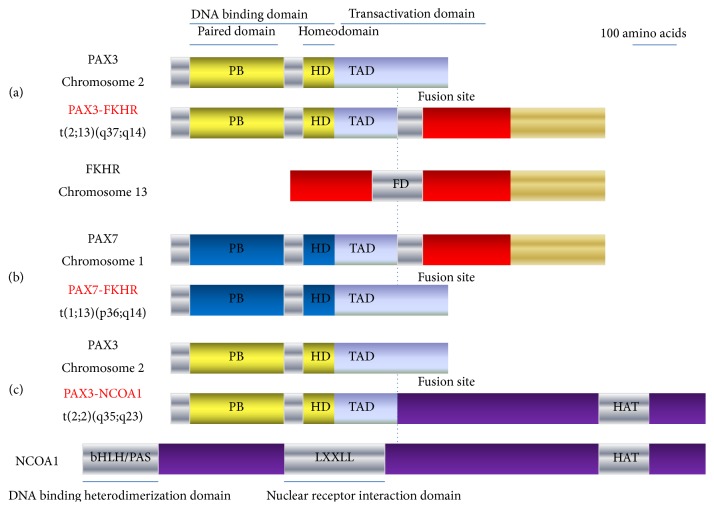
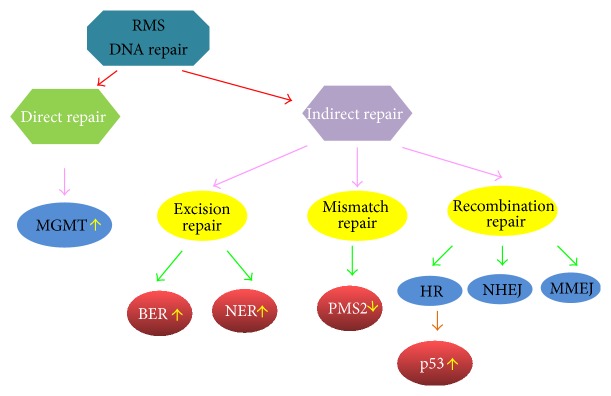
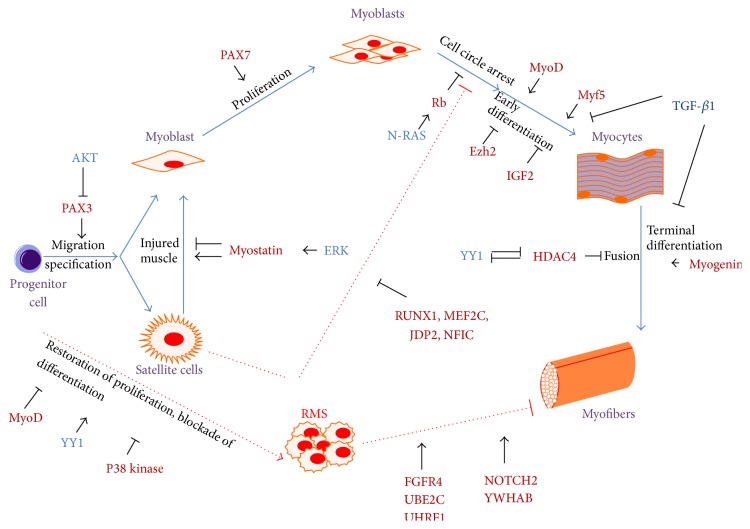
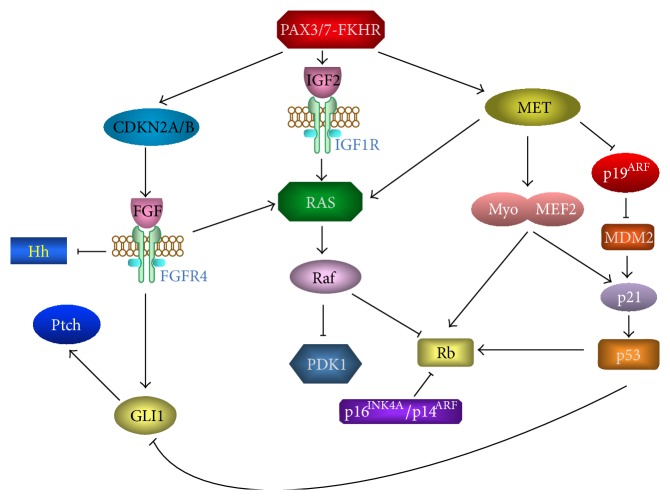
Rhabdomyosarcoma (RMS) is the most common soft tissue malignancy in childhood and adolescence. The two major histological subtypes of RMS are alveolar RMS, driven by the fusion protein PAX3-FKHR or PAX7-FKHR, and embryonic RMS, which is usually genetically heterogeneous. The prognosis of RMS has improved in the past several decades due to multidisciplinary care. However, in recent years, the treatment of patients with metastatic or refractory RMS has reached a plateau. Thus, to improve the survival rate of RMS patients and their overall well-being, further understanding of the molecular and cellular biology of RMS and identification of novel therapeutic targets are imperative. In this review, we describe the most recent discoveries in the molecular and cellular biology of RMS, including alterations in oncogenic pathways, miRNA (miR), in vivo models, stem cells, and important signal transduction cascades implicated in the development and progression of RMS. Furthermore, we discuss novel potential targeted therapies that may improve the current treatment of RMS.
横纹肌肉瘤(RMS)是儿童和青少年时期最常见的软组织恶性肿瘤。RMS的两种主要组织学亚型是由融合蛋白PAX3 - FKHR或PAX7 - FKHR驱动的肺泡型RMS,以及通常在基因上具有异质性的胚胎型RMS。由于多学科护理,RMS的预后在过去几十年有所改善。然而,近年来,转移性或难治性RMS患者的治疗已达到平台期。因此,为了提高RMS患者的生存率及其整体健康状况,进一步了解RMS的分子和细胞生物学并确定新的治疗靶点势在必行。在这篇综述中,我们描述了RMS分子和细胞生物学的最新发现,包括致癌途径的改变、微小RNA(miR)、体内模型、干细胞以及与RMS发生和发展相关的重要信号转导级联反应。此外,我们还讨论了可能改善当前RMS治疗的新型潜在靶向疗法。