Sun Lingli, Li Guanying, Chen Xiang, Chen Yu, Jin Chengzhi, Ji Liangnian, Chao Hui
MOE Key Laboratory of Bioinorganic and Synthetic Chemistry, School of Chemistry and Chemical Engineering, Sun Yat-Sen University, Guangzhou, 510275, China.
Sci Rep. 2015 Oct 1;5:14837. doi: 10.1038/srep14837.
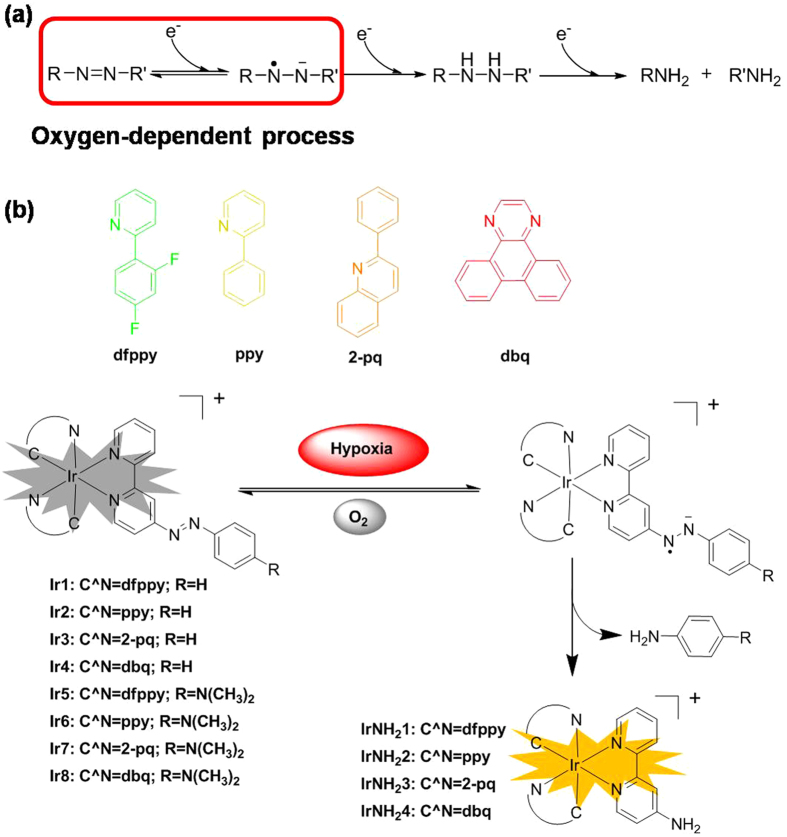
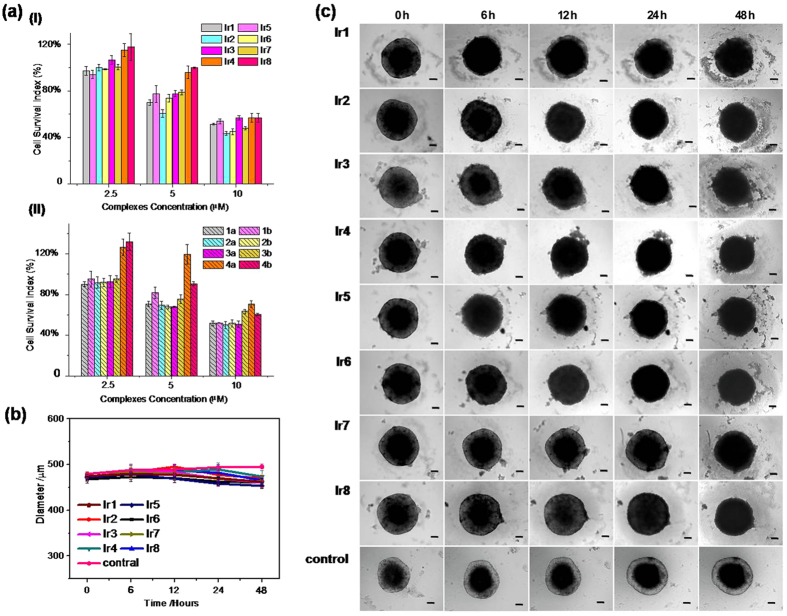
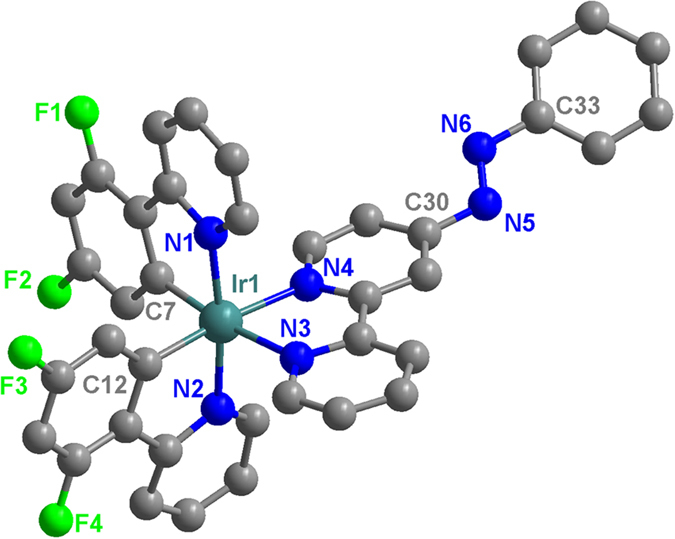
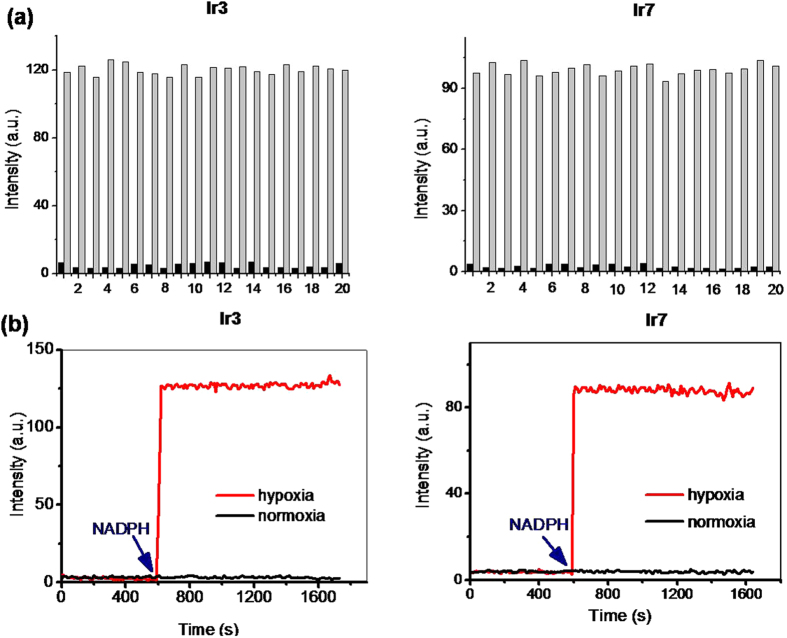
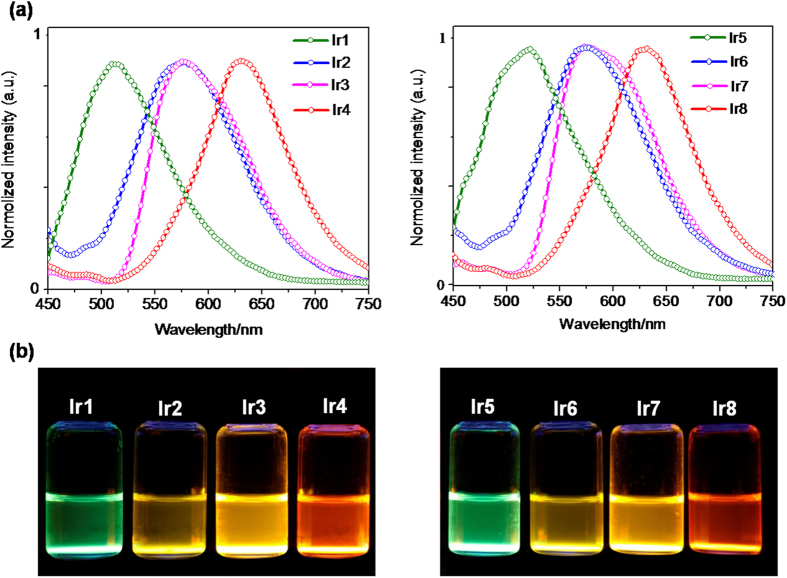
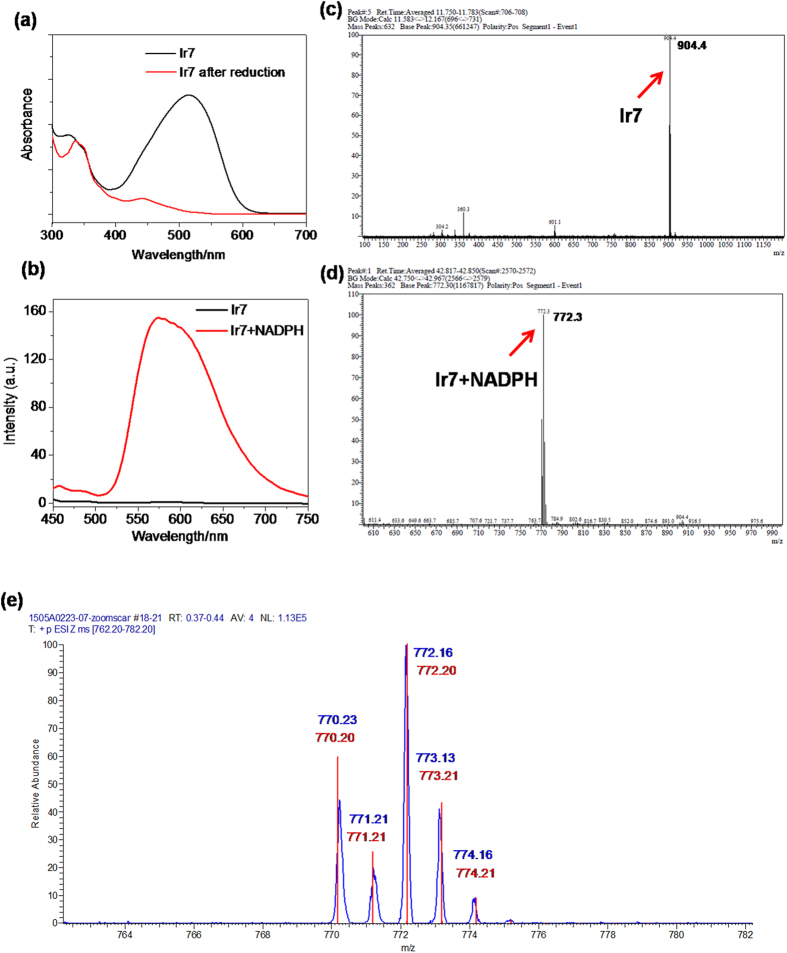
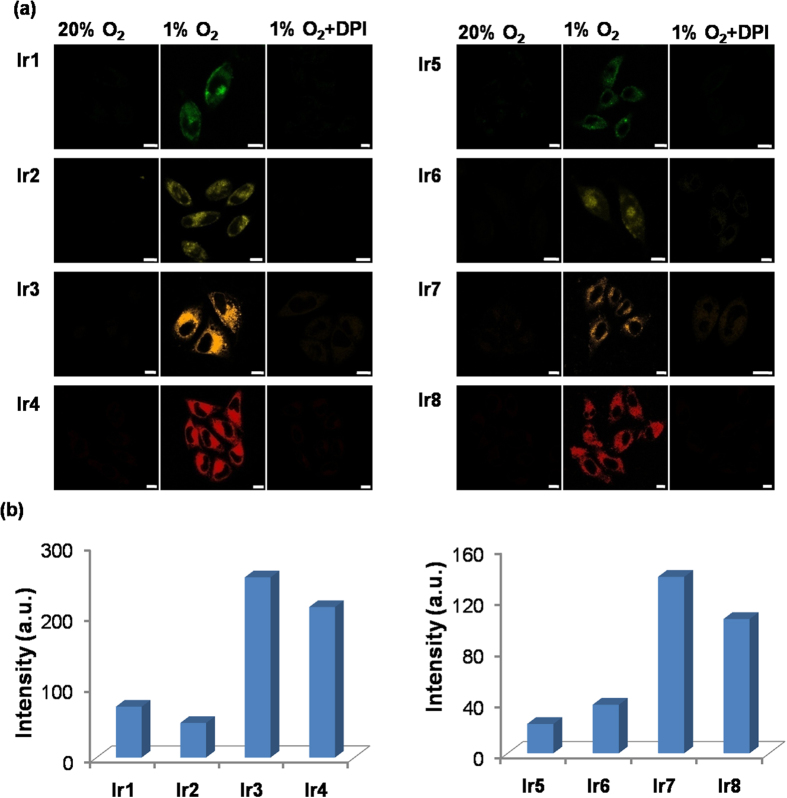
Hypoxia is an important characteristic of malignant solid tumors and is considered as a possible causative factor for serious resistance to chemo- and radiotherapy. The exploration of novel fluorescent probes capable of detecting hypoxia in solid tumors will aid tumor diagnosis and treatment. In this study, we reported the design and synthesis of a series of "off-on" phosphorescence probes for hypoxia detection in adherent and three-dimensional multicellular spheroid models. All of the iridium(III) complexes incorporate an azo group as an azo-reductase reactive moiety to detect hypoxia. Reduction of non-phosphorescent probes Ir1-Ir8 by reductases under hypoxic conditions resulted in the generation of highly phosphorescent corresponding amines for detection of hypoxic regions. Moreover, these probes can penetrate into 3D multicellular spheroids over 100 μm and image the hypoxic regions. Most importantly, these probes display a high selectivity for the detection of hypoxia in 2D cells and 3D multicellular spheroids.
缺氧是恶性实体瘤的一个重要特征,被认为是导致对化疗和放疗严重耐药的一个可能因素。探索能够检测实体瘤中缺氧情况的新型荧光探针将有助于肿瘤的诊断和治疗。在本研究中,我们报道了一系列用于在贴壁和三维多细胞球体模型中检测缺氧的“开-关”磷光探针的设计与合成。所有铱(III)配合物都含有一个偶氮基团作为偶氮还原酶反应性部分以检测缺氧情况。在缺氧条件下,还原酶将非磷光探针Ir1-Ir8还原,生成高磷光性的相应胺类以检测缺氧区域。此外,这些探针能够穿透超过100μm的三维多细胞球体并对缺氧区域成像。最重要的是,这些探针在二维细胞和三维多细胞球体中对缺氧检测具有高选择性。