Tracy Christopher J, Sanders Douglas N, Bryan Jeffrey N, Jensen Cheryl A, Castaner Leilani J, Kirk Mark D, Katz Martin L
Department of Ophthalmology, University of Missouri School of Medicine, Mason Eye Institute, One Hospital Drive, 65212, Columbia, MO, USA.
Genetics Area Program, University of Missouri, Columbia, MO, 65211, USA.
Adv Exp Med Biol. 2016;854:571-7. doi: 10.1007/978-3-319-17121-0_76.
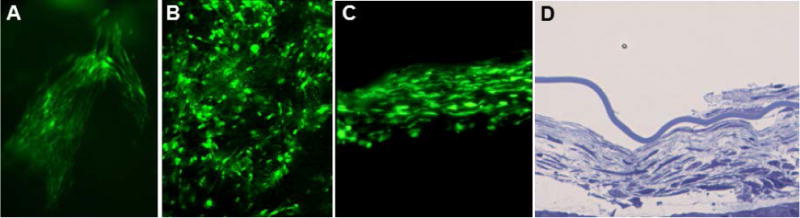
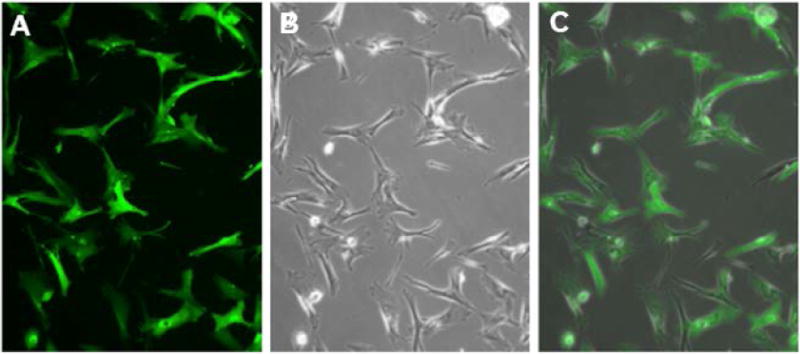
A number of retinal degenerative diseases may be amenable to treatment with continuous intraocular delivery of therapeutic agents that cannot be delivered effectively to the retina via systemic or topical administration. Among these disorders are lysosomal storage diseases resulting from deficiencies in soluble lysosomal enzymes. Most cells, including those of the retina, are able to take up these enzymes and incorporate them in active form into their lysosomes. In theory, therefore, continuous intraocular administration of a normal form of a soluble lysosomal enzyme should be able to cure the molecular defect in the retinas of subjects lacking this enzyme. Experiments were conducted to determine whether genetically modified bone marrow-derived stem cells implanted into the vitreous could be used as -vehicles for continuous delivery of such enzymes to the retina. Bone marrow-derived mesenchymal stem cells (MSCs) from normal mice were implanted into the vitreous of mice undergoing retinal degeneration as a result of a mutation in the PPT1 gene. The implanted cells appeared to survive indefinitely in the vitreous without proliferating or invading the retina. This indicates that intravitreal implantation of MSCs is likely a safe means of long-term delivery of proteins synthesized by the implanted cells. Experiments have been initiated to test the efficacy of using genetically modified autologous MSCs to inhibit retinal degeneration in a canine model of neuronal ceroid lipofuscinosis.
许多视网膜退行性疾病可能适合通过持续眼内递送治疗药物来治疗,而这些药物无法通过全身或局部给药有效地递送至视网膜。这些疾病包括由可溶性溶酶体酶缺乏引起的溶酶体贮积病。大多数细胞,包括视网膜细胞,都能够摄取这些酶并将其以活性形式纳入其溶酶体。因此,从理论上讲,持续眼内给予正常形式的可溶性溶酶体酶应该能够治愈缺乏这种酶的受试者视网膜中的分子缺陷。进行了实验以确定植入玻璃体的基因改造骨髓来源干细胞是否可以用作将此类酶持续递送至视网膜的载体。将来自正常小鼠的骨髓间充质干细胞(MSC)植入因PPT1基因突变而发生视网膜变性的小鼠玻璃体中。植入的细胞似乎在玻璃体内无限期存活,而不会增殖或侵入视网膜。这表明玻璃体腔内植入MSC可能是长期递送植入细胞合成蛋白质的一种安全方法。已经开始进行实验,以测试使用基因改造的自体MSC抑制神经元蜡样脂褐质沉积症犬模型中视网膜变性的疗效。