Department of General Pathology, Pomeranian Medical University in Szczecin, 70-111 Szczecin, Poland.
First Department of Ophthalmology, Pomeranian Medical University in Szczecin, 70-111 Szczecin, Poland.
Int J Mol Sci. 2019 Feb 12;20(3):777. doi: 10.3390/ijms20030777.
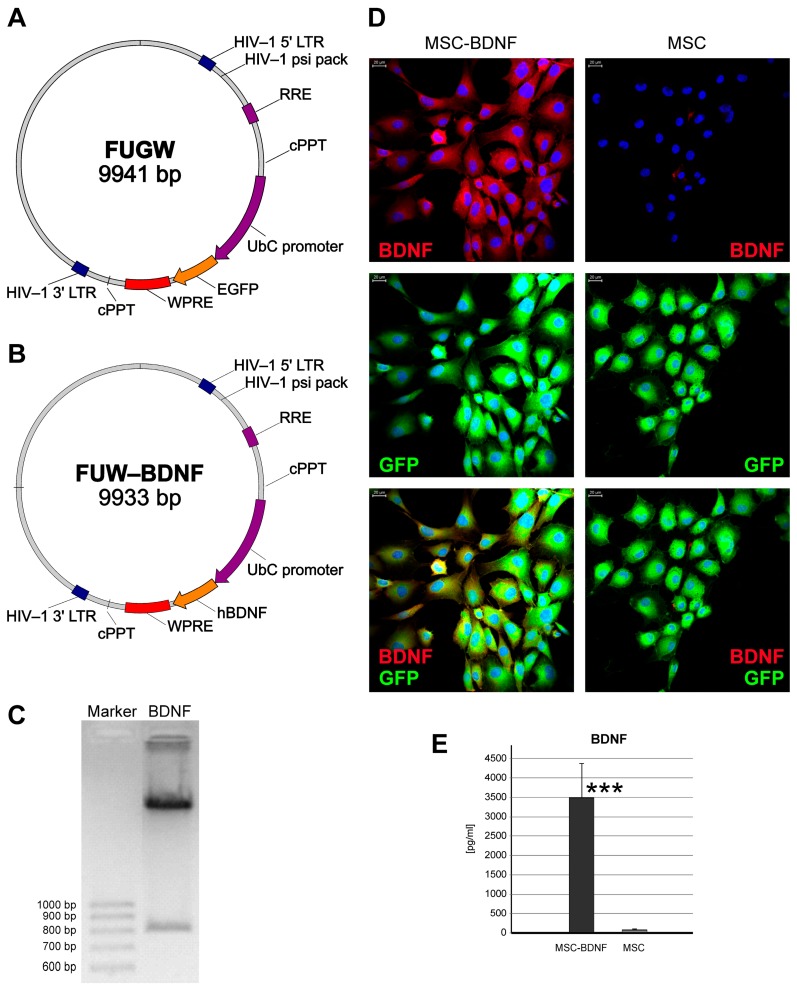
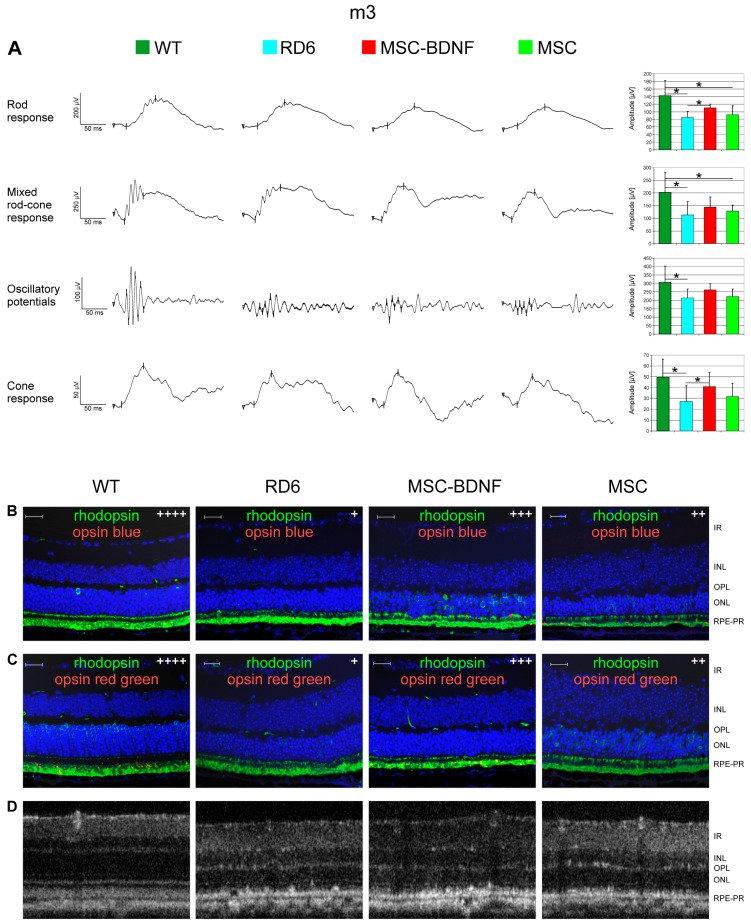
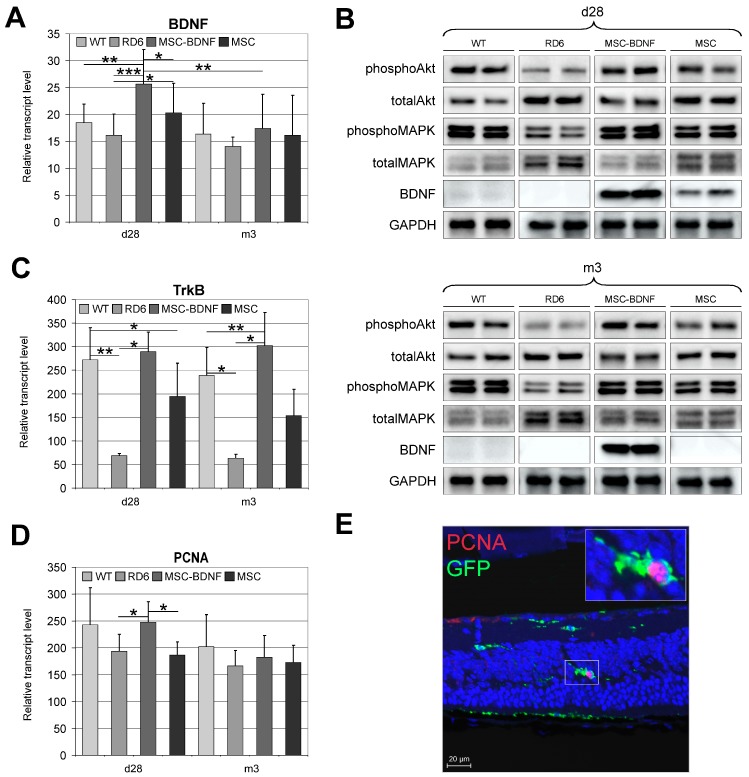
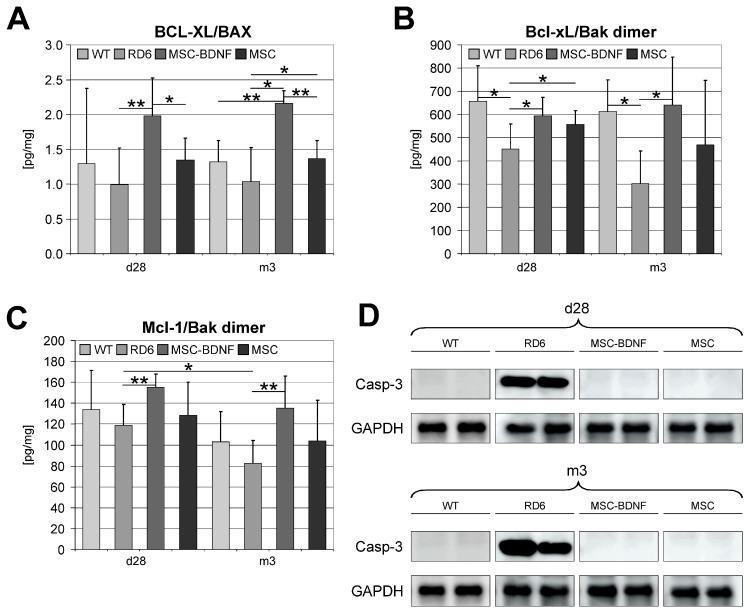
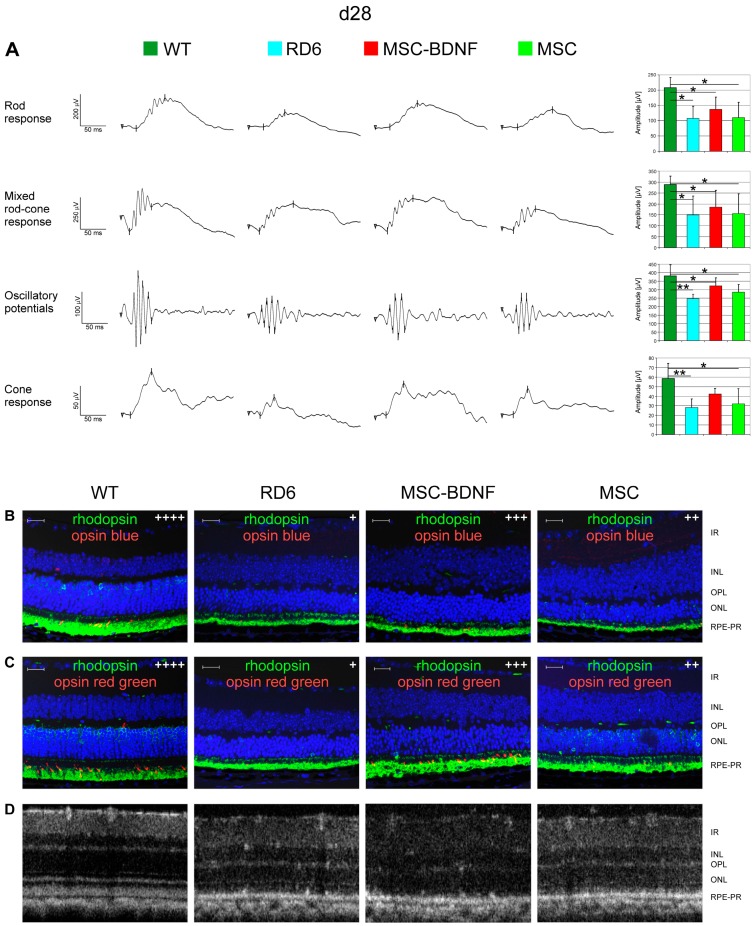
This study aimed to investigate whether the transplantation of genetically engineered bone marrow-derived mesenchymal stromal cells (MSCs) to overexpress brain-derived neurotrophic factor (BDNF) could rescue the chronic degenerative process of slow retinal degeneration in the rd6 (retinal degeneration 6) mouse model and sought to identify the potential underlying mechanisms. Rd6 mice were subjected to the intravitreal injection of lentivirally modified MSC-BDNF or unmodified MSC or saline. In vivo morphology, electrophysiological retinal function (ERG), and the expression of apoptosis-related genes, as well as BDNF and its receptor (TrkB), were assessed in retinas collected at 28 days and three months after transplantation. We observed that cells survived for at least three months after transplantation. MSC-BDNF preferentially integrated into the outer retinal layers and considerably rescued damaged retinal cells, as evaluated by ERG and immunofluorescence staining. Additionally, compared with controls, the therapy with MSC-BDNF was associated with the induction of molecular changes related to anti-apoptotic signaling. In conclusion, BDNF overexpression observed in retinas after MSC-BDNF treatment could enhance the neuroprotective properties of transplanted autologous MSCs alone in the chronically degenerated retina. This research provides evidence for the long-term efficacy of genetically-modified MSC and may represent a strategy for treating various forms of degenerative retinopathies in the future.
本研究旨在探讨是否可以通过移植过表达脑源性神经营养因子(BDNF)的基因工程骨髓间充质基质细胞(MSCs)来挽救 rd6(视网膜变性 6)小鼠模型中的慢性退行性过程,并试图确定潜在的机制。将慢病毒修饰的 MSC-BDNF 或未修饰的 MSC 或生理盐水注入 rd6 小鼠的玻璃体腔。在移植后 28 天和 3 个月时,评估视网膜的体内形态、电生理视网膜功能(ERG)以及与细胞凋亡相关的基因、BDNF 及其受体(TrkB)的表达情况。我们观察到,移植后细胞至少存活了 3 个月。MSC-BDNF 优先整合到外视网膜层,并通过 ERG 和免疫荧光染色评估,明显挽救了受损的视网膜细胞。此外,与对照组相比,MSC-BDNF 治疗与诱导与抗细胞凋亡信号相关的分子变化有关。总之,在 MSC-BDNF 治疗后观察到的视网膜中 BDNF 的过表达可以增强单独在慢性退行性视网膜中移植的自体 MSCs 的神经保护特性。该研究为基因修饰的 MSC 的长期疗效提供了证据,并可能代表未来治疗各种形式的退行性视网膜病变的策略。