Emdin Connor A, Anderson Simon G, Woodward Mark, Rahimi Kazem
The George Institute for Global Health, University of Oxford, Oxford, United Kingdom.
The George Institute for Global Health, University of Oxford, Oxford, United Kingdom; Cardiovascular Research Group, Institute of Cardiovascular Sciences, University of Manchester, Manchester, United Kingdom.
J Am Coll Cardiol. 2015 Oct 6;66(14):1552-1562. doi: 10.1016/j.jacc.2015.07.059.
Reliable quantification of the association between blood pressure (BP) and risk of type 2 diabetes is lacking.
This study sought to determine the association between usual BP and risk of diabetes, overall and by participant characteristics.
A cohort of 4.1 million adults, free of diabetes and cardiovascular disease, was identified using validated linked electronic health records. Analyses were complemented by a meta-analysis of prospective studies that reported relative risks of new-onset diabetes per unit of systolic blood pressure (SBP).
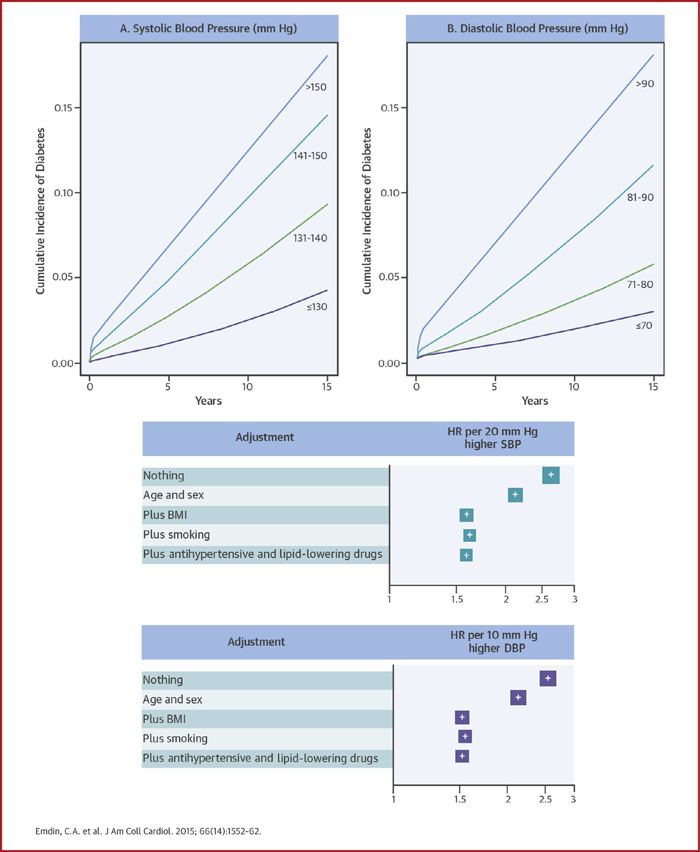
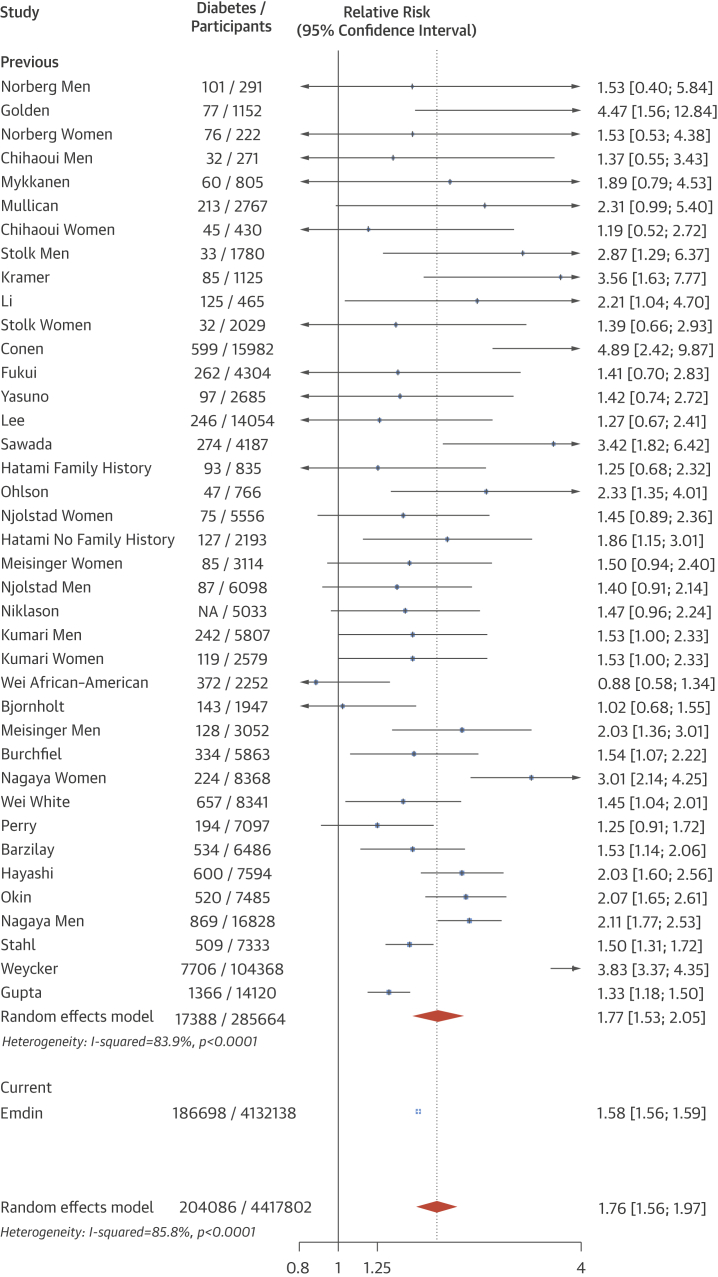
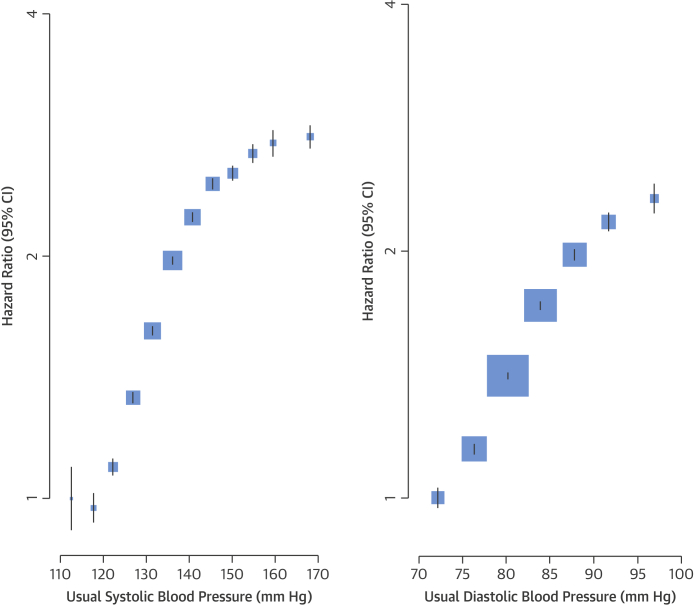
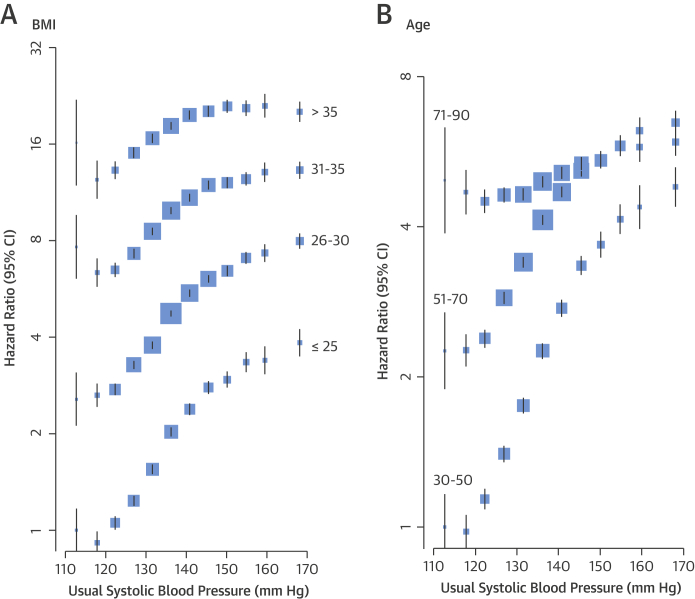
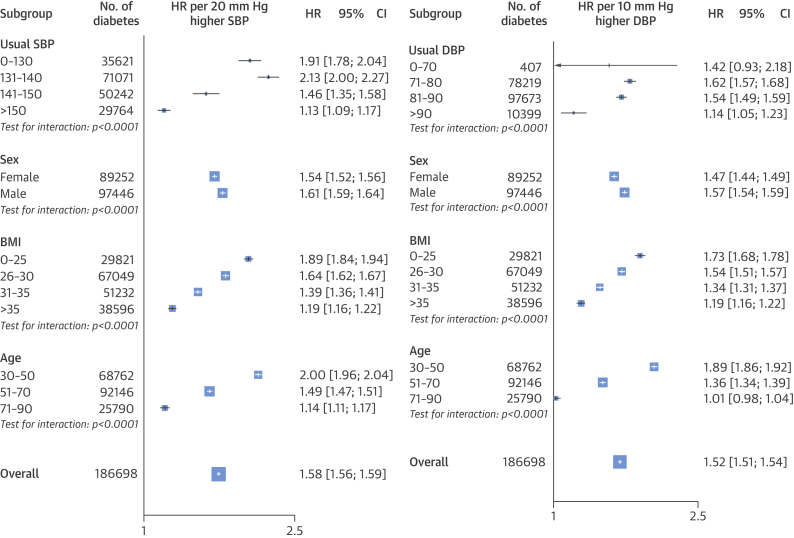
Among the overall cohort, 20 mm Hg higher SBP and 10 mm Hg higher diastolic BP were associated with a 58% and a 52% higher risk of new-onset diabetes (hazard ratio: 1.58; 95% confidence interval [CI]: 1.56 to 1.59; and hazard ratio: 1.52; 95% confidence interval: 1.51 to 1.54), respectively. There was no evidence of a nadir to a baseline BP of 110/70 mm Hg. The strength of the association per 20 mm Hg higher SBP declined with age and with increasing body mass index. Estimates were similar even after excluding individuals prescribed antihypertensive or lipid-lowering therapies. Systematic review identified 30 studies with 285,664 participants and 17,388 incident diabetes events. The pooled relative risk of diabetes for a 20 mm Hg higher usual SBP across these studies was 1.77 (1.53 to 2.05).
People with elevated BP are at increased risk of diabetes. The strength of the association declined with increasing body mass index and age. Further research should determine if the observed risk is modifiable.
目前缺乏对血压(BP)与2型糖尿病风险之间关联的可靠量化研究。
本研究旨在确定一般血压与糖尿病风险之间的总体关联以及按参与者特征划分的关联。
利用经过验证的关联电子健康记录,确定了一个由410万无糖尿病和心血管疾病的成年人组成的队列。通过对前瞻性研究的荟萃分析对结果进行补充,这些前瞻性研究报告了每单位收缩压(SBP)新发糖尿病的相对风险。
在整个队列中,收缩压每升高20 mmHg和舒张压每升高10 mmHg分别与新发糖尿病风险增加58%和52%相关(风险比:1.58;95%置信区间[CI]:1.56至1.59;风险比:1.52;95%置信区间:1.51至1.54)。没有证据表明血压最低点为110/70 mmHg。收缩压每升高20 mmHg的关联强度随年龄和体重指数的增加而下降。即使排除接受抗高血压或降脂治疗的个体,估计结果仍相似。系统评价确定了30项研究,涉及285,664名参与者和17,388例糖尿病发病事件。在这些研究中,通常收缩压每升高20 mmHg,糖尿病的合并相对风险为1.77(1.53至2.05)。
血压升高的人群患糖尿病的风险增加。关联强度随体重指数和年龄的增加而下降。进一步的研究应确定观察到的风险是否可改变。