Seghir Rian, Arscott Steve
Institut d'Electronique, de Microélectronique et de Nanotechnologie (IEMN), CNRS UMR8520, The University of Lille, Cité Scientifique, Avenue Poincaré, 59652 Villeneuve d'Ascq, France.
Sci Rep. 2015 Oct 6;5:14787. doi: 10.1038/srep14787.
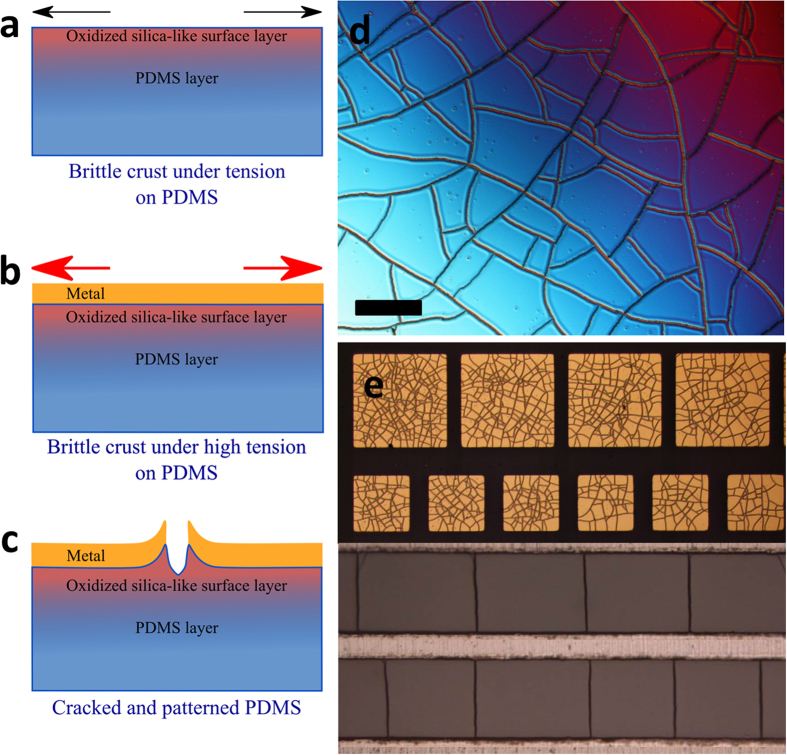
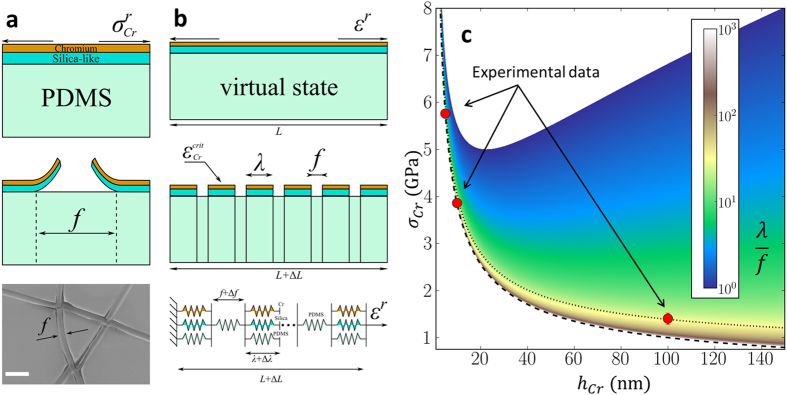
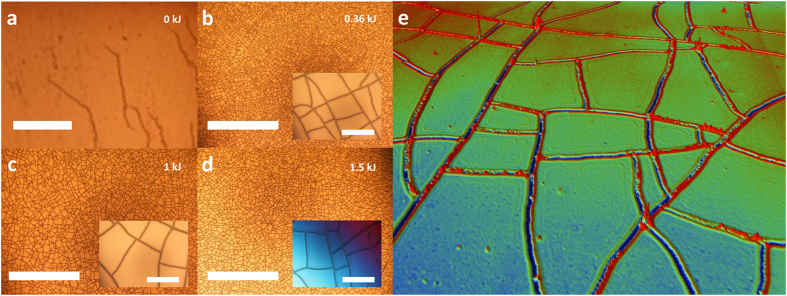
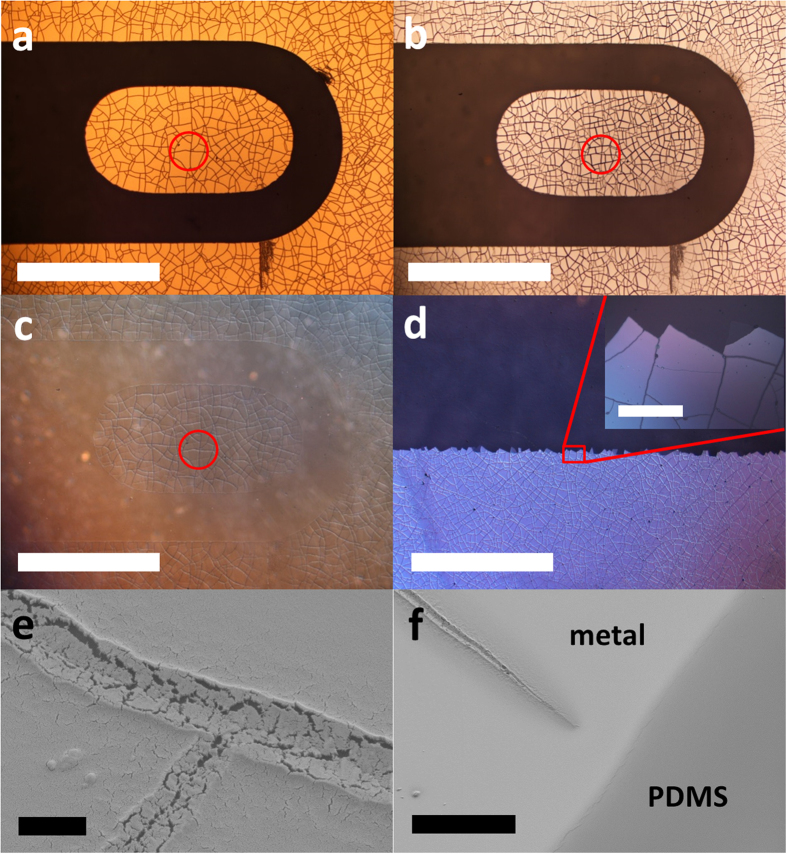
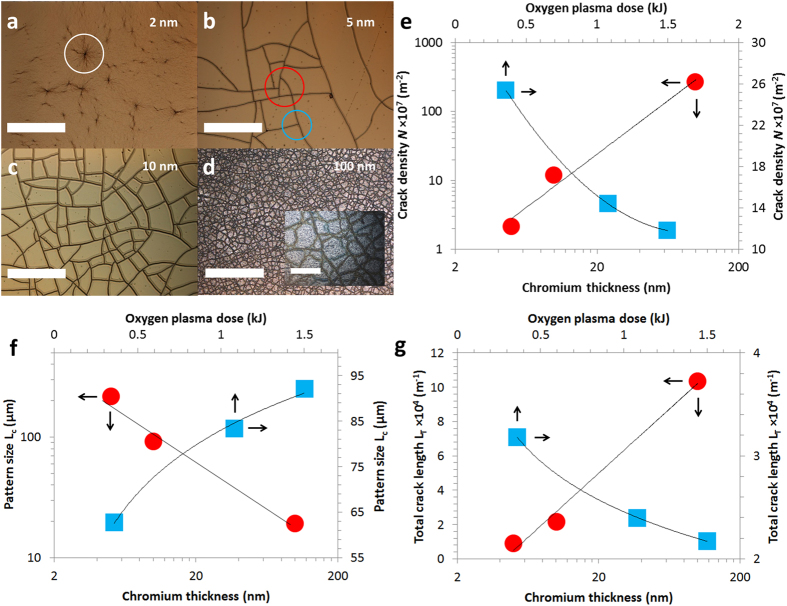
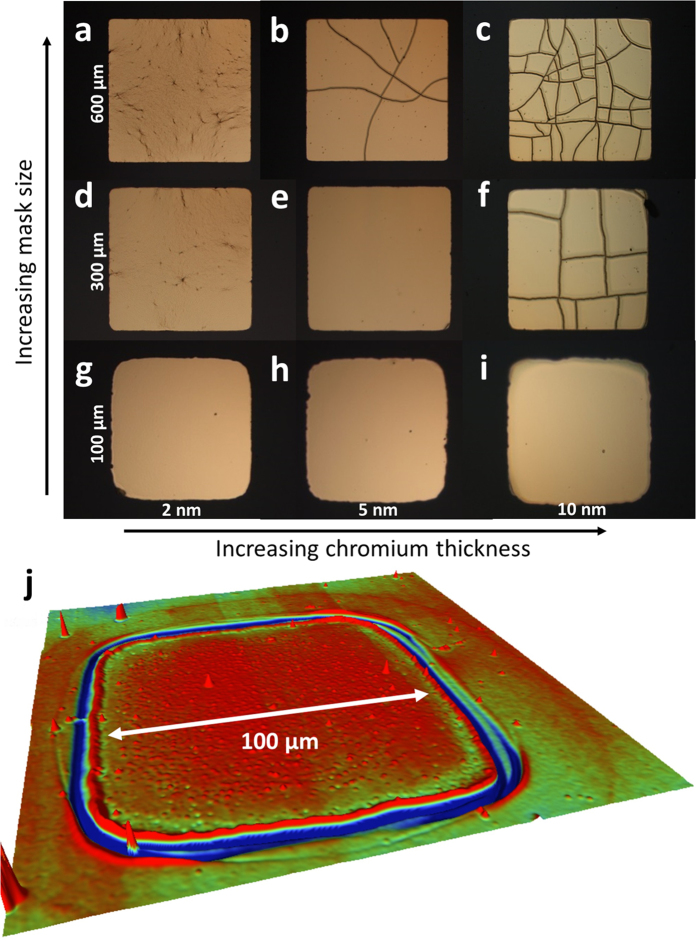
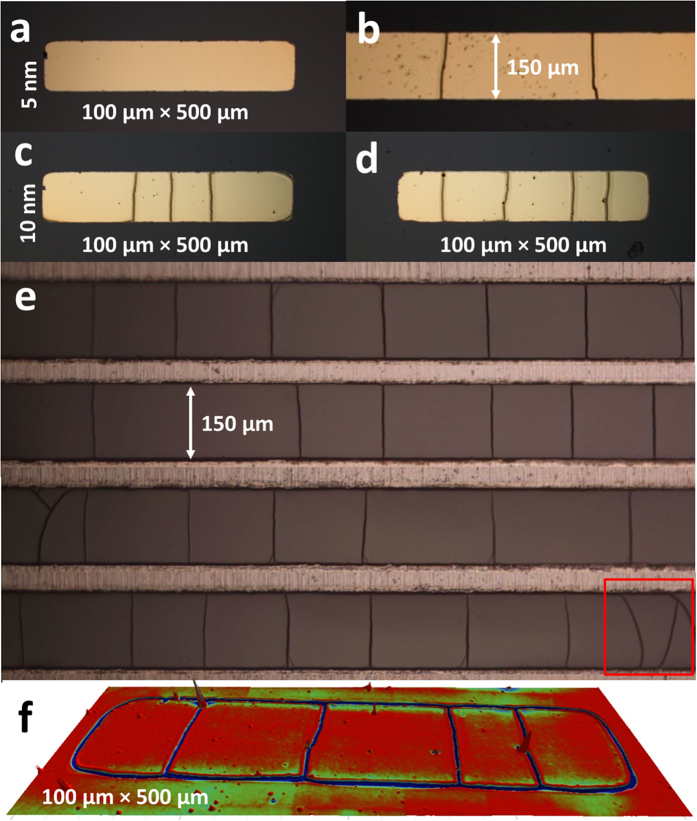
Exploiting pattern formation - such as that observed in nature - in the context of micro/nanotechnology could have great benefits if coupled with the traditional top-down lithographic approach. Here, we demonstrate an original and simple method to produce unique, localized and controllable self-organised patterns on elastomeric films. A thin, brittle silica-like crust is formed on the surface of polydimethylsiloxane (PDMS) using oxygen plasma. This crust is subsequently cracked via the deposition of a thin metal film - having residual tensile stress. The density of the mud-crack patterns depends on the plasma dose and on the metal thickness. The mud-crack patterning can be controlled depending on the thickness and shape of the metallization - ultimately leading to regularly spaced cracks and/or metal mesa structures. Such patterning of the cracks indicates a level of self-organization in the structuring and layout of the features - arrived at simply by imposing metallization boundaries in proximity to each other, separated by a distance of the order of the critical dimension of the pattern size apparent in the large surface mud-crack patterns.
在微纳技术领域中,若将类似于自然界中观察到的图案形成与传统的自上而下光刻方法相结合,可能会带来巨大的益处。在此,我们展示了一种原创且简单的方法,可在弹性体薄膜上产生独特、局部且可控的自组织图案。使用氧等离子体在聚二甲基硅氧烷(PDMS)表面形成一层薄而脆的类二氧化硅外壳。随后,通过沉积具有残余拉应力的薄金属膜使该外壳开裂。泥裂图案的密度取决于等离子体剂量和金属厚度。泥裂图案化可根据金属化的厚度和形状进行控制,最终导致形成规则间隔的裂缝和/或金属台面结构。这种裂缝的图案化表明在特征的结构和布局中存在一定程度的自组织,这仅仅是通过在彼此靠近的位置施加金属化边界实现的,这些边界之间的距离约为大表面泥裂图案中明显的图案尺寸临界维度。