Peng Su-Ping, Copray Sjef
Center for Neuroscience, Shantou University Medical College, Shantou, Guangdong Province, People's Republic of China.
Department of Neuroscience, Medical Physiology, University Medical Center Groningen, University of Groningen, A. Deusinglaan 1, 9713 AV, Groningen, The Netherlands.
Stem Cell Rev Rep. 2016 Feb;12(1):105-20. doi: 10.1007/s12015-015-9623-7.
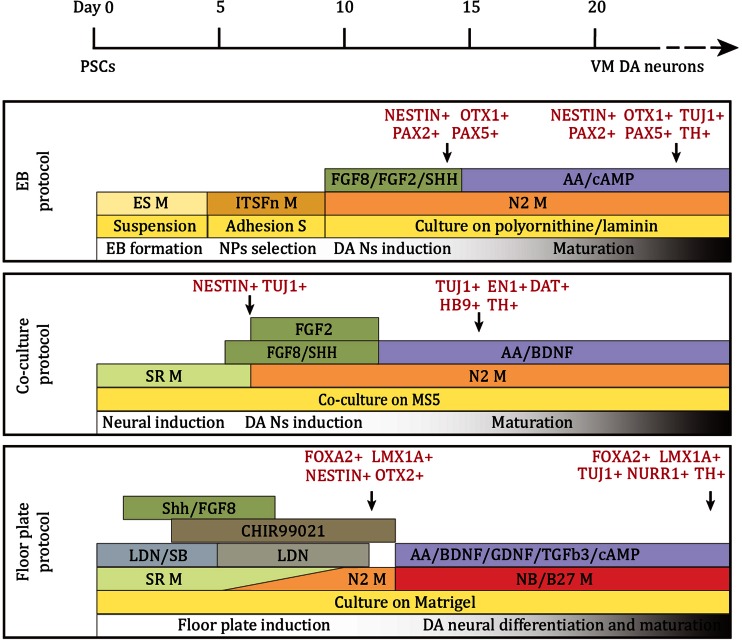
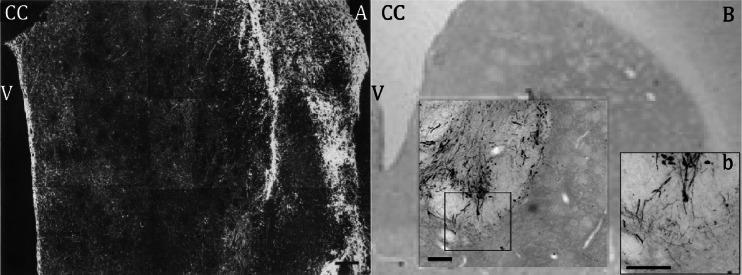
Neuronal degeneration within the substantia nigra and the loss of the dopaminergic nigro-striatal pathway are the major hallmarks of Parkinson's disease (PD). Grafts of foetal ventral mesencephalic (VM) dopaminergic (DA) neurons into the striatum have been shown to be able to restore striatal dopamine levels and to improve overall PD symptoms. However, human foetus-derived cell grafts are not feasible for clinical application. Autologous induced pluripotent stem cell (iPS cell)-derived DA neurons are emerging as an unprecedented alternative. In this review, we summarize and compare the efficacy of human iPS cell-derived DA neuron grafts to restore normal behaviour in a rat model for PD with that of human foetal primary DA neurons. The differences we observed in the efficacy to restore normal function between the 2 types of DA neuron grafts could be ascribed to intrinsic properties of the iPS cell-derived DA neurons that critically affected survival and proper neurite extension in the striatum after implantation.
黑质内的神经元变性以及多巴胺能黑质 - 纹状体通路的丧失是帕金森病(PD)的主要特征。将胎儿腹侧中脑(VM)多巴胺能(DA)神经元移植到纹状体已被证明能够恢复纹状体多巴胺水平并改善整体PD症状。然而,源自人类胎儿的细胞移植在临床应用中并不可行。自体诱导多能干细胞(iPS细胞)衍生的DA神经元正在成为一种前所未有的替代方案。在这篇综述中,我们总结并比较了人类iPS细胞衍生的DA神经元移植与人类胎儿原代DA神经元移植在恢复PD大鼠模型正常行为方面的功效。我们观察到的这两种类型的DA神经元移植在恢复正常功能功效上的差异,可能归因于iPS细胞衍生的DA神经元的内在特性,这些特性在植入后严重影响其在纹状体中的存活和正常神经突延伸。