Nagy Stanislav, Goessling Marc, Amit Yali, Biron David
The Institute for Biophysical Dynamics, The University of Chicago, Chicago, Illinois, United States of America.
Department of Statistics, The University of Chicago, Chicago, Illinois, United States of America.
PLoS Comput Biol. 2015 Oct 6;11(10):e1004517. doi: 10.1371/journal.pcbi.1004517. eCollection 2015 Oct.
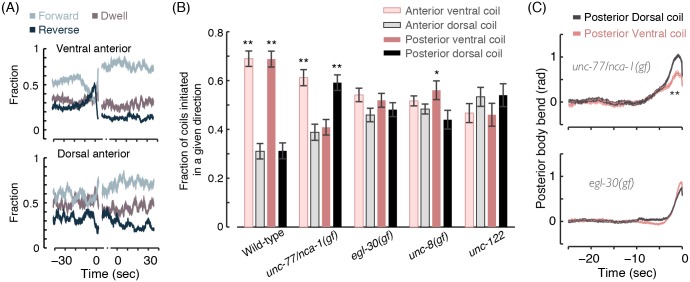
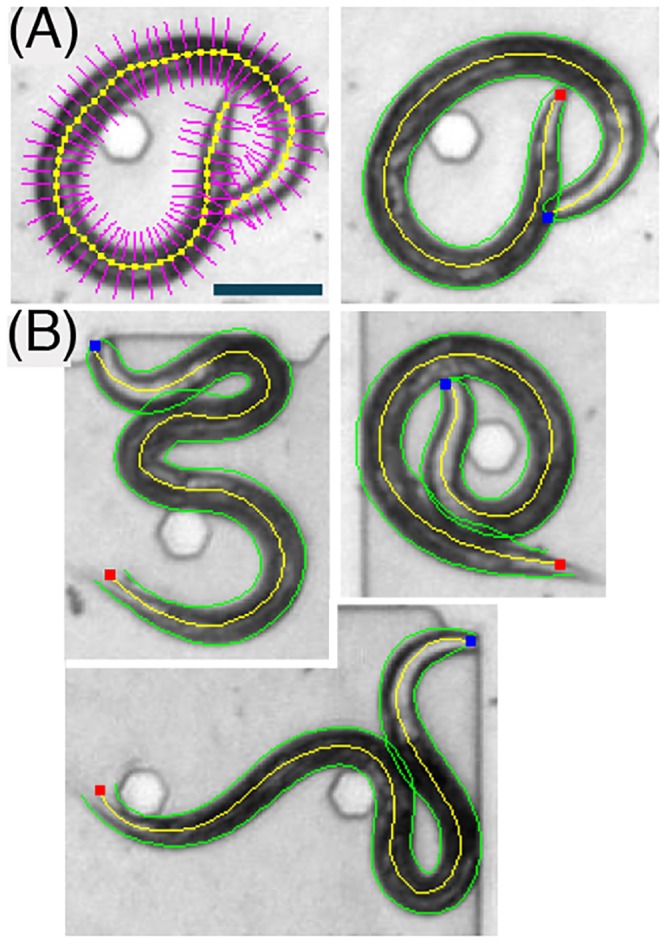
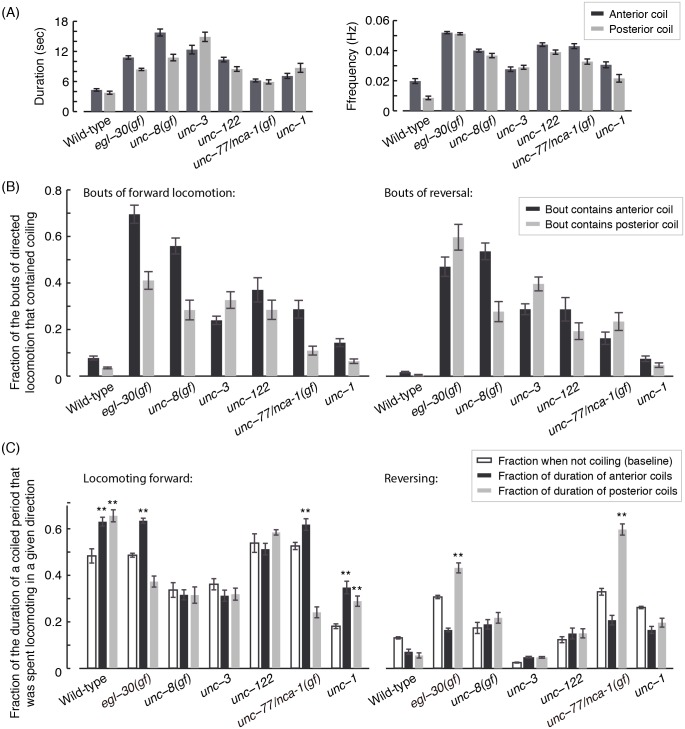
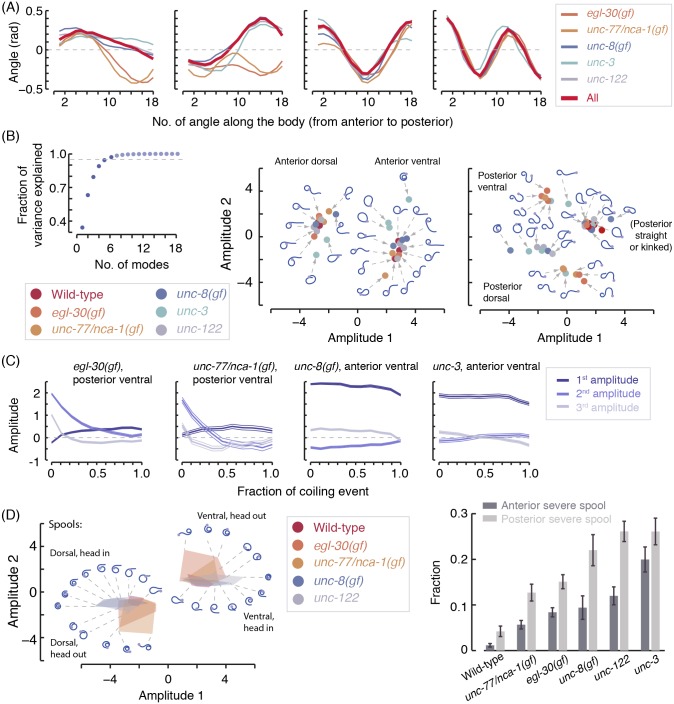
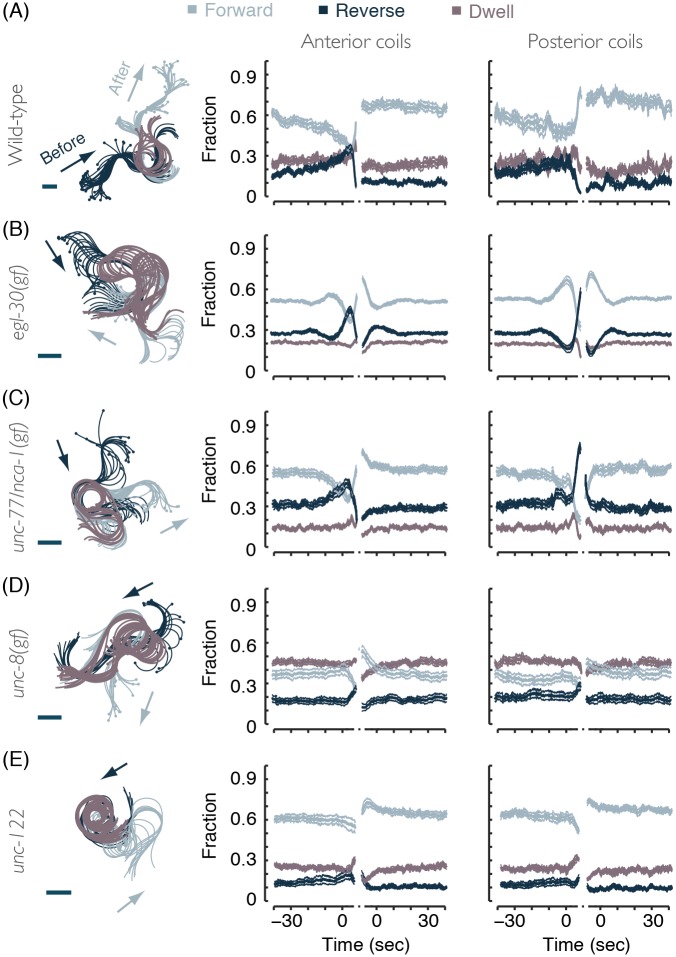
This paper presents a method for automated detection of complex (non-self-avoiding) postures of the nematode Caenorhabditis elegans and its application to analyses of locomotion defects. Our approach is based on progressively detailed statistical models that enable detection of the head and the body even in cases of severe coilers, where data from traditional trackers is limited. We restrict the input available to the algorithm to a single digitized frame, such that manual initialization is not required and the detection problem becomes embarrassingly parallel. Consequently, the proposed algorithm does not propagate detection errors and naturally integrates in a "big data" workflow used for large-scale analyses. Using this framework, we analyzed the dynamics of postures and locomotion of wild-type animals and mutants that exhibit severe coiling phenotypes. Our approach can readily be extended to additional automated tracking tasks such as tracking pairs of animals (e.g., for mating assays) or different species.
本文介绍了一种用于自动检测秀丽隐杆线虫复杂(非自我回避)姿势的方法及其在运动缺陷分析中的应用。我们的方法基于逐步详细的统计模型,即使在严重卷曲的情况下(传统追踪器的数据有限)也能检测到头部和身体。我们将算法可用的输入限制为单个数字化帧,这样就无需手动初始化,并且检测问题变得非常易于并行处理。因此,所提出的算法不会传播检测错误,并且自然地集成到用于大规模分析的“大数据”工作流程中。使用这个框架,我们分析了野生型动物和表现出严重卷曲表型的突变体的姿势和运动动态。我们的方法可以很容易地扩展到其他自动跟踪任务,例如跟踪动物对(例如用于交配试验)或不同物种。