Hadad Uzi, Thauland Timothy J, Martinez Olivia M, Butte Manish J, Porgador Angel, Krams Sheri M
Department of Surgery, Division of Abdominal Transplantation, Stanford University , Stanford, CA , USA ; The Shraga Segal Department of Microbiology and Immunology and Genetics, Ben-Gurion University of the Negev , Beersheba , Israel.
Department of Pediatrics, Division of Immunology, Stanford University , Stanford, CA , USA.
Front Immunol. 2015 Sep 25;6:495. doi: 10.3389/fimmu.2015.00495. eCollection 2015.
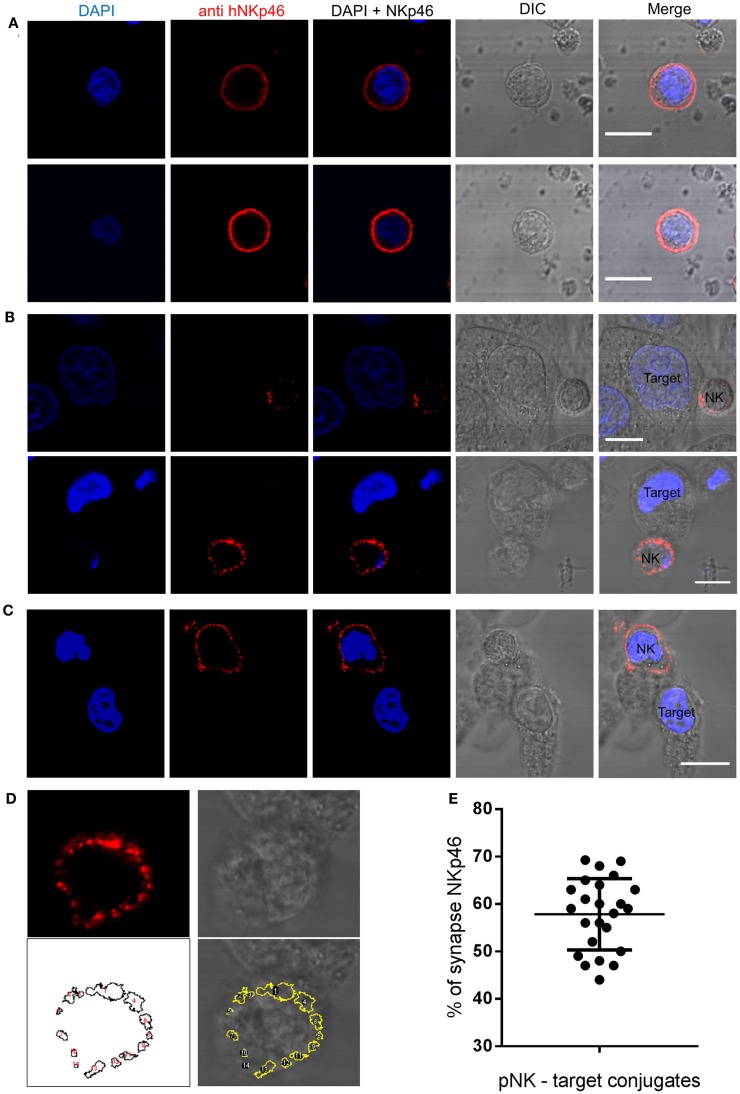
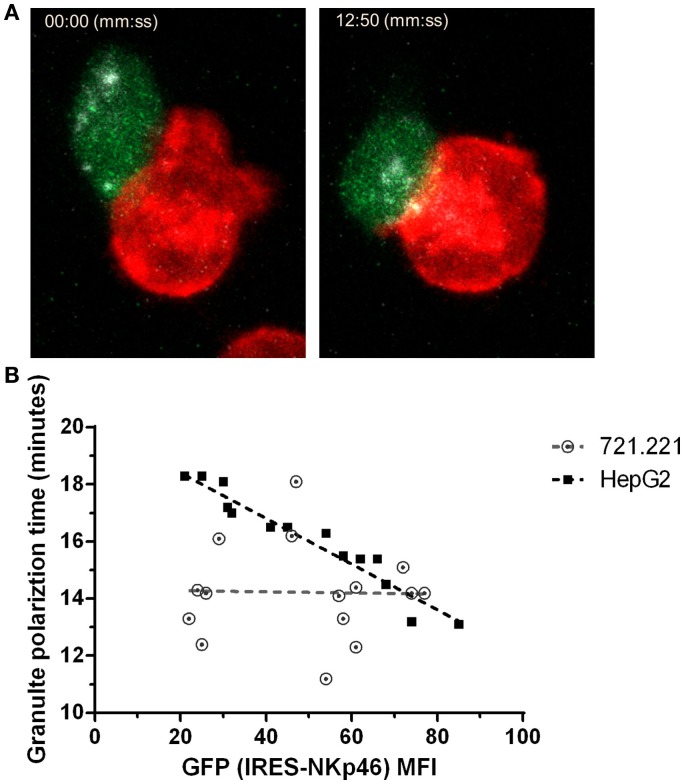
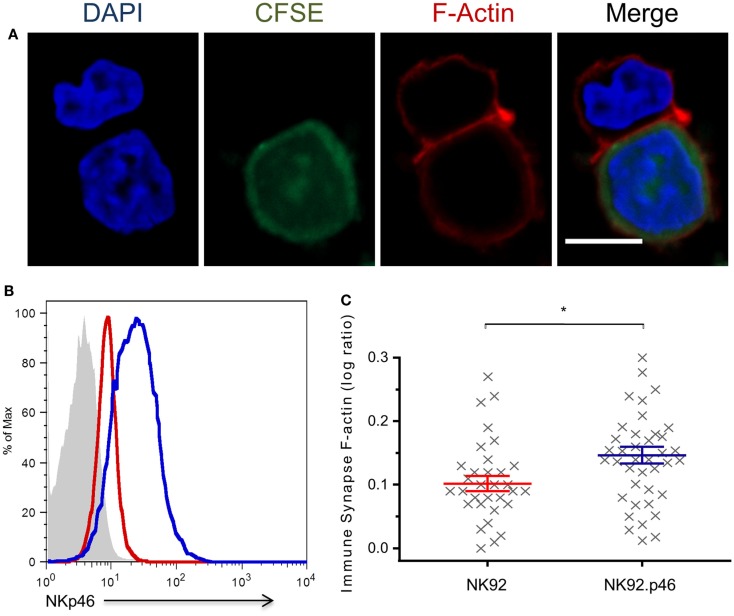
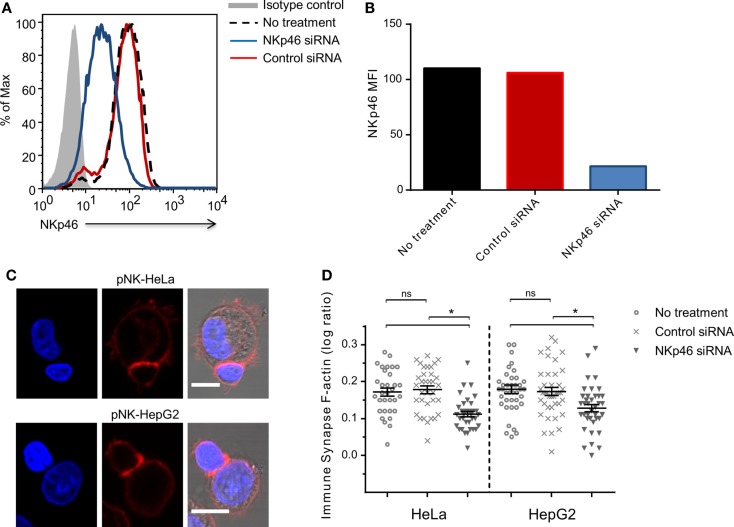
Natural killer (NK) cells play an important role in first-line defense against tumor and virus-infected cells. The activity of NK cells is tightly regulated by a repertoire of cell surface expressed inhibitory and activating receptors. NKp46 is a major NK cell-activating receptor that is involved in the elimination of target cells. NK cells form different types of synapses that result in distinct functional outcomes: cytotoxic, inhibitory, and regulatory. Recent studies revealed that complex integration of NK receptor signaling controls cytoskeletal rearrangement and other immune synapse-related events. However, the distinct nature by which NKp46 participates in NK immunological synapse formation and function remains unknown. In this study, we determined that NKp46 forms microclusters structures at the immune synapse between NK cells and target cells. Over-expression of human NKp46 is correlated with increased accumulation of F-actin mesh at the immune synapse. Concordantly, knock-down of NKp46 in primary human NK cells decreased recruitment of F-actin to the synapse. Live cell imaging experiments showed a linear correlation between NKp46 expression and lytic granules polarization to the immune synapse. Taken together, our data suggest that NKp46 signaling directly regulates the NK lytic immune synapse from early formation to late function.
自然杀伤(NK)细胞在抵御肿瘤和病毒感染细胞的一线防御中发挥着重要作用。NK细胞的活性受到一系列细胞表面表达的抑制性和激活性受体的严格调控。NKp46是一种主要的NK细胞激活性受体,参与靶细胞的清除。NK细胞形成不同类型的突触,导致不同的功能结果:细胞毒性、抑制性和调节性。最近的研究表明,NK受体信号的复杂整合控制着细胞骨架重排和其他免疫突触相关事件。然而,NKp46参与NK免疫突触形成和功能的独特性质仍然未知。在本研究中,我们确定NKp46在NK细胞与靶细胞之间的免疫突触处形成微簇结构。人NKp46的过表达与免疫突触处F-肌动蛋白网的积累增加相关。同样,在原代人NK细胞中敲低NKp46会减少F-肌动蛋白向突触的募集。活细胞成像实验表明,NKp46表达与溶细胞颗粒向免疫突触的极化之间存在线性相关性。综上所述,我们的数据表明,NKp46信号直接调节NK溶细胞免疫突触从早期形成到晚期功能的过程。