Kreuder Johnson Christine, Hitchens Peta L, Smiley Evans Tierra, Goldstein Tracey, Thomas Kate, Clements Andrew, Joly Damien O, Wolfe Nathan D, Daszak Peter, Karesh William B, Mazet Jonna K
One Health Institute, School of Veterinary Medicine, University of California, Davis, CA USA.
USAID, Bureau for Global Health, Washington DC, USA.
Sci Rep. 2015 Oct 7;5:14830. doi: 10.1038/srep14830.
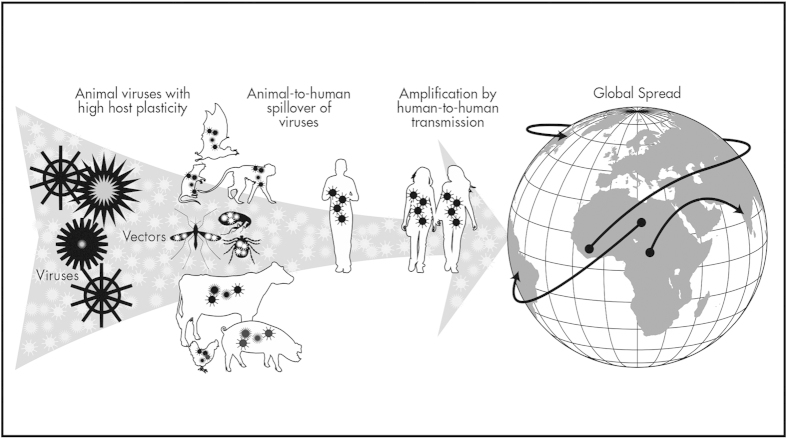
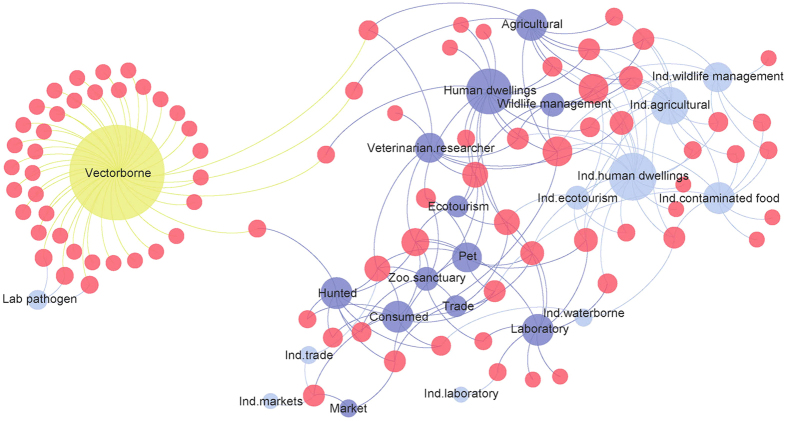
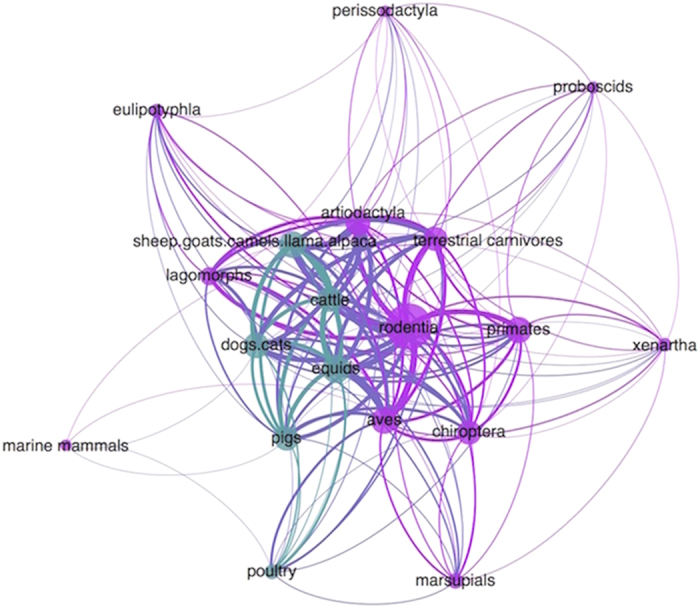
Most human infectious diseases, especially recently emerging pathogens, originate from animals, and ongoing disease transmission from animals to people presents a significant global health burden. Recognition of the epidemiologic circumstances involved in zoonotic spillover, amplification, and spread of diseases is essential for prioritizing surveillance and predicting future disease emergence risk. We examine the animal hosts and transmission mechanisms involved in spillover of zoonotic viruses to date, and discover that viruses with high host plasticity (i.e. taxonomically and ecologically diverse host range) were more likely to amplify viral spillover by secondary human-to-human transmission and have broader geographic spread. Viruses transmitted to humans during practices that facilitate mixing of diverse animal species had significantly higher host plasticity. Our findings suggest that animal-to-human spillover of new viruses that are capable of infecting diverse host species signal emerging disease events with higher pandemic potential in that these viruses are more likely to amplify by human-to-human transmission with spread on a global scale.
大多数人类传染病,尤其是最近出现的病原体,都源自动物,而动物向人类持续传播疾病给全球健康带来了重大负担。认识人畜共患病溢出、扩增和传播所涉及的流行病学情况对于确定监测重点和预测未来疾病出现风险至关重要。我们研究了迄今为止涉及人畜共患病毒溢出的动物宿主和传播机制,发现具有高宿主可塑性(即分类学和生态学上宿主范围多样)的病毒更有可能通过二次人际传播扩大病毒溢出,并具有更广泛的地理传播范围。在促进不同动物物种混合的活动中传播给人类的病毒具有显著更高的宿主可塑性。我们的研究结果表明,能够感染多种宿主物种的新病毒从动物向人类的溢出预示着具有更高大流行潜力的新发病事件,因为这些病毒更有可能通过人际传播在全球范围内传播并扩大。