Kramer Marianne C, Liang Dongming, Tatomer Deirdre C, Gold Beth, March Zachary M, Cherry Sara, Wilusz Jeremy E
Department of Biochemistry and Biophysics, University of Pennsylvania Perelman School of Medicine, Philadelphia, Pennsylvania 19104, USA;
Department of Microbiology, University of Pennsylvania Perelman School of Medicine, Philadelphia, Pennsylvania 19104, USA.
Genes Dev. 2015 Oct 15;29(20):2168-82. doi: 10.1101/gad.270421.115. Epub 2015 Oct 8.
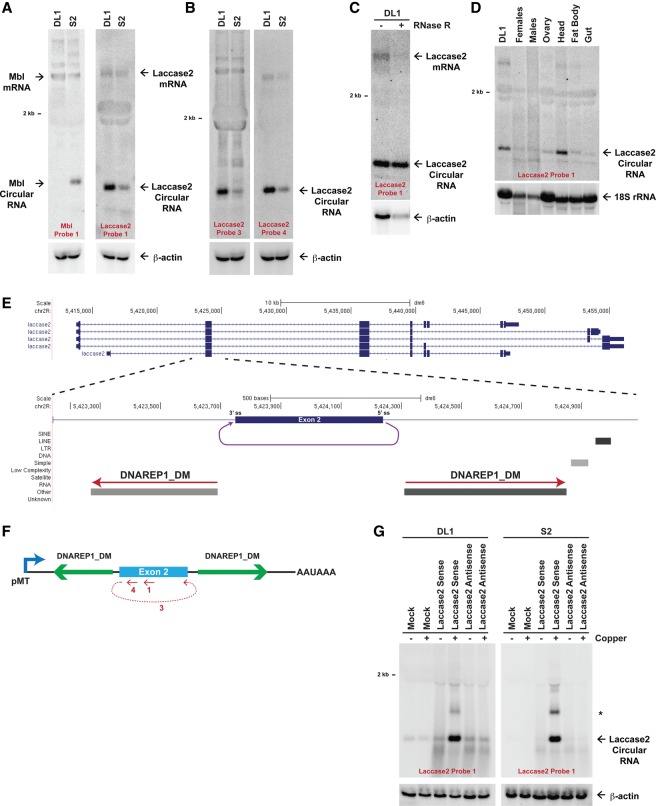
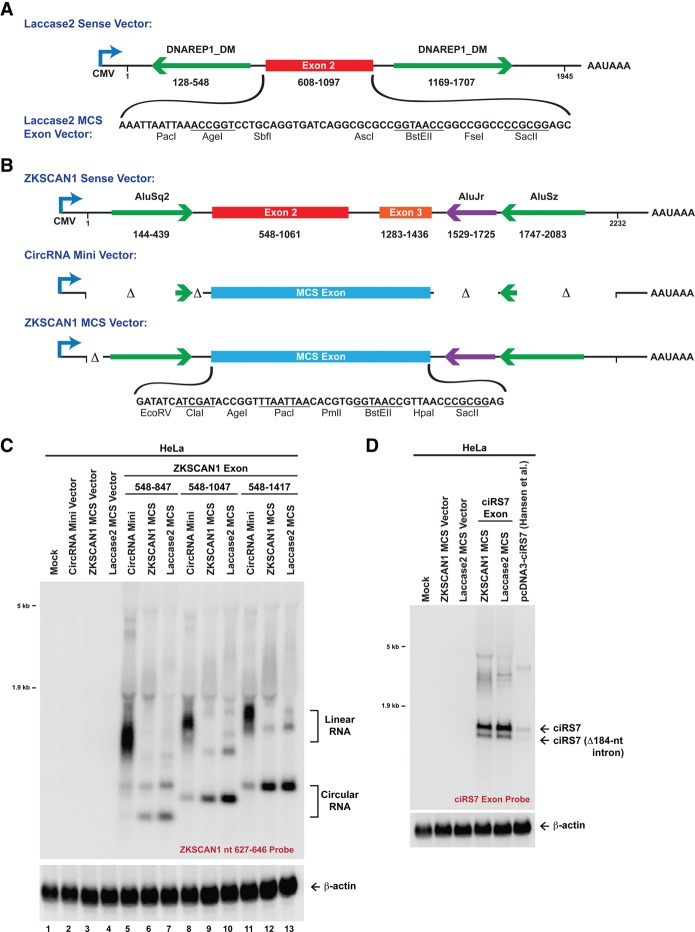
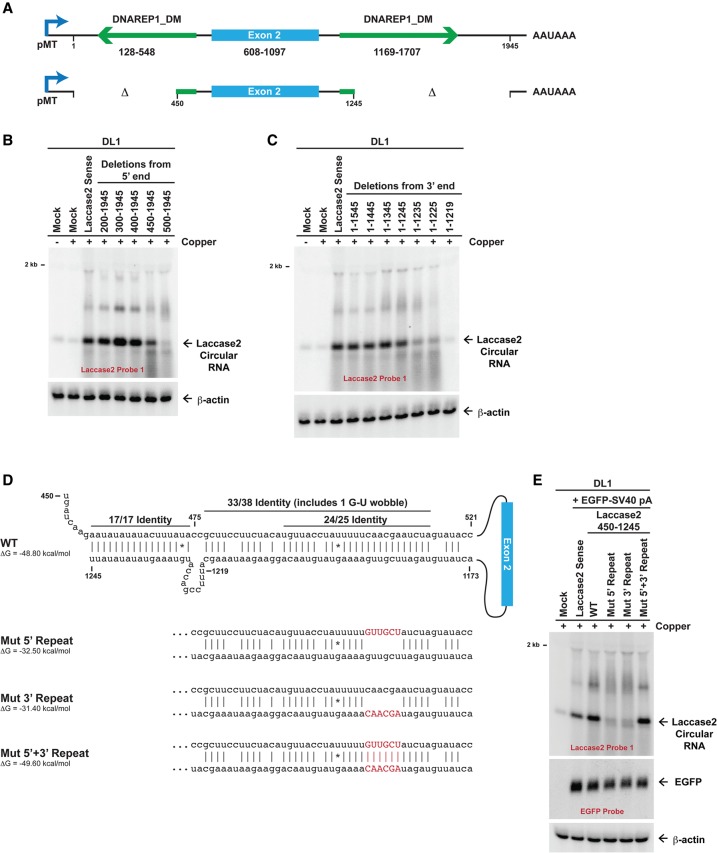
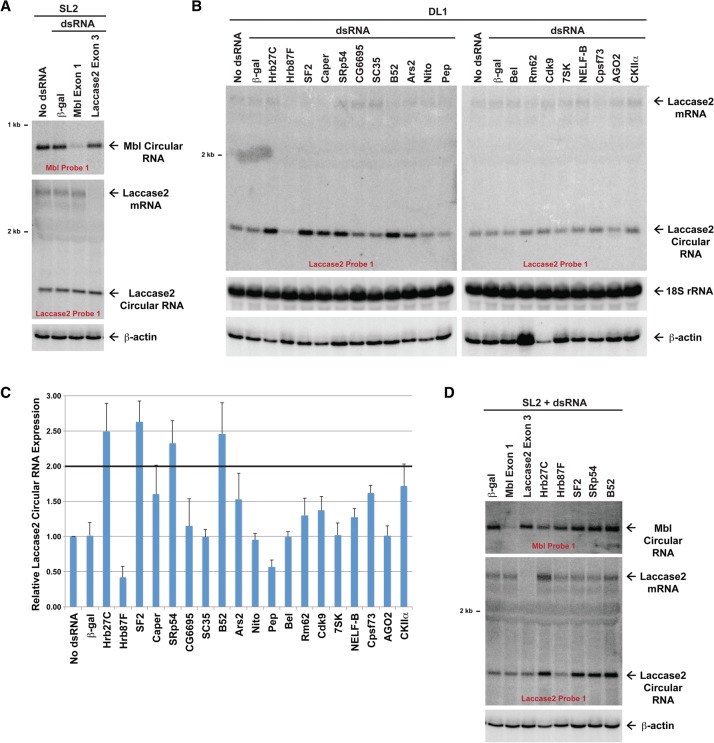
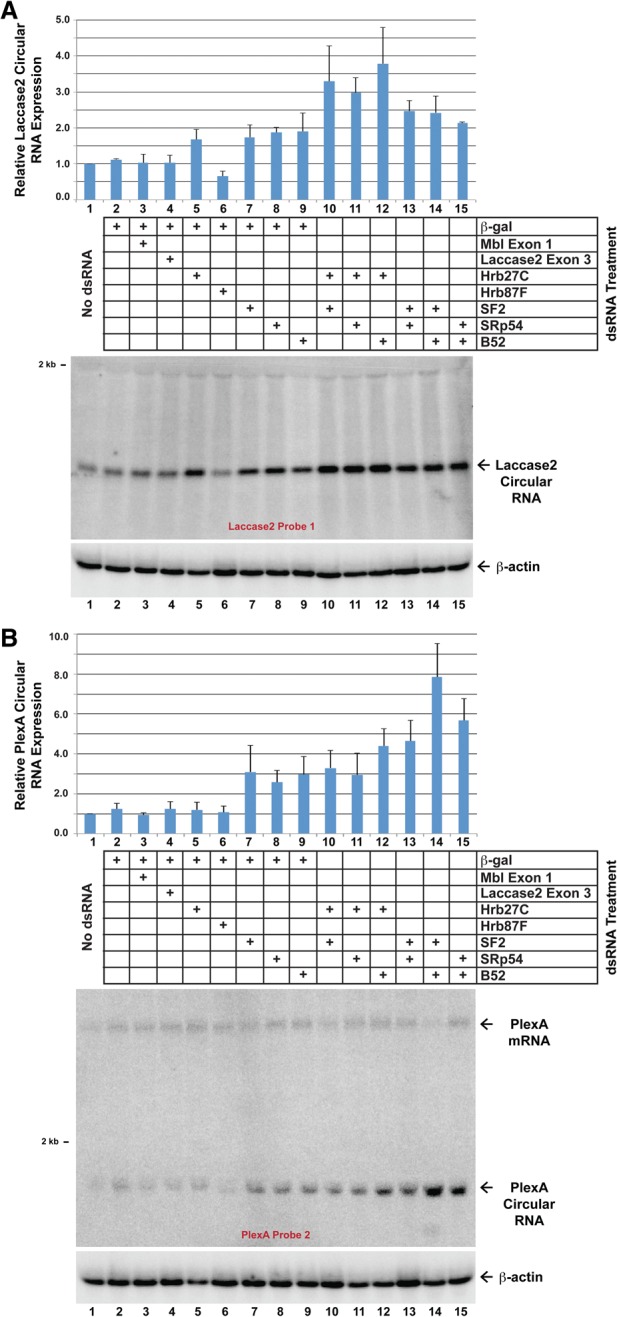
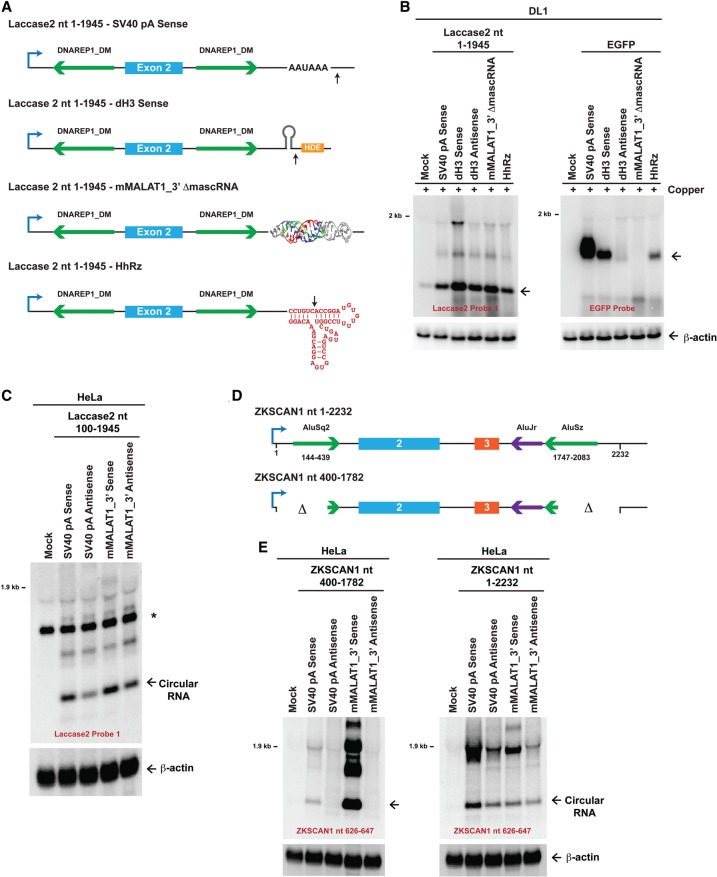
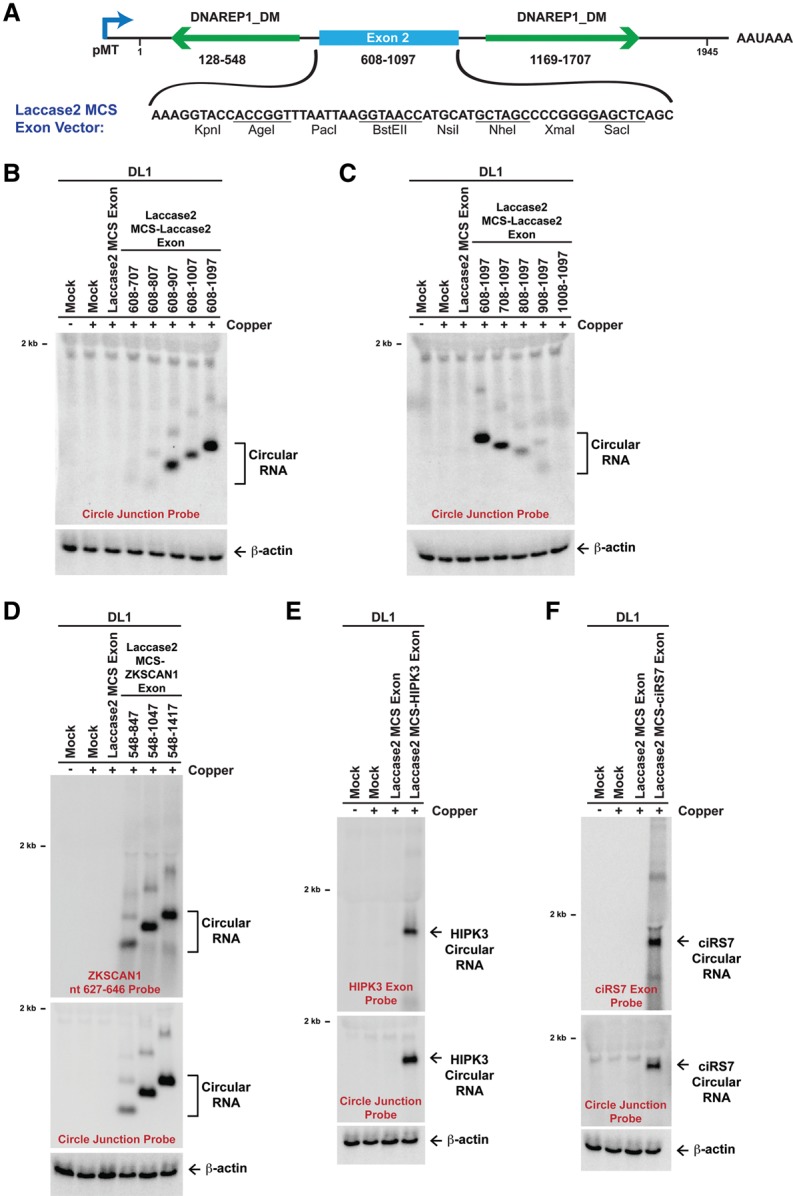
Thousands of eukaryotic protein-coding genes are noncanonically spliced to produce circular RNAs. Bioinformatics has indicated that long introns generally flank exons that circularize in Drosophila, but the underlying mechanisms by which these circular RNAs are generated are largely unknown. Here, using extensive mutagenesis of expression plasmids and RNAi screening, we reveal that circularization of the Drosophila laccase2 gene is regulated by both intronic repeats and trans-acting splicing factors. Analogous to what has been observed in humans and mice, base-pairing between highly complementary transposable elements facilitates backsplicing. Long flanking repeats (∼ 400 nucleotides [nt]) promote circularization cotranscriptionally, whereas pre-mRNAs containing minimal repeats (<40 nt) generate circular RNAs predominately after 3' end processing. Unlike the previously characterized Muscleblind (Mbl) circular RNA, which requires the Mbl protein for its biogenesis, we found that Laccase2 circular RNA levels are not controlled by Mbl or the Laccase2 gene product but rather by multiple hnRNP (heterogeneous nuclear ribonucleoprotein) and SR (serine-arginine) proteins acting in a combinatorial manner. hnRNP and SR proteins also regulate the expression of other Drosophila circular RNAs, including Plexin A (PlexA), suggesting a common strategy for regulating backsplicing. Furthermore, the laccase2 flanking introns support efficient circularization of diverse exons in Drosophila and human cells, providing a new tool for exploring the functional consequences of circular RNA expression across eukaryotes.
数以千计的真核生物蛋白质编码基因通过非规范剪接产生环状RNA。生物信息学研究表明,在果蝇中,长内含子通常位于发生环化的外显子两侧,但这些环状RNA的产生机制在很大程度上仍不清楚。在此,我们通过对表达质粒进行广泛诱变和RNA干扰筛选,揭示了果蝇漆酶2基因的环化受内含子重复序列和顺式作用剪接因子的共同调控。与在人类和小鼠中观察到的情况类似,高度互补的转座元件之间的碱基配对促进了反向剪接。长侧翼重复序列(约400个核苷酸[nt])在转录共发生过程中促进环化,而含有最小重复序列(<40 nt)的前体mRNA主要在3'末端加工后产生环状RNA。与之前鉴定的需要肌肉盲(Mbl)蛋白参与其生物合成的Mbl环状RNA不同,我们发现漆酶2环状RNA的水平不受Mbl或漆酶2基因产物的控制,而是由多种以组合方式起作用的hnRNP(异质核糖核蛋白)和SR(丝氨酸-精氨酸)蛋白调控。hnRNP和SR蛋白也调控果蝇其他环状RNA的表达,包括丛状蛋白A(PlexA),这表明存在一种调控反向剪接的通用策略。此外,漆酶2侧翼内含子支持果蝇和人类细胞中多种外显子的高效环化,为探索真核生物中环状RNA表达的功能后果提供了一种新工具。