Aoki Kohei, Teshima Yasushi, Kondo Hidekazu, Saito Shotaro, Fukui Akira, Fukunaga Naoya, Nawata Tomoko, Shimada Tatsuo, Takahashi Naohiko, Shibata Hirotaka
Department of Endocrinology, Metabolism, Rheumatology and Nephrology, Oita University Faculty of Medicine, Oita, Japan (K.A., N.F., T.N., H.S.).
Department of Cardiology and Clinical Examination, Oita University Faculty of Medicine, Oita, Japan (Y.T., H.K., S.S., A.F., N.T.).
J Am Heart Assoc. 2015 Oct 9;4(10):e002023. doi: 10.1161/JAHA.115.002023.
Renal dysfunction is a major risk factor for atrial fibrillation (AF). The uremic toxin indoxyl sulfate may contribute to the progression of cardiac fibrosis and AF substrate in renal dysfunction.
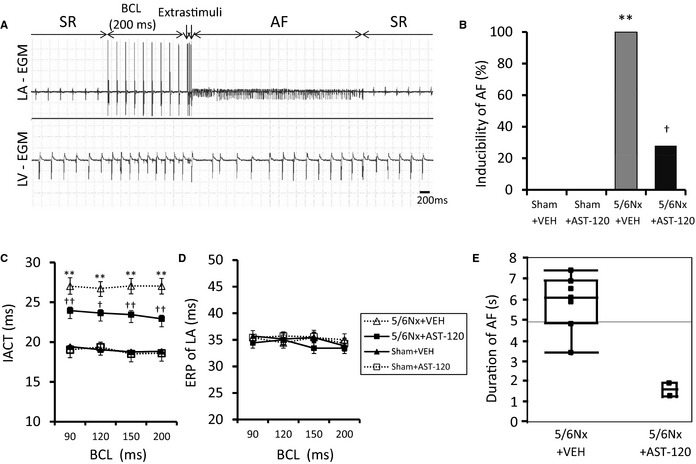
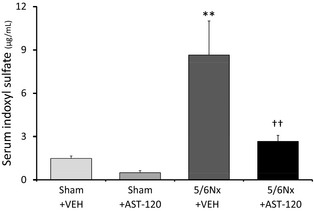
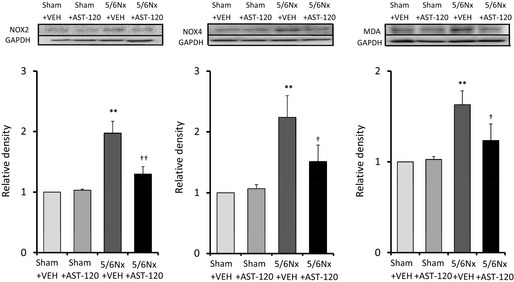
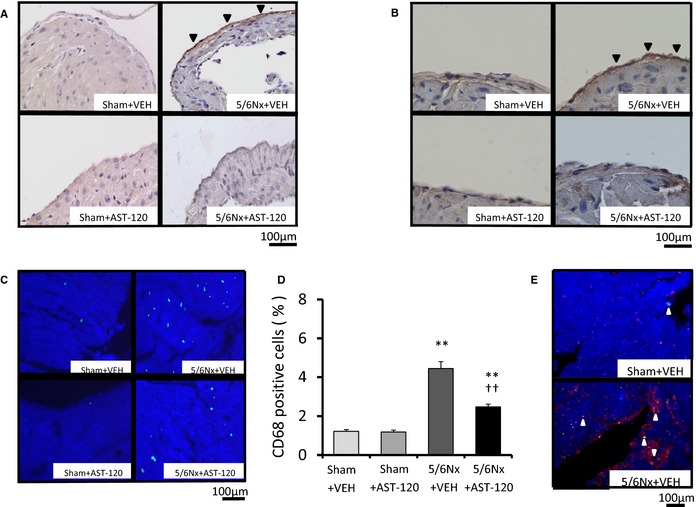
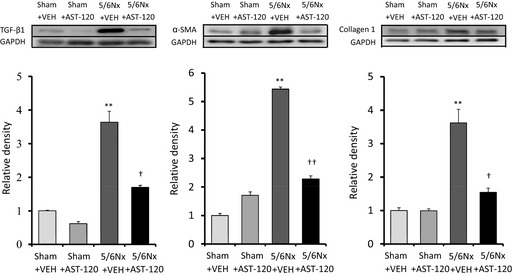
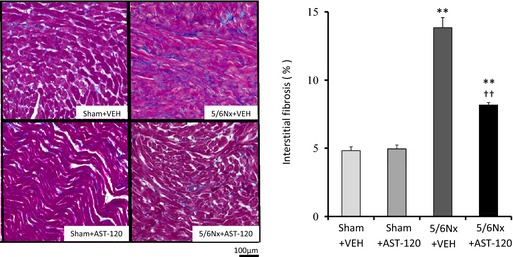
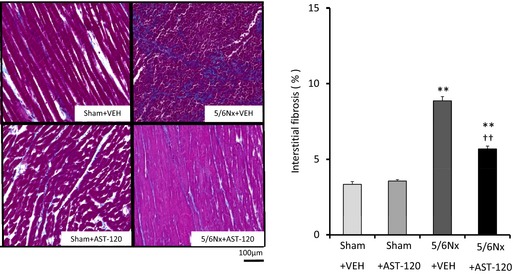
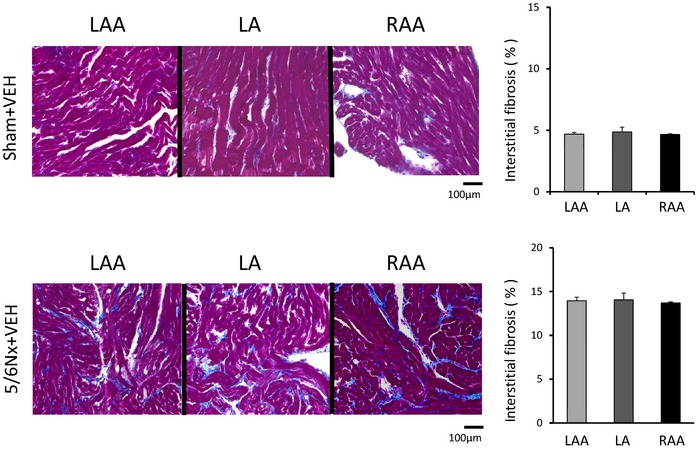
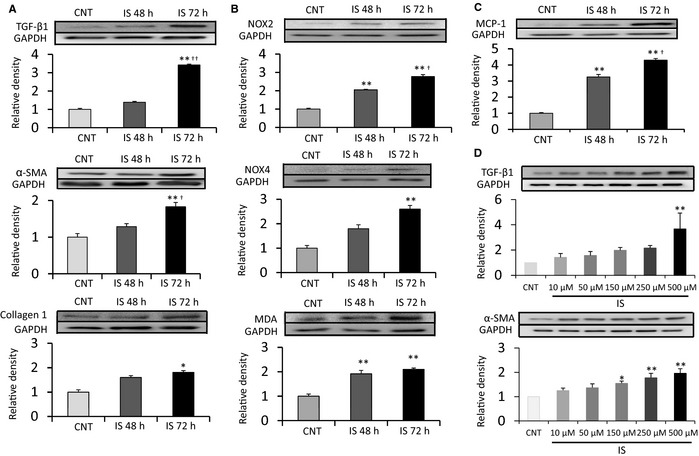
Male Sprague-Dawley rats were assigned randomly to the following groups: 5/6 nephrectomy (5/6Nx) with vehicle, 5/6Nx with AST-120, sham procedure with vehicle, and sham procedure with AST-120. Vehicle and AST-120 were administered for 4 weeks. Serum levels of IS were significantly increased in 5/6Nx groups. Expression of malondialdehyde, an indicator of oxidative stress, was upregulated in the left atrium of 5/6Nx groups and was accompanied by an increase in expression of NADPH oxidase 2 and 4. Monocyte-mediated inflammatory signals such as CD68, monocyte chemoattractant protein 1, and vascular cell adhesion molecule 1 were also upregulated in 5/6Nx groups. Interstitial fibrosis was promoted heterogeneously, and expression of profibrotic indicators such as transforming growth factor β1, α-smooth muscle actin, and collagen type 1 was upregulated in left atrium tissue of 5/6Nx groups. In cultured atrial fibroblasts, incubation with IS upregulated expression of the markers of oxidative stress, inflammation, and profibrotic factors. These results suggest the direct effects of IS on the progression of AF substrate. AF was consistently and invariably induced by atrial extrastimuli in 5/6Nx groups in electrophysiological experiments. AST-120 treatment significantly alleviated renal dysfunction-induced oxidative stress, inflammation, and atrial fibrosis and, consequently, attenuated AF inducibility.
Indoxyl sulfate facilitates atrial fibrosis and AF and thus is a novel therapeutic target for prevention of renal dysfunction-induced AF.
肾功能不全是心房颤动(AF)的主要危险因素。尿毒症毒素硫酸吲哚酚可能促进肾功能不全时心脏纤维化及AF基质的进展。
将雄性Sprague-Dawley大鼠随机分为以下几组:假手术组(给予赋形剂)、假手术组(给予AST-120)、5/6肾切除组(给予赋形剂)、5/6肾切除组(给予AST-120)。赋形剂和AST-120给药4周。5/6肾切除组血清硫酸吲哚酚水平显著升高。氧化应激指标丙二醛的表达在5/6肾切除组左心房上调,并伴有NADPH氧化酶2和4表达增加。5/6肾切除组中单核细胞介导的炎症信号如CD68、单核细胞趋化蛋白1和血管细胞黏附分子1也上调。间质纤维化呈异质性促进,5/6肾切除组左心房组织中促纤维化指标如转化生长因子β1、α平滑肌肌动蛋白和I型胶原的表达上调。在培养的心房成纤维细胞中,硫酸吲哚酚孵育上调氧化应激、炎症和促纤维化因子标志物的表达。这些结果提示硫酸吲哚酚对AF基质进展有直接作用。在电生理实验中,5/6肾切除组心房额外刺激始终能诱发AF。AST-120治疗显著减轻肾功能不全诱导的氧化应激、炎症和心房纤维化,从而减弱AF的诱发率。
硫酸吲哚酚促进心房纤维化和AF,因此是预防肾功能不全诱导AF的新治疗靶点。